
GCC Cement Market: Low-Carbon Transition, Pricing Trends & Growth Opportunities
How public infrastructure investments, housing expansion, and industrial growth are influencing demand patterns and market competition in the GCC cement market

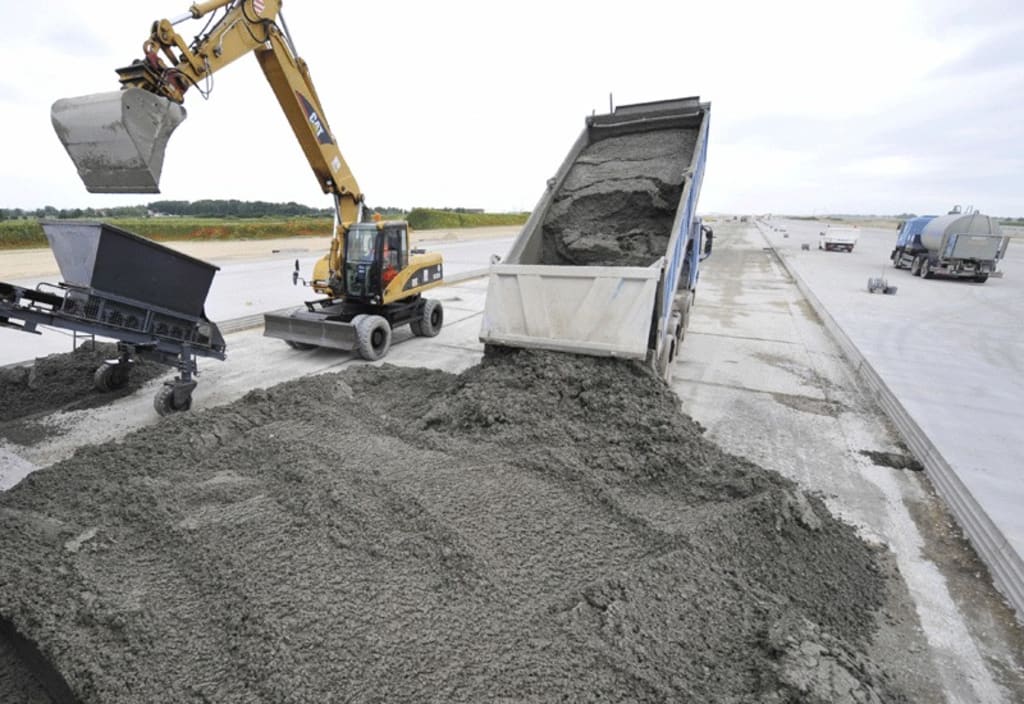
According to IMARC Group's latest research publication, GCC Cement Market size reached 94.5 Million Tons in 2024. The market is projected to reach 142.8 Million Tons by 2033, exhibiting a growth rate (CAGR) of 4.7% during 2025-2033.
How AI is Reshaping the Future of GCC Cement Market
- Predictive Maintenance Revolution: AI algorithms forecast equipment failures in kilns, crushers, and mills before they happen, slashing unplanned downtime by 20% across Saudi and UAE facilities while extending asset life significantly.
- Energy Efficiency Breakthroughs: Machine learning optimizes kiln operations and fuel combinations in real-time, cutting energy consumption by 5-10% and supporting regional net-zero goals through intelligent process adjustments that boost throughput while lowering emissions.
- Quality Control Automation: AI-powered X-ray analysis and computer vision systems monitor clinker composition continuously, catching defects instantly and reducing off-spec output by over 10%, ensuring consistent quality across GCC production lines.
- Smart Supply Chain Forecasting: Advanced analytics predict market demands with precision, enabling producers to optimize inventory levels by 15%, reduce waste, and better serve mega-project timelines across NEOM and Red Sea developments.
How Vision 2030 is Revolutionizing GCC Cement Industry
Saudi Arabia's Vision 2030 and UAE Vision 2050 are fundamentally reshaping the cement sector through unprecedented infrastructure investment. The $500 billion NEOM city alone drives millions of tons in annual cement demand, while The Line, Red Sea Project, Qiddiya, and Diriyah Gate generate sustained procurement needs. Saudi Arabia accounts for 45-50% of regional cement consumption, with Q2 sales jumping 21% to 13.13 million tons as mega-projects accelerate. Vision 2030's economic diversification push is channeling investments into smart cities, industrial zones, housing projects, and the Etihad Rail network. Governments are mandating sustainable building practices, with Saudi's Sustainable Building Program reporting 64% more projects undergoing sustainability assessments and 140% more design compliance certifications.
Access the Latest 2026 Market Data & Forecasts
GCC Cement Market Trends & Drivers:
Mega-infrastructure initiatives are fundamentally driving market expansion across the region. Vision 2030 programs are pumping billions into transformational projects that demand massive cement volumes. NEOM's ongoing construction of The Line and Oxagon city boosted western Saudi Arabia's consumption substantially, while the Etihad Rail network and Dubai's urban renewal projects generate continuous demand. The UAE Ministry of Energy approved multiple coastal protection and housing projects in Fujairah and Ras Al Khaimah, all relying heavily on Portland cement. Qatar's post-World Cup infrastructure upgrades and Oman's industrial incentives sustain base consumption. National Housing Company schemes and Ministry of Transport roadworks create predictable long-term contracts. Southern Cement and Northern Region Cement realigned logistics to serve Tabuk, Riyadh, and Makkah regions efficiently. With residential and commercial buildings driving 56.7% of cement demand, rapid urbanization across Abu Dhabi, Dubai, Riyadh, and Doha ensures steady market growth through ongoing construction of mixed-use developments, luxury real estate, and affordable housing projects.
Sustainability mandates are reshaping production strategies and product portfolios region-wide. Green building regulations, LEED and Estidama certifications, and carbon reduction commitments are accelerating adoption of blended cements and low-carbon alternatives. Portland Pozzolana Cement incorporating fly ash and slag reduces emissions by 30-40% while maintaining durability in harsh climates. Holcim announced plans to import 2 million tons annually of low-carbon cement from European plants, while LafargeHolcim targets 30% emission reductions by leveraging industrial by-products and carbon capture technologies. UltraTech and other producers invest in limestone calcined clay cement achieving up to 40% emission cuts. Oman Cement integrates refuse-derived fuels and renewable energy to meet national mandates. The green cement segment reached 1.15 million tons, projected to hit 2.1 million tons with strong momentum from NEOM's sustainability requirements, UAE's net-zero building mandates, and Middle East Green Initiative goals driving eco-friendly construction materials adoption across commercial and residential projects.
Technological modernization and digital transformation are revolutionizing operational efficiency across GCC facilities. Automation, robotics, IoT sensors, and data analytics streamline production processes, minimize human error, and optimize resource management. Gulf Cement Company's merger with Buzzi Unicem brought advanced process control and digital monitoring systems enhancing production accuracy while reducing downtime. AI-driven predictive maintenance deployed at Yamama Cement and showcased at Cemtech MEA prevents costly breakdowns. Real-time equipment monitoring through IoT devices improves furnace operations and waste heat recovery, significantly cutting operational costs. Energy-efficient technologies and alternative fuel adoption support both profitability and environmental compliance. Companies focus on plant reliability, capacity optimization, and strategic terminal expansions to serve growing markets. GCC's $518 million Odessa plant expansion targets summer commissioning, while multiple terminals enter planning stages. As producers navigate regional overcapacity concerns, strategic modernization positions manufacturers competitively while meeting stricter environmental regulations and serving mega-project demands with precision logistics and technical support.
GCC Cement Market Industry Segmentation:
The report has segmented the market into the following categories:
Type Insights:
- Blended
- Portland
- Others
End Use Insights:
- Residential
- Commercial
- Infrastructure
Country Insights:
- Saudi Arabia
- UAE
- Qatar
- Oman
- Kuwait
- Bahrain
Competitive Landscape:
The competitive landscape of the industry has also been examined along with the profiles of the key players.
Key Players:
- Al Safwa Cement Company
- Cemex UAE (CEMEX S.A.B. de C.V.)
- Emirates Steel Arkan
- Gulf Cement Company
- Kuwait Cement Company (K.S.C.)
- Lafarge Emirates Cement Company LLC (Holcim Group)
- Najran Cement Company
- Oman Cement Company (s.a.o.g)
- Qatar National Cement Company
- Saudi Cement Company
- Yanbu Cement Company
Recent News and Developments in GCC Cement Market
- January 2025: Saudi Arabia's Ministry of Municipal and Housing reported a 64% rise in projects undergoing sustainability assessments and 140% increase in design compliance certifications under the Sustainable Building Program, accelerating green cement adoption across Vision 2030 developments including NEOM and Qiddiya.
- May 2025: Holcim Group announced plans to expand low-carbon cement supply to GCC markets by importing products from its Belgium-based plant with 2 million tons annual capacity, strengthening regional access to sustainable ECOPact cement for high-rise and infrastructure projects.
- July 2025: Saudi Arabia's cement sector registered 21% sales growth reaching 13.13 million tons in Q2, driven by mega-project activation including NEOM, ROSHN, Diriyah, and The Line, with local demand accounting for 97% of all dispatches as infrastructure execution accelerates.
- October 2025: Gulf Cement Company (UAE) completed its strategic merger with Italian group Buzzi Unicem, implementing advanced process control systems and digital monitoring to enhance operational excellence, production accuracy, and global footprint while addressing regional sustainability requirements.
Note: If you require specific details, data, or insights that are not currently included in the scope of this report, we are happy to accommodate your request. As part of our customization service, we will gather and provide the additional information you need, tailored to your specific requirements. Please let us know your exact needs, and we will ensure the report is updated accordingly to meet your expectations.
About the Creator
Abhay Rajput
I am working in market research company that provides market and business research intelligence across the globe.
Keep reading
More stories from Abhay Rajput and writers in Futurism and other communities.
GCC Bakery Products Market: Urban Lifestyles, Convenience Demand & Competitive Landscape
According to IMARC Group's latest research publication, GCC bakery products market size reached USD 9.0 Billion in 2024. The market is projected to reach USD 15.0 Billion by 2033, exhibiting a growth rate of 5.8% during 2025-2033.
By Abhay Rajput5 days ago in Futurism
About Binding Prometheus
I want to start actively advocating on behalf of my own work, and the most valuable part of my canon is, without a doubt, Binding Prometheus, the play I have been working on since 2019 and only finished in 2023 as part of my MA. The play itself is an amalgamation of a million different inspirations. On one end, it evokes the Ancient Greek myth-play, deriving its own title from the earliest extant work of Western drama we have, Aeschylus’s Prometheus Bound. On the other end, it borrows significantly from the sci-fi bulwarks from over the years, namely Mary Shelley’s Frankenstein and Karel Capek’s Rossum’s Universal Robots. The play could be an episode of Black Mirror, I fear. I don’t know. I’ve only ever seen one episode of Black Mirror.
By Steven Christopher McKnight11 days ago in Futurism
Contact Lenses Market: Daily Disposables, Hygiene Awareness & Market Expansion
According to IMARC Group's latest research publication, the global contact lenses market size reached USD 9.00 Billion in 2025. Looking forward, IMARC Group expects the market to reach USD 14.62 Billion by 2034, exhibiting a growth rate of 4.98% during 2026-2034.
By Jeffrey Wilson6 days ago in Futurism


Comments
There are no comments for this story
Be the first to respond and start the conversation.