
future airplanes will be silent?
Here’s why airplanes will be silent in the future.
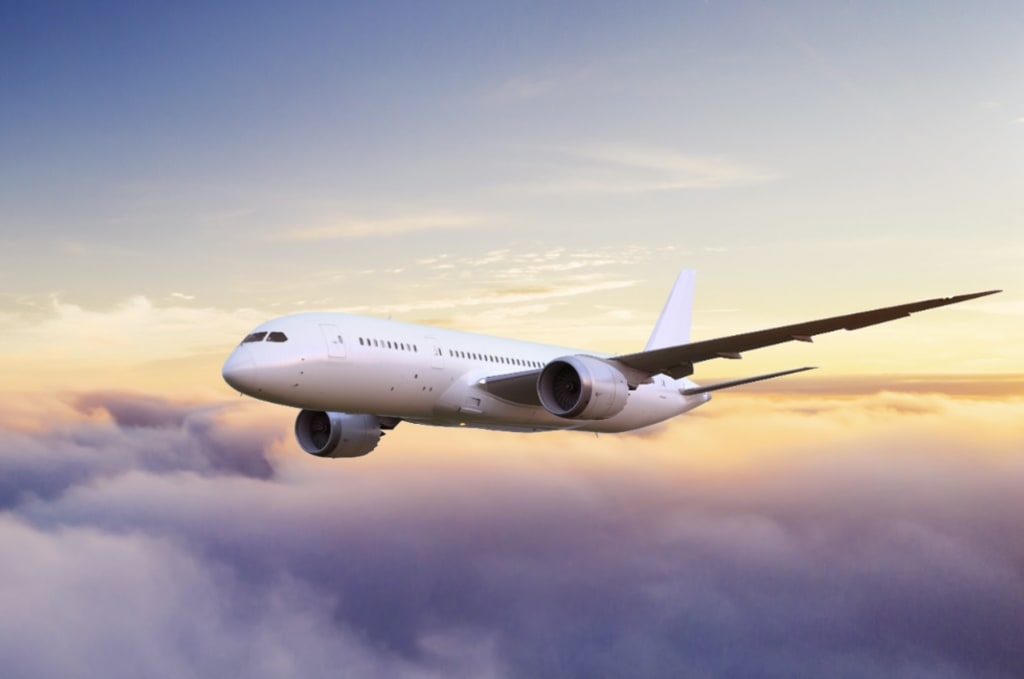
Future airplanes are poised to revolutionize air travel by being completely silent. Imagine standing on an airport control tower rooftop, witnessing a massive plane glide in for a landing. Instead of the usual roaring engines, all you hear is the whispering wind. This is the potential reality for electric airplanes, a groundbreaking innovation that promises quieter skies and reduced environmental impact.
In this future scenario, an enormous airplane approaches, silently whizzing over your head. The initial sound you hear is the gentle scraping of tires against the asphalt as it touches down. This remarkable quietness is a result of the aircraft's electric propulsion system. Unlike traditional planes that guzzle copious amounts of fuel and create deafening noise, electric airplanes are designed to operate efficiently without disturbing passersby or city dwellers below.
Engineers and aviation experts predict that fully electric airplanes might not become commonplace for several decades. Currently, the Dreamliner 787, a revolutionary aircraft that can accommodate up to 310 passengers while emitting zero pollution, remains a distant aspiration for designers.
To delve into the history of electric flight, let's rewind 140 years to 1883, when a pioneering French aviation enthusiast achieved the first-ever electric-powered flight. However, this early experiment faced challenges due to the heavy electric engine, which hindered long-distance flight and passenger capacity.
Fast-forward to the present, the aviation industry grapples with the persistent challenge of heavy batteries and engines. Conventional airplane fuel contains significantly more energy per pound than even the most advanced batteries available. The weight discrepancy poses a critical issue: to incorporate enough batteries for electric flight, designers would need to sacrifice essential components like seats, restrooms, and amenities. This compromises the plane's performance and range.
The breakthrough comes from reimagining aircraft design. Engineers have been retrofitting existing planes by replacing conventional engines with electric counterparts, significantly reducing weight and noise. Take the example of the Cessna 208b Caravan, a nine-seat passenger plane that has successfully transitioned to an electric engine and is undergoing safety certifications.
Another trailblazing model is the ES-19, a four-engine, all-electric airplane constructed with lightweight aluminum. Its reduced maintenance costs and cheaper electric power make it an economically viable option, especially for short distances of about 220 miles. This innovation could revolutionize regional travel and enable airports to be located closer to city centers, dramatically reducing travel times.
An even more ambitious creation is the Aviation Alice, a nine-seat aircraft built predominantly from composite materials and equipped with three engines. Its exceptional aerodynamics and efficient design allow it to cover distances of about 620 miles, promising impressive fuel efficiency and lower operating costs compared to traditional planes.
In the quest for sustainable aviation, it's worth noting that electric planes have their limitations. They're best suited for shorter distances, accounting for roughly half of all global flights. Electric planes could reshape travel dynamics on routes like New York to Washington DC or Detroit to Toronto, optimizing efficiency and minimizing emissions.
The environmental benefits of electric flight are undeniable. Current conventional airplanes collectively emit around 1 billion tons of CO2 annually. By integrating electric planes into the fleet, this environmental impact could be halved, leading to a substantial reduction in carbon emissions and improved air quality.
As the aviation industry continues its trajectory toward electric flight, numerous challenges remain, including battery technology advancements, range improvements, and regulatory adaptations. Nonetheless, the strides made so far showcase a promising future where air travel becomes more sustainable, quieter, and environmentally friendly. Electric planes have the potential to reshape the skies and redefine how we explore the world while prioritizing our planet's well-being.
Thank you for reading.
About the Creator
Keep reading
More stories from writers in Futurism and other communities.
About Binding Prometheus
I want to start actively advocating on behalf of my own work, and the most valuable part of my canon is, without a doubt, Binding Prometheus, the play I have been working on since 2019 and only finished in 2023 as part of my MA. The play itself is an amalgamation of a million different inspirations. On one end, it evokes the Ancient Greek myth-play, deriving its own title from the earliest extant work of Western drama we have, Aeschylus’s Prometheus Bound. On the other end, it borrows significantly from the sci-fi bulwarks from over the years, namely Mary Shelley’s Frankenstein and Karel Capek’s Rossum’s Universal Robots. The play could be an episode of Black Mirror, I fear. I don’t know. I’ve only ever seen one episode of Black Mirror.
By Steven Christopher McKnight25 days ago in Futurism
New Missions to Pluto: What Awaits Future Explorers
For decades, Pluto was a distant point of light at the edge of the Solar System—mysterious, poorly understood, and largely ignored. Even after its reclassification as a dwarf planet in 2006, Pluto never truly lost its scientific importance. On the contrary, the historic flyby of NASA’s New Horizons spacecraft in 2015 transformed Pluto from an abstract concept into a complex, dynamic world. Mountains of water ice, vast nitrogen glaciers, layered hazes, and signs of ongoing geological activity stunned scientists and raised a crucial question: was that brief encounter enough?
By Holianyk Ihor4 days ago in Futurism
The Duelist
The rays of a dying red sun flashed against the onrushing blade. The grey beards say the key to dueling lies in size, speed, reach, righteous fury, whatever the person in front of them pays them to say. Matteo knew better than any it was none of these and had an undefeated record on these sands to prove it.
By Matthew J. Frommabout 19 hours ago in Fiction



Comments (1)
great job what are you waiting for you can join my friends and read what I have just preperd for you