
From Mundane to Mind-Blowing: How AI is Rewriting Daily Life
The Current Impact of Artificial Intelligence and Its Evolution Toward a Super intelligent Future

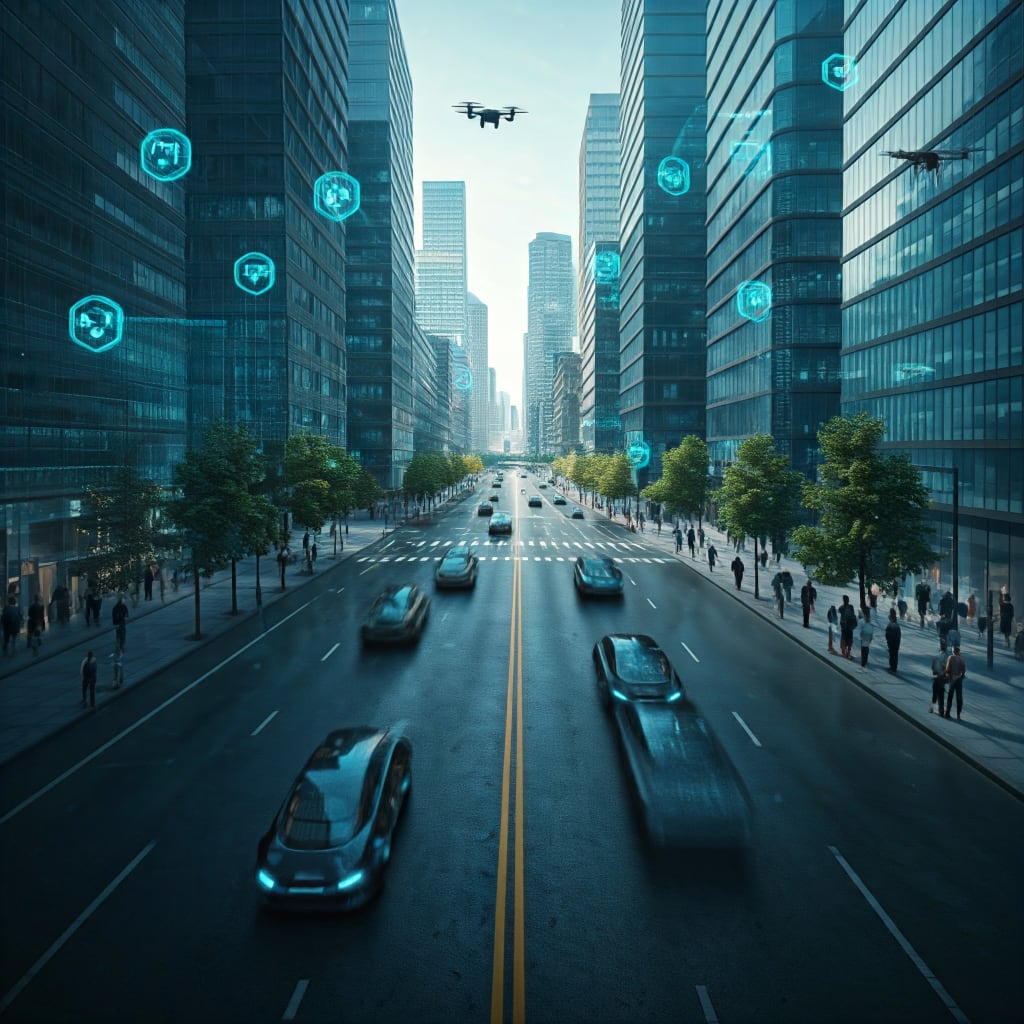
Artificial intelligence (AI) is becoming an integral part of our daily lives, influencing everything from how we work, communicate, and entertain ourselves to the way we receive healthcare, make financial decisions, and navigate the world. Its impact is profound, and its evolution promises to reshape the future even more dramatically.
AI in Everyday Life
1. Personal Assistants and Communication
Think about the last time you asked your phone for directions or used a virtual assistant to set a reminder or check the weather. AI-powered systems like Siri, Alexa, and Google Assistant have revolutionized the way we interact with technology. Natural Language Processing (NLP) allows these assistants to understand and respond to human language, making our interactions with machines more intuitive.
As AI progresses, these virtual assistants are getting smarter. They're becoming proactive, learning our routines and preferences, suggesting routes to avoid traffic, or reminding us to order groceries before we run out. Soon, they might handle even more complex tasks like managing our calendars, responding to emails on our behalf, or even making decisions based on our previous behavior.
2. Healthcare
AI is revolutionizing healthcare in ways that were once the stuff of science fiction. From predictive diagnostics to personalized treatment plans, AI's role in medicine is growing. Machine learning models can analyze vast amounts of medical data, allowing doctors to catch diseases like cancer earlier than ever before. In radiology, AI systems assist with image analysis, identifying anomalies that a human eye might miss.
AI-driven apps now provide virtual consultations, offering medical advice or even diagnosing conditions based on user inputs and symptoms. As the technology improves, we may see AI-powered robots assisting in surgeries, or even entirely autonomous systems performing procedures with greater precision than human surgeons.
AI’s capability to mine genetic data is leading to breakthroughs in personalized medicine, where treatments are tailored to an individual's genetic makeup, increasing the chances of success and reducing side effects.
3. Transportation
Self-driving cars, once a futuristic dream, are rapidly becoming a reality. AI plays a crucial role in enabling autonomous vehicles to perceive their environment, make decisions, and navigate safely. Companies like Tesla and Waymo are pioneering this technology, which could soon eliminate the need for human drivers entirely.
Beyond personal transportation, AI is also being used in logistics. Autonomous drones and robots are already delivering packages, optimizing routes, and making last-mile delivery more efficient. AI-driven systems manage supply chains, predict demand, and even reduce fuel consumption by optimizing routes for shipping trucks.
In the future, we could see entire cities re-engineered around AI-driven transportation systems that are safer, more efficient, and more sustainable than our current infrastructure.
4. Work and Productivity
In the workplace, AI is automating repetitive tasks, allowing humans to focus on more creative and strategic roles. For example, AI algorithms can process large amounts of data, perform basic analysis, and generate reports much faster than any human could. In customer service, chatbots are becoming more advanced, handling inquiries and resolving issues without the need for human intervention.
Creative industries are also seeing a shift. AI is being used to write articles, design graphics, and even compose music. Tools like OpenAI’s ChatGPT (the same technology that powers this conversation) and DALL-E can generate text and images, providing businesses and individuals with creative content at scale.
As AI continues to evolve, we might see a future where human-AI collaboration becomes the norm, with AI acting as an extension of our cognitive abilities, enhancing creativity and problem-solving.
5. Entertainment and Media
AI is also transforming entertainment. Streaming platforms like Netflix and Spotify use AI algorithms to recommend shows, movies, and music based on our preferences. These algorithms analyze user behavior, predicting what content we might enjoy, and ensuring that entertainment is personalized to our tastes.
In video games, AI is being used to create more immersive and realistic experiences. Non-playable characters (NPCs) are becoming more intelligent, reacting dynamically to player actions. AI-generated content is also on the rise in gaming, with algorithms designing levels, storylines, and even entire game worlds.
Looking ahead, AI could enable entirely new forms of entertainment, where stories, music, or artwork are created on-the-fly, tailored to the unique preferences of each individual user.
6. Education
AI-powered learning platforms are revolutionizing education by providing personalized learning experiences. Algorithms can assess a student’s strengths and weaknesses, offering tailored content and pacing to suit their needs. Platforms like Duolingo and Khan Academy are already using AI to adapt lessons in real-time, ensuring students stay engaged and challenged.
In the future, AI could become a personal tutor for every student, guiding them through their education, offering feedback, and helping them explore subjects in ways that traditional classroom settings can’t.
7. Smart Homes
AI-driven smart home technology is making everyday tasks easier. From controlling lights and appliances to managing security systems, AI allows us to automate and optimize our living spaces. Smart thermostats learn our routines and adjust temperatures for maximum comfort and efficiency. AI-powered home security systems can recognize faces and notify homeowners of potential threats.
As the Internet of Things (IoT) evolves, AI will seamlessly integrate into every aspect of our homes. Imagine a future where your house knows when you're coming home, preheats the oven, plays your favorite music, and adjusts the lighting to suit your mood—all automatically.
About the Creator
kingkart
The best things in life are really expensive. You can have me for $7 billion.
The Last Fortress
The Final Frontier of Privacy For centuries, the human mind has been the only place where true freedom existed. No matter how oppressive a regime was, or how invasive a technology became, your thoughts were yours alone. They were the "Last Fortress"—a sanctuary of private dreams, silent rebellions, and unspoken loves.
By Alex Sterling 8 days ago in Futurism
Microencapsulation Market Outlook: Controlled Release Technologies and Application Expansion Opportunities
According to IMARC Group's latest research publication, the global microencapsulation market size reached USD 11.3 Billion in 2024. Looking forward, IMARC Group expects the market to reach USD 22.1 Billion by 2033, exhibiting a growth rate (CAGR) of 7.38% during 2025-2033.
By James Whitman6 days ago in Futurism



Comments
There are no comments for this story
Be the first to respond and start the conversation.