
From Hobby to Weapon: How Cheap Drones Are Revolutionizing the Battlefield in Ukraine
Swarms of Death from Above: The Unsettling Future of Combat Technology

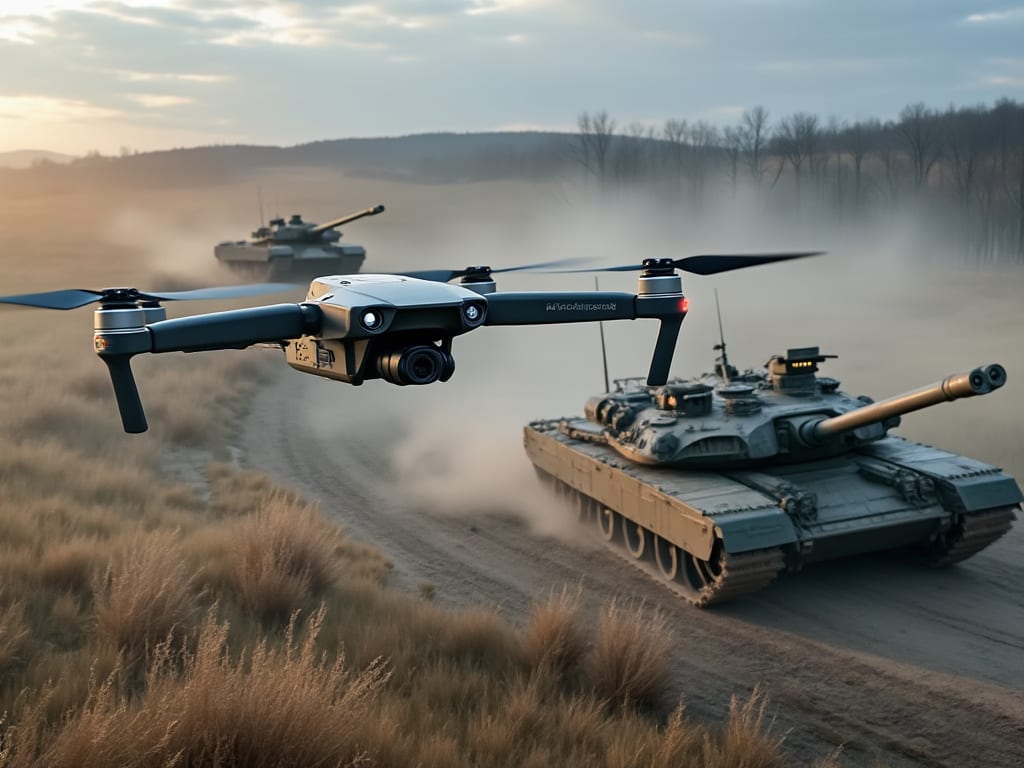
In recent years, the face of warfare has undergone a dramatic transformation, with drones emerging as a game-changing technology on the battlefield. A recent video highlighting the exploits of Ukraine's 79th Air Assault Brigade provides a stark illustration of this shift, showcasing how these unmanned aircraft are redefining military engagements in the ongoing conflict with Russia.
The footage, grainy and intense, depicts Ukrainian forces employing drones to devastating effect against Russian T-72B3M tanks. This scene, which could have been plucked from a futuristic war film, is now a reality on the frontlines of Eastern Europe. It serves as a powerful testament to the increasing role of unmanned aerial vehicles (UAVs) in modern combat scenarios.
Drones have rapidly become a cornerstone of Ukraine's defense strategy against the numerically superior Russian forces. Their appeal lies in their cost-effectiveness and versatility. Unlike traditional military hardware, which often comes with hefty price tags and logistical challenges, drones offer a more accessible and flexible option for armed forces. This is particularly crucial for Ukraine, which must maximize every resource in its arsenal to counter the Russian invasion.
The types of drones employed in this conflict span a wide spectrum. On one end, there are high-end military drones like the Turkish-made Bayraktar TB2. These sophisticated machines, capable of long-duration flights and carrying significant payloads, initially played a crucial role in Ukraine's resistance. However, their effectiveness waned as Russian forces adapted their air defenses to counter these larger, more conspicuous targets.
In response to this shift, Ukraine pivoted towards using smaller, commercial-grade drones. Popular models like the DJI Mavic, originally designed for civilian use, have been repurposed for military applications. These nimble quadcopters excel in reconnaissance roles, providing crucial intelligence on enemy movements and positions. Their small size and low cost make them ideal for widespread deployment, allowing Ukrainian forces to maintain constant surveillance over vast stretches of the frontline.
Perhaps the most innovative development in this drone war has been the emergence of "kamikaze" drones. These are essentially flying bombs, designed for one-way missions to strike high-value targets. Often cobbled together from commercially available components, these drones represent a particularly cost-effective method of engaging enemy armor and fortifications. For instance, a $400 kamikaze drone can potentially neutralize a multi-million dollar tank, dramatically altering the economic calculus of warfare.
The proliferation of drones on the battlefield has not gone unchallenged. Russian forces have been developing and deploying various countermeasures to mitigate the threat posed by these unmanned aircraft. Some of these defenses are surprisingly low-tech, such as the use of anti-drone netting to protect key installations. Other approaches leverage advanced electronic warfare capabilities to jam the signals controlling enemy drones, forcing them to crash or lose their effectiveness.
This evolving cat-and-mouse game between drone operators and anti-drone defenses has spurred further technological advancements. One particularly significant development is the integration of artificial intelligence (AI) into drone systems. Companies like the Ukrainian startup Saker are at the forefront of this trend, developing drones capable of autonomously identifying and engaging targets.
The implications of AI-powered drones are profound and potentially unsettling. These systems could theoretically operate without constant human oversight, making split-second decisions about target acquisition and engagement. While this might enhance military effectiveness, it also raises serious ethical questions about the role of human judgment in lethal decision-making processes.
The potential for autonomous drone swarms represents another leap forward in military technology. Imagine hundreds or even thousands of small, AI-guided drones operating in concert, overwhelming enemy defenses through sheer numbers. This scenario, once the stuff of science fiction, is rapidly becoming a plausible reality.
Companies like Anduril, founded by tech entrepreneur Palmer Luckey, are pushing the boundaries of what's possible in this domain. Their Lattice operating system aims to coordinate vast numbers of autonomous drones and other military assets, creating a unified and highly responsive combat network. This level of integration could dramatically amplify the destructive potential of drone technology.
However, the rise of drone warfare is not without its critics and concerns. The lowered barriers to entry for this technology mean that non-state actors, including terrorist groups and criminal organizations, could potentially acquire and deploy lethal drone capabilities. This democratization of air power poses new challenges for security forces worldwide.
Moreover, the increasing autonomy of these systems raises profound ethical questions. As AI takes on a greater role in target identification and engagement, we must grapple with the implications of removing human decision-making from the loop. The prospect of machines making life-or-death choices on the battlefield is a sobering one, challenging our traditional notions of military ethics and accountability.
The ongoing conflict in Ukraine serves as a real-world laboratory for these emerging technologies. The lessons learned here will likely shape military doctrines and strategies for years to come. As drones become more sophisticated, numerous, and autonomous, they have the potential to fundamentally alter the nature of warfare.
In conclusion, the drone revolution in modern warfare is well underway. From the battlefields of Eastern Europe to the research labs of Silicon Valley, unmanned aircraft are reshaping our understanding of combat. As these technologies continue to evolve, society must grapple with their implications, balancing the potential military advantages against the ethical and security concerns they raise. The future of warfare is here, and it flies on silent wings, guided by silicon brains.
About the Creator
Keep reading
More stories from Next Koding and writers in Futurism and other communities.
Linus Torvalds Unveils the Seismic Shift in Programming's Future with AI
In a world where artificial intelligence is rapidly transforming industries, the realm of programming stands at a crossroads. Linus Torvalds, the legendary creator of Linux and Git, has shared his thoughts on the intersection of AI and coding, offering a perspective that could reshape our understanding of software development's future.
By Next Kodingabout a year ago in Futurism
About Binding Prometheus
I want to start actively advocating on behalf of my own work, and the most valuable part of my canon is, without a doubt, Binding Prometheus, the play I have been working on since 2019 and only finished in 2023 as part of my MA. The play itself is an amalgamation of a million different inspirations. On one end, it evokes the Ancient Greek myth-play, deriving its own title from the earliest extant work of Western drama we have, Aeschylus’s Prometheus Bound. On the other end, it borrows significantly from the sci-fi bulwarks from over the years, namely Mary Shelley’s Frankenstein and Karel Capek’s Rossum’s Universal Robots. The play could be an episode of Black Mirror, I fear. I don’t know. I’ve only ever seen one episode of Black Mirror.
By Steven Christopher McKnight11 days ago in Futurism
Plant Based Food Market Set to Soar to USD 32.2 Billion Driven by Digital Shift and Diverse Content
🌱 Plant-Based Food Market – Overview The plant-based food market comprises foods and beverages made primarily from plants (vegetables, legumes, grains, nuts, seeds, fruits) that serve as alternatives to conventional animal-derived products. This includes plant-based meat substitutes, dairy alternatives (milk, yogurt, cheese), eggs, ready-to-eat meals, snacks, and beverages formulated to meet the growing demand for healthier and more sustainable diets. The shift toward plant-based eating reflects rising consumer consciousness around health, environment, animal welfare, and ethical consumption.
By James Smithabout 4 hours ago in Futurism


Comments (1)
When they gain autonomy, woe to us.