
Fiber Cement Market in Saudi Arabia: Roofing & Cladding Demand, Cost Efficiency & Growth Drivers
How durable construction materials, fire- and weather-resistant building solutions, and rising infrastructure and housing demand are driving product adoption, sustainability, and market growth across the Saudi Arabia fiber cement market.


Momentum in Saudi Arabia's fiber cement sector reflects the Kingdom's larger shift toward resilient, climate-appropriate construction materials. Rising construction activity fueled by Vision 2030, increased demand for durable and moisture-resistant products, and strong sustainability commitments are driving this market forward. Substantial infrastructure investments, particularly in the giga-projects and residential sectors, continue to boost Saudi Arabia's fiber cement market share—especially in facade and partition wall applications across commercial and residential builds. According to IMARC Group's latest data, the Saudi Arabia fiber cement market size was valued at USD 171.3 Million in 2025. Looking forward, IMARC Group estimates the market to reach USD 264.5 Million by 2034, exhibiting a growth rate of 4.95% during 2026-2034.
Saudi Arabia Fiber Cement Market Growth Drivers:
- Surging Infrastructure Activity Under Vision 2030
Saudi Arabia's Vision 2030 strategy has unleashed a wave of large-scale construction projects including NEOM, The Red Sea Project, and Qiddiya. These mega-developments require high-performance building materials that can withstand extreme temperature swings and moisture exposure. Government capital expenditure for transportation and public works reached around USD 80 billion, creating sustained demand for fiber cement panels in structural facades and partition systems. The construction sector grew by 4% year-on-year in early 2025, with cement sales rising 21% to 13.1 million tonnes in the second quarter alone. Fiber cement's fire resistance and structural integrity make it ideal for these flagship projects, where quality and longevity are non-negotiable.
- Residential Housing Expansion and Homeownership Targets
The Kingdom aims to achieve 70% homeownership by 2030, backed by programs like Sakani and the National Housing Company's large-scale developments. Targeting 600,000 new homes over the next few years, these initiatives are driving consistent consumption of building materials across Riyadh, Jeddah, and Dammam. Residential applications now account for over half of total fiber cement usage, as builders turn to moisture-proof and termite-resistant boards for interior partitions, ceiling panels, and exterior cladding. The urbanization rate has reached 84%, intensifying the need for affordable yet durable housing stock. Fiber cement fits this demand perfectly, offering lower maintenance costs and better performance than traditional alternatives in the Kingdom's variable climate.
Download the Sample Report to Understand Market Trends and Outlook
Saudi Arabia Fiber Cement Market Trends:
- Product Innovation with Advanced Compliance Standards
Manufacturers are introducing fiber cement boards that meet rigorous international specifications like ASTM C-1186, enhancing both construction flexibility and material reliability. These products are designed for dual-purpose use—interior partitions and external facades—offering builders a single solution that simplifies procurement and installation. Companies are investing in smooth-finish textures and standardized dimensions that align with modern architectural requirements. The focus on certified, fire-resistant, and moisture-proof solutions is helping contractors meet Saudi Building Code mandates while reducing project delays. This shift toward compliance-ready products is driving market accessibility, as local producers expand capacity to serve both mega-projects and smaller residential builds across the Kingdom's diverse regions.
- Adoption of Green Building Certifications and Procurement Standards
LEED certification has become a key differentiator in Saudi Arabia's construction sector, with the Kingdom holding the highest concentration of LEED buildings in the Middle East. Projects like Aramco's King Salman Energy Park (SPARK) have set benchmarks by becoming the first industrial city globally to achieve LEED certification. Government and corporate procurement increasingly favors materials with verified environmental credentials, pushing fiber cement suppliers to adopt certified green cement and recyclable inputs. The introduction of Mostadam, Saudi Arabia's localized green building framework, further reinforces this trend by establishing climate-appropriate standards. Builders are aligning their material choices with sustainability goals to win contracts on public infrastructure and high-profile commercial developments.
- Regional Production Capacity Expansion and Supply Chain Optimization
Local manufacturers are scaling up production to meet surging demand from Vision 2030 projects, reducing reliance on imports and improving delivery timelines. Companies are optimizing logistics and dispatch operations to serve high-demand regions like Tabuk, Riyadh, and Makkah efficiently. The focus is on bulk supply contracts linked to long-term infrastructure upgrades—roads, utilities, and public housing—where fiber cement panels provide cost-effective durability. Strategic partnerships for waste-derived fuels and digital plant upgrades are enhancing operational efficiency while cutting carbon emissions. This trend toward localized, sustainable production is helping Saudi Arabia emerge as a regional hub for fiber cement manufacturing, supporting both domestic construction and potential export opportunities to neighboring markets.
Recent News and Developments in Saudi Arabia Fiber Cement Market
- May 2025: Mada Gypsum Company introduced its ASTM C-1186 compliant fiber cement boards in Saudi Arabia. The product enhanced construction flexibility and durability, designed for both interior and exterior use, strengthening the market with fire-resistant and moisture-proof building solutions.
Note: If you require specific details, data, or insights that are not currently included in the scope of this report, we are happy to accommodate your request. As part of our customization service, we will gather and provide the additional information you need, tailored to your specific requirements. Please let us know your exact needs, and we will ensure the report is updated accordingly to meet your expectations.
About the Creator
Faisal Al-Harbi
Market research professional based in Saudi Arabia (KSA), focused on industry trends, market growth, and economic insights.
Writing data-driven articles on Saudi markets, business outlook, and Vision 2030–driven sectors.
Keep reading
More stories from Faisal Al-Harbi and writers in Futurism and other communities.
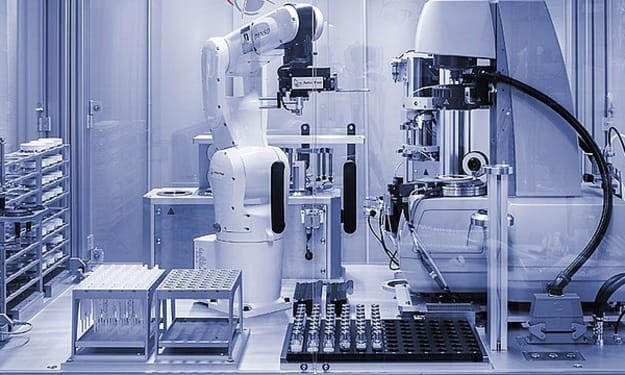
Saudi Arabia Laboratory Automation Market: Digital Labs, Workflow Efficiency & Growth Outlook
Growing demand for high-throughput diagnostics, rising healthcare infrastructure investments, and government initiatives supporting digital transformation are driving laboratory automation adoption across Saudi Arabia. According to IMARC Group’s latest research, the Saudi Arabia laboratory automation market size reached USD 70.4 Million in 2025. Looking forward, IMARC Group expects the market to reach USD 117.1 Million by 2034, exhibiting a growth rate of 5.81% during 2026-2034.
By Faisal Al-Harbia day ago in Futurism
Healthy Snacks Market Trends: Functional Ingredients, Clean Label Demand & Forecast to 2034
Rising health awareness, busy lifestyles, and preference for convenient, nutritious foods are driving healthy snack demand, supported by clean-label trends, product innovation, and expanding retail and online distribution channels. According to IMARC Group’s latest data, The global healthy snacks market size was valued at USD 95.8 Billion in 2025. Looking forward, IMARC Group estimates the market to reach USD 148.4 Billion by 2034, exhibiting a CAGR of 4.98% from 2026-2034. North America currently dominates the market, holding a market share of over 39.6% in 2025.
By Suhaira Yusuf7 days ago in Futurism
GCC Textile Market Analysis: Industry Overview, Key Players & Future Outlook
According to IMARC Group's latest research publication, GCC textile market size reached USD 20.9 Billion in 2025. The market is projected to reach USD 34.2 Billion by 2034, exhibiting a growth rate of 5.64% during 2026-2034.
By Abhay Rajput6 days ago in Futurism
The Lesions of Devotion
Every day I set myself down on the freshly cut lawn and strip myself bare. I take my guitar and finger the frets and pick at the strings, listening for dissonance. My life is dissonance. I twist the tuning pegs until each string sounds bright. Then I kneel, calves pointing behind me, kneecaps facing forward. All exposed to the breeze. I close my eyes and play the melody.
By Paul Stewart4 days ago in Fiction


Comments
There are no comments for this story
Be the first to respond and start the conversation.