
Ferroelectric RAM Market Outlook: High-Speed Memory Innovation and Growth Opportunities
The ferroelectric RAM (FeRAM) market is gaining momentum, driven by growing demand for high-speed, low-power, and non-volatile memory solutions in advanced electronics.

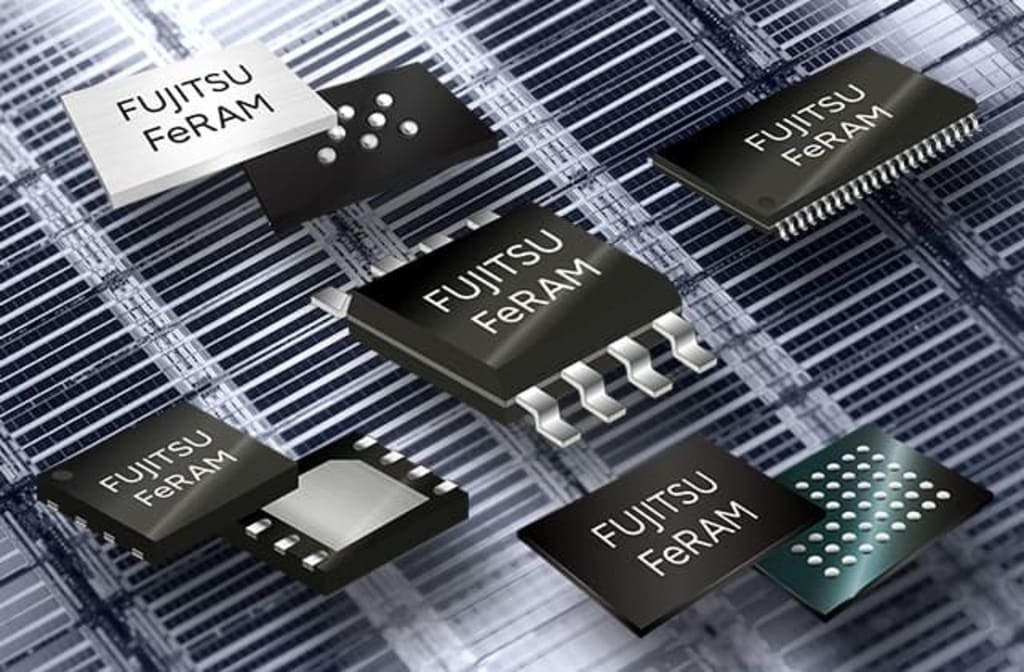
Rising demand for fast, non-volatile memory with low power consumption is driving growth in the ferroelectric RAM market. Increasing use in IoT devices, automotive electronics, and industrial automation supports adoption. According to IMARC Group's latest research publication, The global ferroelectric RAM market size reached USD 333.7 Million in 2024. Looking forward, IMARC Group expects the market to reach USD 434.2 Million by 2033, exhibiting a growth rate (CAGR) of 2.82% during 2025-2033.
How AI is Reshaping the Future of Ferroelectric RAM Market
- AI-Powered In-Memory Computing Architectures: Ferroelectric capacitors enable neural network weight storage in compute-in-memory systems, achieving over 90% accuracy on machine learning tasks while eliminating power-hungry transimpedance amplifiers and reducing energy consumption by more than an order of magnitude.
- Machine Learning Accelerators for Edge Devices: Unified memristor-ferroelectric memory stacks support on-chip training and inference for AI systems, combining analog storage capabilities with rapid low-energy updates ideal for autonomous learning in smartphones, autonomous vehicles, and security cameras with energy as low as 0.24 femtojoules per operation.
- Neuromorphic Computing Systems: AI-driven ferroelectric field-effect transistor synapses demonstrate exceptional potentiation and depression cycles, enabling convolutional neural networks to achieve learning accuracy above 90% across wide temperature bands from 20-200°C, crucial for applications in harsh environments.

Ferroelectric RAM Industry Overview:
Smart meter deployment is accelerating ferroelectric RAM adoption for battery-powered wireless sensors, where unlimited write endurance and instant data persistence minimize maintenance costs. Infineon's radiation-hardened 1 and 2 Mb parallel interface devices offer 120-year data retention at 85°C, addressing utility infrastructure needs. Automotive applications increasingly rely on FeRAM for advanced driver assistance systems and engine control units requiring dependable memory in extreme temperatures and harsh conditions.
Ferroelectric RAM Market Trends & Drivers
The automotive electronics sector drives substantial demand for ferroelectric RAM solutions capable of withstanding severe operating conditions while maintaining data integrity. Modern vehicles integrate numerous electronic control units for driver assistance, infotainment, and safety systems requiring memory with fast access times and non-volatile characteristics. Kioxia's universal flash storage devices for automotive applications demonstrate industry momentum toward reliable embedded memory. FeRAM's ability to operate across wide temperature ranges without performance degradation makes it essential for mission-critical automotive functions where conventional Flash and EEPROM technologies struggle with endurance limitations and slower write speeds.
Industrial automation and IoT device proliferation creates expanding opportunities for ferroelectric RAM in applications demanding energy-efficient, high-endurance memory solutions. Smart factories deploy thousands of sensors and controllers requiring frequent data logging without power loss concerns. FeRAM's combination of DRAM-like speed with Flash-like non-volatility enables continuous operation in industrial control systems, medical devices, and wearable electronics where battery life and reliability are paramount. Asia Pacific manufacturing hubs, particularly Japan and South Korea, lead adoption through government initiatives supporting semiconductor technology advancement, while European markets benefit from stringent industrial standards favoring deterministic write operations in metering and grid infrastructure.
Material science breakthroughs in hafnium oxide-based ferroelectric layers enable FeRAM integration into advanced CMOS nodes, overcoming previous scalability challenges. Ferroelectric Memory Company's partnership with Neumonda targets gigabit-scale production using doped HfO2 materials compatible with existing semiconductor fabrication lines. This CMOS compatibility reduces integration barriers for chipmakers while allowing sub-10nm non-volatile memories in logic processes. Research institutions and foundry vendors collaborate on 3D ferroelectric memory stacks promising increased bit density for compact AI hardware. IEEE Roadmap Systems technical reports highlighting FeRAM alongside MRAM and ReRAM validate the technology's position in next-generation mass data storage architectures supporting demanding AI workloads.
Leading Companies Operating in the Global Ferroelectric RAM Industry:
- Fujitsu Limited (Furukawa Group)
- Infineon Technologies AG
- International Business Machines Corporation
- LAPIS Semiconductor Co. Ltd. (Rohm Semiconductor)
- Samsung Electronics Co. Ltd.
- Texas Instruments Incorporated
- Toshiba Corporation
Ferroelectric RAM Market Report Segmentation:
By Type:
- Serial Memory
- Parallel Memory
- Others
Parallel memory represents the largest class, as it enables simultaneous access to multiple memory cells, significantly improving read and write efficiency for data-intensive applications.
By Application:
- Mass Storage
- Embedded Storage
- Others
Mass storage dominates based on application, driven by requirements for rapid connectivity and non-volatile memory solutions in SSDs and memory cards.
By End Use:
- Security Systems
- Energy Meters
- Smart Cards
- Consumer Electronics
- Wearable Electronics
- Automotive Electronics
- Others
Based on end use, the market has been segmented into security systems, energy meters, smart cards, consumer electronics, wearable electronics, automotive electronics, and others.
Regional Insights:
- North America (United States, Canada)
- Asia Pacific (China, Japan, India, South Korea, Australia, Indonesia, Others)
- Europe (Germany, France, United Kingdom, Italy, Spain, Russia, Others)
- Latin America (Brazil, Mexico, Others)
- Middle East and Africa
North America exhibits a clear dominance in the ferroelectric RAM market due to significant semiconductor technology investments and growing demand for advanced memory solutions across diverse industries.
Recent News and Developments in Ferroelectric RAM Market
- June 2024: Infineon Technologies launched the industry's first radiation-hardened 1 and 2 Mb parallel interface ferroelectric RAM memory devices. These devices offer exceptional reliability and endurance, featuring up to 120 years of data retention at 85 degrees Celsius, specifically designed for space, automotive, and industrial applications requiring extreme durability.
- May 2024: IEEE Roadmap and Systems (IRDS) released a comprehensive technical roadmap report on mass data storage technologies. The report covered detailed roadmaps for non-volatile memory technologies including magnetic random-access memory (MRAM), resistive RAM (ReRAM), and ferroelectric RAM (FeRAM), validating FeRAM's strategic importance in next-generation storage architectures.
- April 2025: Ferroelectric Memory Company (FMC) announced a strategic partnership with Neumonda to produce DRAM+ non-volatile memory technology in Germany. This collaboration focuses on utilizing hafnium oxide (HfO2)-based ferroelectric layers to scale FeRAM production to gigabit levels, enabling near-DRAM performance for demanding AI workloads.
- January 2024: Kioxia Corporation announced sampling of the industry's first universal flash storage (UFS) Ver. 4.0 embedded flash memory devices designed specifically for automotive applications. This development reflects broader industry trends toward advanced memory solutions supporting autonomous driving and connected vehicle technologies where FeRAM complements high-performance storage requirements.
- July 2024: The South Korean government announced a comprehensive initiative to support development of advanced memory technologies, including ferroelectric RAM, as part of a broader strategy to strengthen the country's semiconductor sector. The initiative provides substantial funding for research and development alongside incentives for companies investing in next-generation memory solutions.
Note: If you require specific details, data, or insights that are not currently included in the scope of this report, we are happy to accommodate your request. As part of our customization service, we will gather and provide the additional information you need, tailored to your specific requirements. Please let us know your exact needs, and we will ensure the report is updated accordingly to meet your expectations.
About the Creator
James Whitman
With years of experience in analyzing global industries, I specialize in delivering actionable market insights that help businesses stay ahead in an ever-changing landscape.
Keep reading
More stories from James Whitman and writers in Futurism and other communities.
Diethylene Glycol (DEG) Market Outlook: Industrial Demand and Growth Opportunities
Rising demand from polyester resins, antifreeze, plasticizers, and industrial solvents is driving growth in the diethylene glycol (DEG) market. Expansion of construction, automotive, and packaging industries supports consumption. According to IMARC Group's latest research publication, The global diethylene glycol (DEG) market size was valued at 3.38 Million Tons in 2024. Looking forward, IMARC Group estimates the market to reach 4.74 Million Tons by 2033, exhibiting a CAGR of 3.8% from 2025-2033.
By James Whitmana day ago in Futurism
AI: Power That Demands Responsibility. Are We Ready for the Side Effects? 🤖⚠️
Artificial intelligence is a powerful tool, but its effectiveness depends on one fundamental principle: Responsible AI. This is not just a trendy phrase, but a set of critical practices — from eliminating biases in data to rigorous monitoring, verification, and transparency in AI systems. Responsible AI aims to ensure that technology serves humanity without infringing on privacy, dignity, or safety.
By Piotr Nowaka day ago in Futurism
GCC Home Decor Market Analysis: Industry Overview, Key Players & Future Outlook
According to IMARC Group's latest research publication, GCC home decor market size reached USD 14,946 Million in 2024. The market is projected to reach USD 22,530 Million by 2033, exhibiting a growth rate (CAGR) of 4.7% during 2025-2033.
By Abhay Rajput5 days ago in Futurism



Comments
There are no comments for this story
Be the first to respond and start the conversation.