
Exploring the Ethical Implications of Artificial Intelligence in Healthcare
Navigating the Complex Landscape: Ethical Considerations and Guidelines


Healthcare is just one of the sectors where artificial intelligence (AI) has brought about a revolution. Diagnostics, treatment, and patient care have all been improved thanks to the application of AI technologies in the medical field. The ethical ramifications of AI use must be carefully considered, though, as the technology becomes more commonplace in the healthcare industry. The use of artificial intelligence in healthcare raises a number of ethical issues, and this article explores solutions. It also examines ways to ensure that AI technologies are developed and used in an ethical manner.
1. Introduction
In recent years, the rapid advancement of AI in healthcare has showcased its potential to transform the industry. AI refers to the development of computer systems capable of performing tasks that typically require human intelligence, such as analyzing complex medical data, making predictions, and providing decision support. While AI offers promising benefits, it also raises ethical questions that need to be addressed.
2. Understanding Artificial Intelligence (AI) in Healthcare
It is crucial to comprehend AI in the context of healthcare before delving into the ethical ramifications. The study of intelligent machines that can mimic human behavior and intelligence is known as artificial intelligence. It is a subfield of computer science. AI technologies are used in a variety of healthcare applications, such as image recognition, robotics, machine learning, and natural language processing.
3. Benefits of Artificial Intelligence in Healthcare
AI holds tremendous potential to revolutionize healthcare by improving diagnostics, enhancing efficiency, and enabling proactive patient care. Some of the key benefits of AI in healthcare include:
3.1 Improved Diagnostics and Treatment
AI-powered diagnostic systems can analyze vast amounts of medical data, including imaging scans, patient records, and genetic information, to provide accurate and timely diagnoses. This capability can help healthcare professionals make more informed decisions and detect diseases at early stages, increasing the chances of successful treatment.
3.2 Enhanced Efficiency and Patient Care
By automating repetitive tasks and streamlining administrative processes, AI can reduce the burden on healthcare staff, allowing them to focus more on patient care. Intelligent virtual assistants can also enhance patient engagement by providing personalized health recommendations, medication reminders, and answering common healthcare queries.
3.3 Predictive Analytics and Disease Prevention
AI algorithms can analyze patient data to identify patterns, risk factors, and early warning signs of diseases. This enables proactive interventions, such as personalized preventive measures and timely interventions, to reduce the likelihood of disease progression.
4. Ethical Concerns in the Use of Artificial Intelligence in Healthcare
As AI becomes more pervasive in healthcare, several ethical concerns come along with its integration. These ethical concerns must be addressed to ensure that AI in healthcare operates within appropriate boundaries and safeguards. The following are some of the key ethical concerns associated with the use of artificial intelligence in healthcare:
4.1 Privacy and Data Security
The use of AI in healthcare requires the collection and analysis of vast amounts of sensitive patient data. Ensuring the privacy and security of this data is paramount to maintain patient trust. Stricter regulations and robust data governance frameworks should be in place to protect patient confidentiality and prevent unauthorized access or data breaches.
4.2 Bias and Discrimination
AI algorithms are only as unbiased as the data they are trained on. If the data used for training contains biases, it can lead to biased outcomes and discrimination. It is crucial to identify and mitigate biases in AI systems to ensure fair and equitable healthcare delivery to all individuals, regardless of their race, gender, or socioeconomic background.
4.3 Trust and Accountability
Building trust in AI-driven healthcare systems is essential for widespread adoption. Transparency and explain-ability of AI algorithms and their decision-making processes are crucial for healthcare professionals and patients to understand how AI-based recommendations are generated. Establishing accountability frameworks to address any potential harm caused by AI systems is also essential.
4.4 Job Displacement and Workforce Impact
As AI automation advances, concerns arise regarding the potential displacement of healthcare workers. It is essential to strike a balance between the benefits of AI automation and preserving human involvement and expertise in patient care. Upskilling healthcare professionals and reimagining their roles in an AI-enabled healthcare system can help address these concerns.
5. Ensuring Ethical AI in Healthcare
To mitigate the ethical concerns associated with AI in healthcare, specific measures must be implemented. The following strategies can help ensure the ethical development and deployment of AI technologies in healthcare:
5.1 Transparency and Explain-ability
AI algorithms should be transparent and provide explanations for their recommendations or decisions. This transparency allows healthcare professionals and patients to understand the rationale behind AI-generated outcomes and build trust in the system.
5.2 Robust Data Governance and Privacy Measures
Stricter regulations and guidelines for data governance and privacy should be in place to protect patient data. This includes informed consent procedures, data anonymization techniques, and secure storage and transmission of data.
5.3 Fairness and Bias Mitigation
AI algorithms must be rigorously evaluated for biases and discriminatory outcomes. Techniques like debiasing algorithms, diverse and representative training data, and continuous monitoring can help mitigate these concerns and ensure fair treatment for all patients.
5.4 Human Oversight and Control
Human oversight and control should be incorporated into AI systems to avoid overreliance and potential errors. Healthcare professionals should have the ability to review, validate, or override AI-generated recommendations based on their expertise and patient context.
6. The Role of Regulations and Guidelines
Regulatory bodies play a crucial role in ensuring the ethical use of AI in healthcare. Governments and organizations should establish clear guidelines and standards to govern the development, deployment, and monitoring of AI technologies in healthcare. These guidelines should address privacy, fairness, transparency, and accountability aspects of AI applications.
7. Ethical Decision-Making in AI-Driven Healthcare
Ethical decision-making frameworks need to be developed to guide healthcare professionals in navigating the complexities of AI-driven healthcare. Balancing patient autonomy, beneficence, and justice principles is essential. Informed consent procedures, patient empowerment, and collaborative decision-making can help ensure ethical AI practices.
8. Future Perspectives and Challenges
As AI continues to advance in healthcare, ongoing efforts are required to address emerging ethical challenges. Advancing ethical frameworks specific to AI, providing ethical education and training for healthcare professionals, and fostering a culture of ethical AI adoption and implementation are critical steps in the journey toward responsible and beneficial AI in healthcare.
9. Conclusion
Artificial intelligence has the potential to revolutionize healthcare by improving diagnostics, enhancing efficiency, and enabling proactive patient care. However, its integration raises ethical concerns that must be addressed to ensure its responsible and beneficial use. Privacy and data security, bias and discrimination, trust and accountability, and job displacement are some of the key ethical considerations in AI-driven healthcare.
To ensure ethical AI in healthcare, transparency and explain-ability of AI algorithms, robust data governance and privacy measures, fairness and bias mitigation, and human oversight and control are essential. Regulations and guidelines play a vital role in setting standards and addressing ethical concerns. Ethical decision-making frameworks should guide healthcare professionals in navigating the complexities of AI-driven healthcare.
Future perspectives involve advancing ethical frameworks, providing ethical education and training, and fostering a culture of responsible AI adoption. It is crucial to strike a balance between the benefits of AI automation and preserving human involvement and expertise in patient care.
In conclusion, exploring the ethical implications of artificial intelligence in healthcare is crucial for harnessing the potential of AI while upholding ethical principles and safeguarding patient well-being. By addressing the ethical concerns associated with AI in healthcare, we can ensure that AI technologies are developed and implemented in a manner that benefits patients, healthcare professionals, and society as a whole.
10. FAQs (Frequently Asked Questions)
Q: Can artificial intelligence replace healthcare professionals?
A: While AI can assist healthcare professionals, it is unlikely to replace them entirely. AI technology works best when combined with human expertise and oversight.
Q: How can biases in AI algorithms be mitigated?
A: Mitigating biases in AI algorithms requires diverse and representative training data, rigorous evaluation, and continuous monitoring to identify and address any biased outcomes.
Q: What role do patients play in AI-driven healthcare?
A: In AI-driven healthcare, patients play a crucial role in decision-making and must be empowered with information, informed consent, and the ability to participate in collaborative decision-making processes.
Q: What steps can organizations take to ensure ethical AI in healthcare?
A: Organizations can ensure ethical AI in healthcare by implementing transparency, robust data governance, fairness evaluation, and providing human oversight and control in AI systems.
Q: How can healthcare professionals adapt to the integration of AI?
A: Healthcare professionals can adapt to AI integration by upskilling themselves, embracing new roles that leverage AI capabilities, and maintaining a patient-centered approach in healthcare delivery.
About the Creator
Aditi
I Love to Write, I hope you love to read
Intraocular Lens Market Outlook: Vision Correction Innovation and Ophthalmic Care Growth Opportunities
According to IMARC Group's latest research publication, The global intraocular lens market size reached USD 4.6 Billion in 2025. Looking forward, IMARC Group expects the market to reach USD 6.7 Billion by 2034, exhibiting a growth rate (CAGR) of 4.14% during 2026-2034
By James Whitmana day ago in Futurism
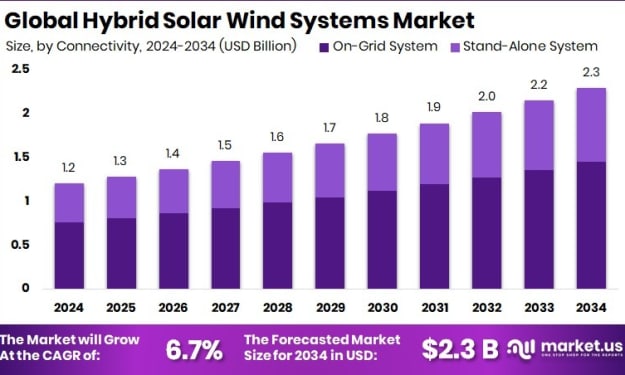
Hybrid Solar Wind Systems Market to Reach USD 2.3 Billion by 2034
The Global Hybrid Solar Wind Systems Market, valued at USD 1.2 billion in 2024, is projected to reach USD 2.3 billion by 2034, growing at a CAGR of 6.7% from 2025 to 2034. The Asia Pacific region led the market in 2024, holding a 43.8% share worth approximately USD 0.5 billion.
By Hayden Kulas6 days ago in Futurism


Comments
There are no comments for this story
Be the first to respond and start the conversation.