
Exploring the Benefits and Challenges of Artificial Intelligence
An In-Depth Look at the Potential of AI to Revolutionize Society and the Need for Ethical Considerations

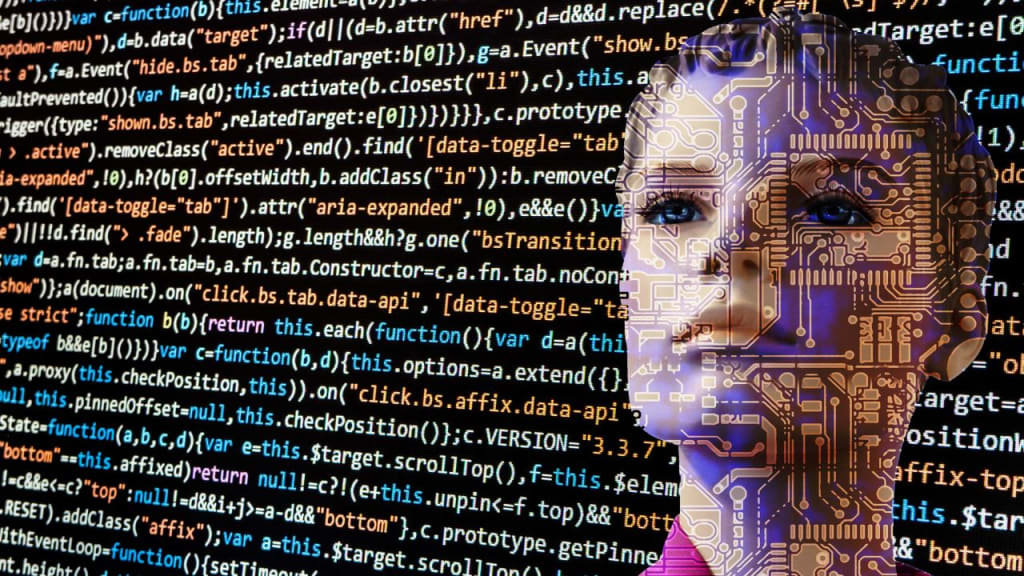
Artificial Intelligence (AI) has been a topic of great interest for decades now, and with good reason. The advancements in this field have the potential to revolutionize the way we live and work. From self-driving cars to virtual personal assistants, AI is already making a significant impact in our daily lives. However, despite its many benefits, there are also several concerns that must be addressed to ensure that AI is developed and used in a responsible and ethical manner.
At its core, AI refers to the development of computer systems that can perform tasks that typically require human intelligence, such as visual perception, speech recognition, decision-making, and language translation. This is achieved through machine learning, which involves feeding large amounts of data into algorithms and allowing them to learn and make predictions on their own. The goal of AI is to create systems that can think and reason like humans, allowing them to perform tasks that are beyond the capabilities of traditional computer systems.
One of the most exciting applications of AI is in the area of robotics. Robots equipped with AI can perform tasks that are dangerous or difficult for humans, such as exploring other planets or handling hazardous materials. They can also work alongside humans to increase efficiency and productivity in industries such as manufacturing and logistics. For example, AI-powered robots can be programmed to work 24/7 without taking breaks, leading to increased output and lower costs for companies.
Another area where AI is making waves is in the field of healthcare. AI algorithms can analyze vast amounts of medical data to identify patterns and make more accurate diagnoses. This has the potential to greatly improve the speed and accuracy of medical treatments, leading to better patient outcomes. For instance, AI-powered systems can assist doctors in diagnosing diseases by analyzing images and identifying patterns that may be missed by human eyes. Additionally, AI algorithms can help researchers in discovering new drugs and treatments by analyzing vast amounts of biological data.
However, the rapid development of AI also raises some serious concerns. One of the main concerns is the potential for AI to replace human jobs, particularly in industries such as customer service and data analysis. There are also concerns about the ethics of AI, such as the potential for biased algorithms and the use of AI for malicious purposes. For example, there have been instances where AI algorithms have been found to be biased against certain races or genders, leading to unequal treatment and outcomes.
To address these concerns, it is important for governments and companies to regulate the development and use of AI. This can include setting standards for the transparency and accountability of AI systems, as well as investing in education and training programs to help workers adapt to the changing job market. Additionally, it is important to ensure that AI algorithms are developed with ethics and fairness in mind, so that they do not perpetuate or amplify existing biases and discrimination.
In conclusion, AI is a rapidly growing field with tremendous potential to improve our lives. While it is important to consider the potential risks and ethical implications of AI, it is also essential to embrace the opportunities it presents and continue to push the boundaries of what is possible. With the right approach, AI has the potential to be a powerful tool for good and bring about positive change in the world. However, it is important to proceed with caution and ensure that the development and use of AI is guided by ethical and moral principles to ensure that its benefits are widely shared and its risks are minimized.
About the Creator
Andrei Florescu
I am a person who is passionate about writing and reporting, and who has a strong interest in staying up-to-date with current events and delivering insightful, informative and well-researched content to the public.
Keep reading
More stories from Andrei Florescu and writers in Futurism and other communities.
The Russian-Ukrainian War: Causes and Consequences
YEREVAN, Armenia — As Russian troops stormed into Ukraine last February, sending millions of Ukrainians fleeing for their lives, thousands of Russians also raced to pack their bags and leave home, fearing the Kremlin would shut the borders and impose martial law.
By Andrei Florescu3 years ago in Serve
About Binding Prometheus
I want to start actively advocating on behalf of my own work, and the most valuable part of my canon is, without a doubt, Binding Prometheus, the play I have been working on since 2019 and only finished in 2023 as part of my MA. The play itself is an amalgamation of a million different inspirations. On one end, it evokes the Ancient Greek myth-play, deriving its own title from the earliest extant work of Western drama we have, Aeschylus’s Prometheus Bound. On the other end, it borrows significantly from the sci-fi bulwarks from over the years, namely Mary Shelley’s Frankenstein and Karel Capek’s Rossum’s Universal Robots. The play could be an episode of Black Mirror, I fear. I don’t know. I’ve only ever seen one episode of Black Mirror.
By Steven Christopher McKnight18 days ago in Futurism
Massage Equipment Market: Ergonomic Innovation, Wellness Demand & Market Momentum
According to IMARC Group's latest research publication, The global massage equipment market size reached USD 8.1 Billion in 2024. Looking forward, IMARC Group expects the market to reach USD 16.3 Billion by 2033, exhibiting a growth rate (CAGR) of 8.08% during 2025-2033.
By James Whitman6 days ago in Futurism


Comments (1)
Nice work, i like what you wrote young man, i would like to see the next one !