
Everything Has a Price
Understanding the Cost of Choices and the Value of Sacrifice


Chapter 1: Everything Has a Price
In life, nothing is truly free. Every choice we make, every path we take, carries with it a cost—whether it's time, effort, opportunity, or emotional energy. The phrase "everything has a price" isn't meant to instill fear or caution in every decision we make, but rather to remind us of a deep and universal truth: that all things come with trade-offs. Being aware of these trade-offs helps us make conscious decisions and accept the consequences with maturity.
A comfortable, low-stress job usually comes with a modest salary. If we desire higher pay, we must often accept increased pressure, longer hours, and greater responsibility. There is no such thing as high reward without higher risk. Likewise, delicious, indulgent foods may bring us temporary satisfaction, but when consumed frequently, they can harm our long-term health. We may crave ease and pleasure in the moment, but over time, these conveniences can cost us our energy, our wellness, and even our self-respect.
Easy roads are often crowded, predictable, and limiting. On the other hand, difficult paths—those less traveled—tend to offer greater rewards, personal growth, and the opportunity to make a meaningful impact. This is because the hard path demands effort, resilience, and vision. It pushes us to grow beyond our limits and rise to our potential. And when we do, the rewards are not just external—they are internal: confidence, wisdom, and deep fulfillment.
You cannot have everything at once. Every decision is a form of exchange. To gain freedom, you might need to sacrifice stability. To ensure safety, you may have to limit risk and spontaneity. To be loved, you must learn to love others first. To succeed, you have to be willing to fail. Life is governed by this silent, yet powerful principle of balance. It is not about punishment or reward, but about cause and effect, choice and consequence.
Consider the story of a young entrepreneur who leaves a secure corporate job to pursue her dream. In the beginning, she struggles—sleepless nights, financial instability, and constant doubt. But she persists. Years later, she builds a business that reflects her values, serves her community, and brings her personal and financial fulfillment. Her success is admirable not just because of the result, but because of what she gave up to get there. That was the price.
Or think about the person who chooses to stay home and care for a loved one with a chronic illness. They put aside career ambitions, social opportunities, and personal time. But in return, they gain a depth of connection, a purpose rooted in love, and an understanding of humanity that no job could ever offer. That too is a kind of success, and it too comes at a cost.
Understanding this concept helps us take control of our lives. We stop wishing for effortless success and begin to respect the process. We stop comparing ourselves with others and start focusing on the price we are willing to pay for what we truly want. This mindset empowers us to live more intentionally. It encourages patience in pursuit, resilience in hardship, and clarity in values.
In relationships, everything has a price too. A lasting, loving connection requires time, communication, vulnerability, compromise. If we are unwilling to invest in these, the relationship deteriorates. And if we do invest, we must be willing to risk heartbreak, disappointment, or change. That risk is the price of intimacy. And it is worth paying for those we truly cherish.
Even happiness itself is not free. True happiness often requires discipline: the discipline to say no to immediate pleasure in favor of long-term peace. The discipline to care for our health, to surround ourselves with positive influences, to let go of toxic habits. These are costs. But the return is joy—not the fleeting kind, but the sustainable kind that arises from living in alignment with our values.
Every dream, every goal, every meaningful life is built upon sacrifices. The question is not whether we will pay a price, but whether we are willing to pay the right price for the right things. Are we paying with our time and energy for something that truly matters to us? Or are we paying the price of regret by avoiding discomfort and settling for less?
Sometimes, the most expensive price is the one we don’t notice right away—the quiet erosion of our spirit when we live a life that isn’t our own, when we say yes too often out of fear, when we ignore the whisper of our dreams. That cost adds up. It can become a burden heavier than any hard choice we were afraid to make.
But the good news is: we always have a choice. Every day, we decide what to invest in. Time, energy, love, effort—these are our currencies. Spend them wisely. Pay the price for things that make you proud, not just comfortable. Choose the road that builds your character, not just your convenience. That is where the true rewards lie.
So next time you are faced with a decision, ask yourself: what is the price, and am I willing to pay it? Not all prices are worth paying, and not all comforts are worth keeping. But when you do choose with awareness, the life you build—though not free—will be rich in meaning.
Chapter 2: The Invisible Costs We All Pay
Not all prices are obvious. Some of the most profound costs in life are silent and slow. They don’t come with a receipt or a loud warning. They creep in gradually, unnoticed, until one day we wake up feeling distant from ourselves and wondering how we got there.
One of the most common invisible costs is the cost of comfort. When we prioritize comfort over growth for too long, we begin to trade our potential for predictability. At first, this feels safe. But over time, it can lead to stagnation. We may stay in jobs we dislike, relationships that no longer nourish us, or routines that quietly dull our spirit—all because it’s easier than facing the uncertainty of change.
Another invisible cost is the price of approval. Many people spend years trying to meet the expectations of others—parents, peers, society—without stopping to ask what they truly want. We adjust our dreams, shape our personalities, and silence our desires just to fit into molds that were never made for us. This quiet surrender of authenticity often leaves us feeling empty, even when we seem successful on the outside.
There is also the cost of indecision. Every time we delay a decision out of fear or doubt, we pay with time and opportunity. Waiting is not always wise. Sometimes, we use waiting as a disguise for avoidance. While we hesitate, life moves forward. Doors close. Momentum fades. And the chance to act courageously slips further out of reach.
Fear itself demands a toll. Fear of failure. Fear of judgment. Fear of loss. These fears shape our actions more than we realize. They keep us from asking for what we need, trying new things, speaking our truth. And each time we let fear choose for us, we pay with self-respect, creativity, and joy.
Even silence has a price. The things we don’t say, the truths we bury, the apologies we withhold—these create distance in our relationships and unrest in our hearts. We often believe that staying quiet avoids conflict. But sometimes, silence costs more than honesty. It erodes trust, connection, and understanding.
These invisible costs are not always avoidable. Life will ask us to compromise, to choose between imperfect options, to walk through uncertainty. But the key is to notice them—to name them—and to decide if they are worth it.
The danger lies in paying these prices unconsciously. When we live without reflection, we risk spending our most valuable resources—time, energy, attention—on things that do not align with our values. The result is not just fatigue, but a quiet grief: the feeling of having lived someone else’s life.
But awareness changes everything. When we become conscious of what we are trading, we can choose differently. We can decide to stop chasing validation and start seeking meaning. We can let go of convenience and embrace growth. We can trade comfort for courage. And with each brave choice, we take back control of our story.
The invisible costs will always be there. But they don’t have to steal our lives. When we recognize them, we can begin to live with greater clarity, purpose, and authenticity.
Chapter 3: Paying the Price for a Purposeful Life
Living a purposeful life doesn’t happen by accident. It requires intentional choices and consistent effort. While the rewards of such a life are profound—fulfillment, clarity, joy—the cost can be equally significant. Purpose is not free. It demands sacrifice, discipline, and often the willingness to walk a path alone.
To live with purpose, one must often say no to distractions and yes to discomfort. It may mean waking up early, turning down lucrative offers that don’t align with our values, or speaking up when it would be easier to remain silent. It may mean leaving the familiar for the unknown. The price we pay is in the form of delayed gratification, social misunderstanding, and the weight of responsibility.
But those who choose this path know: the cost is worth it. Because what we gain is a life lived in alignment with our true selves. We gain peace—not the kind that comes from avoiding problems, but the kind that arises from knowing we are walking the right road, even when it’s difficult.
Purpose often isolates us at first. When you begin to live intentionally, you might feel out of step with others. Friends may not understand your priorities. Family may question your choices. But as you continue, you attract those who share your values. And more importantly, you begin to respect yourself on a deeper level.
There’s also the emotional toll. Living with purpose means caring deeply. It means investing your heart in causes and people. It opens you to disappointment and pain. But it also opens you to profound love and connection. This vulnerability is not a weakness; it is the very essence of a meaningful life.
Success on the path of purpose doesn’t always look like fame or fortune. Often, it looks like quiet persistence, small victories, and inner peace. It looks like staying true to your word, even when no one’s watching. It looks like being proud of the life you’ve built, not because it’s perfect, but because it’s yours.
To pursue purpose is to accept the full spectrum of life—the highs and the lows, the praise and the criticism, the wins and the losses. It’s about living fully, not just comfortably. And that fullness is the ultimate reward.
So if you are seeking purpose, ask yourself: What am I willing to give up? What comforts, what shortcuts, what applause am I ready to release in order to gain something deeper? Know this: the price may be high, but the return is immeasurable.
The path of purpose is not for everyone. But for those who dare to walk it, life becomes more than survival—it becomes a legacy.
Chapter 4: The Price of Peace
Peace is something many people crave—but few realize the price it demands. True peace, the kind that settles deep in your soul and brings clarity in chaos, is not handed to us. It must be created, protected, and sometimes fought for. And often, it begins with letting go.
To find peace, we must first pay the price of letting go of control. Life is unpredictable. No matter how carefully we plan, how tightly we hold on, there will be things beyond our power. The more we resist this truth, the more tension we carry. Real peace begins when we stop resisting what is and begin accepting what cannot be changed. That surrender is a price—a hard one for those who equate control with security.
Another price we must pay is the willingness to forgive. Forgiveness does not mean excusing harm or forgetting pain. It means choosing to release the grip of resentment, so it no longer poisons our present. Carrying anger may feel justified, but it costs us inner calm. To forgive is to pay a price: the pride we relinquish, the ego we soften, the narrative we change. But the return is freedom.
Peace also asks us to prune our lives—to walk away from things that disturb our well-being, even when they seem important. Toxic relationships. Overloaded schedules. Negative self-talk. Letting go of these may feel like loss at first. But it’s a trade that gives us room to breathe and space to heal. It’s how we reclaim ownership of our mental and emotional environment.
Often, peace requires silence. In a noisy world, we are constantly pulled by distraction, urgency, and the need to respond. But peace is found in moments of quiet reflection—moments we must actively carve out. Turning off the noise and sitting with our thoughts is not easy. We confront ourselves there. But the more we do, the more we discover our own voice beneath the noise.
Sometimes, peace requires boundaries. Saying “no” is a price we pay to protect our time, our energy, our mental clarity. It might make us feel guilty or selfish. But without boundaries, peace is impossible. When we say yes to everything, we say no to ourselves.
The greatest form of peace is the one that lives within us, regardless of circumstances. And this inner peace doesn’t come from perfect conditions—it comes from aligning our actions with our values. From making decisions that let us sleep at night. From knowing we’re not betraying ourselves to please others. That kind of peace is priceless. But again—it has a price.
So if you want peace, ask yourself: what are you willing to release? What are you ready to stop chasing? What hard conversations are you willing to have? What truth are you finally ready to face?
Because peace isn’t passive. It’s an active, conscious creation. It is earned, not granted. And while the cost may be steep, the reward is a life that feels whole—one where your heart is not at war with your mind, and your spirit can finally rest.
About the Creator
AI in Pulp and Paper Industry Market to hit USD 14.7 Billion By 2034
AI in Pulp and Paper Industry Market Overview The Global AI in Pulp and Paper Industry Market is projected to reach approximately USD 14.7 Billion by 2034, increasing from USD 7.1 Billion in 2024, reflecting a CAGR of 7.9% during the forecast period from 2025 to 2034.
By Roberto Cruma day ago in Futurism
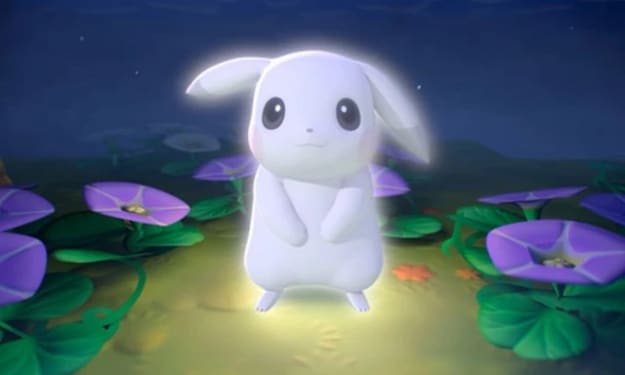
The Mystery of the "Ghost Pikachu": 5 Heartbreaking Truths Behind Peakychu’s Pale Appearance
Before the first copy of Pokopia even hit shelves, the "Ghost Pikachu" had already broken the internet. When the trailers debuted a pale, hauntingly white version of the world’s most famous mouse, the fandom's collective head-canon went into overdrive, with viral theories suggesting a new Ghost-type regional variant or, more grimly, the literal spirit of a deceased companion. However, the truth buried in the game’s Pokédex is far more grounded and emotionally devastating. Peakychu isn't a supernatural phantom; it is a creature defined by a history of trauma, raising a haunting question: What happens to a Pokémon when it loses the very energy that defines its existence?
By Tech Horizons7 days ago in Futurism


Comments
There are no comments for this story
Be the first to respond and start the conversation.