
Europe in Space: How the Continent is Shaping the Future of Space Exploration and Technology
From satellites to Mars missions, the EU and ESA are positioning Europe as a global leader in the next space race
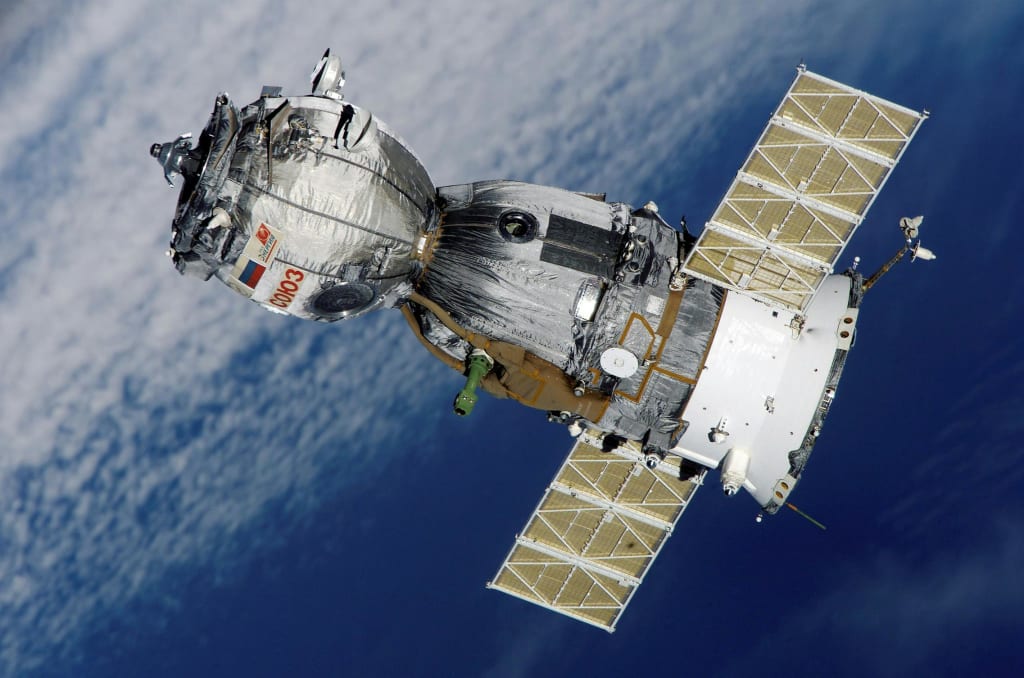
When most people think of space exploration, their minds go to the bold launches of NASA, the billionaire-fueled ambitions of SpaceX, or China’s rapid expansion into lunar territory. But quietly and methodically, Europe has become a major player in space—technologically sophisticated, deeply collaborative, and increasingly autonomous.
Through the European Space Agency (ESA) and national space programs across France, Germany, Italy, and beyond, Europe is building the infrastructure, science, and partnerships to shape the next era of exploration—one focused not just on glory, but on data, resilience, and sustainability.
1. ESA: Europe’s Coordinated Gateway to Space
Founded in 1975, the European Space Agency (ESA) is an intergovernmental organization with 22 member states, including both EU and non-EU countries. Headquartered in Paris, ESA has led or contributed to major missions ranging from satellite launches to deep-space science.
Its key missions include:
Ariane Launch Vehicles: Europe's Ariane 5 rocket is one of the most reliable heavy-lift launch systems in the world. Its successor, Ariane 6, aims to reduce costs and compete with private-sector giants.
Copernicus and Galileo: Copernicus is the world’s largest Earth observation program, and Galileo is the EU’s independent satellite navigation system—offering greater accuracy than GPS.
ExoMars Mission: A joint venture with Russia’s Roscosmos (before political tensions halted collaboration), this project aims to explore signs of life on Mars using the European-built Rosalind Franklin rover.
ESA is also a major partner in the International Space Station (ISS) and contributes key components and science modules.
2. Earth Observation: Satellites Serving the Planet
One of Europe’s greatest strengths in space is Earth observation, with satellites that monitor everything from weather to wildfires to sea-level rise.
The Copernicus program, run in partnership with the European Commission and ESA, operates the Sentinel satellites, which:
Track climate change indicators.
Monitor deforestation, agriculture, and air quality.
Provide emergency response data during natural disasters.
These data streams are not just academic—they are used by governments, insurers, humanitarian agencies, and even farmers. For example, Sentinel-2 helps European vineyards optimize irrigation and forecast yield with high-resolution imagery.
The EU’s focus on space for sustainability is positioning it as a global provider of trusted, non-commercial Earth data.
3. Galileo: Europe’s Answer to GPS
While the U.S. operates GPS and Russia has GLONASS, Europe developed Galileo as a civil-controlled, high-accuracy global navigation satellite system.
Key advantages:
Better location accuracy: Galileo can achieve accuracy down to centimeters when used with specialized equipment.
Independence: It provides Europe with strategic autonomy in navigation, vital for military, transportation, and critical infrastructure.
Integration with smartphones: Most modern smartphones are Galileo-compatible, improving location services across devices.
Galileo currently has 28 satellites in orbit, with plans to expand its capabilities for autonomous vehicles, aviation, and maritime operations.
4. Climate, Defense, and Cybersecurity from Orbit
Beyond exploration, space tech is now central to climate resilience, defense, and digital security—all top priorities for the EU.
Climate and Sustainability
ESA’s Greenhouse Gas Satellite (CO2M) is under development to track carbon emissions at an industrial scale—supporting the EU Green Deal.
European satellites are helping scientists predict extreme weather events, track glaciers, and assess biodiversity loss.
Space and Defense
The EU Space Strategy for Security and Defence, adopted in 2023, emphasizes protecting satellites from cyberattacks, jamming, and physical threats.
The European Union Agency for the Space Programme (EUSPA) now coordinates space assets for strategic autonomy, especially in telecommunications and surveillance.
Cybersecurity
Space systems are vulnerable to interference and cyber threats. Europe is developing quantum-safe satellite encryption, as well as more resilient, decentralized communications infrastructure.
5. Commercial Space in Europe: The Rise of Startups
Europe’s space landscape is no longer just institutional—it’s increasingly entrepreneurial. Across the continent, space startups and private companies are flourishing, backed by both national funding and EU grants.
Notable players include:
Isar Aerospace (Germany) – building small launchers to serve the growing microsatellite market.
PLD Space (Spain) – developing reusable suborbital rockets.
Open Cosmos (UK/Spain) – democratizing space data with affordable satellite solutions.
ICEYE (Finland) – using radar satellites for near-real-time Earth imaging, day or night.
The European Commission’s Cassini Space Entrepreneurship Initiative is pumping hundreds of millions of euros into early-stage space tech, including launch, satellite servicing, and space debris removal.
6. Future Missions: To the Moon and Beyond
Europe isn’t sitting still in the next phase of exploration. Upcoming ESA missions and collaborations include:
Lunar Gateway: ESA is providing key modules and support for NASA’s planned Moon-orbiting space station, part of the Artemis program.
EnVision: A mission to Venus, scheduled for the early 2030s, to study the planet’s atmosphere and geological activity.
Moonlight: A future lunar telecommunications network developed with the UK and Italy, aiming to establish 4G-like services on the Moon.
Space Rider: An autonomous, reusable spaceplane designed to bring scientific payloads back to Earth.
These missions showcase Europe's intent to be not just a participant, but a pioneer in the emerging space economy.
Conclusion: Europe’s Space Moment is Now
While it may not dominate headlines like its U.S. or Chinese counterparts, Europe is building a quiet space revolution—defined by collaboration, purpose, and precision.
With a focus on Earth science, satellite navigation, sustainable innovation, and peaceful exploration, Europe is uniquely positioned to lead in the areas of space that matter most to humanity's future.
As new players enter orbit and the space economy expands, the European model—strategic, science-driven, and globally cooperative—may well prove to be the most enduring.
The stars may belong to no one, but the future of space is undeniably European, too.
About the Creator
Keep reading
More stories from Kaitesi Abigail and writers in Futurism and other communities.
Biotechnology and the Future of Medicine: How Science Is Rewriting the Rules of Healing
Biotechnology is no longer just a niche branch of science confined to labs and academic journals—it is now the beating heart of the future of medicine. By harnessing the power of biology at a molecular and genetic level, biotechnology is enabling doctors, researchers, and scientists to rethink what’s possible in disease prevention, diagnosis, and treatment.
By Kaitesi Abigail6 months ago in Futurism
About Binding Prometheus
I want to start actively advocating on behalf of my own work, and the most valuable part of my canon is, without a doubt, Binding Prometheus, the play I have been working on since 2019 and only finished in 2023 as part of my MA. The play itself is an amalgamation of a million different inspirations. On one end, it evokes the Ancient Greek myth-play, deriving its own title from the earliest extant work of Western drama we have, Aeschylus’s Prometheus Bound. On the other end, it borrows significantly from the sci-fi bulwarks from over the years, namely Mary Shelley’s Frankenstein and Karel Capek’s Rossum’s Universal Robots. The play could be an episode of Black Mirror, I fear. I don’t know. I’ve only ever seen one episode of Black Mirror.
By Steven Christopher McKnight18 days ago in Futurism
Saudi Arabia Boiler Market: Clean Energy Transition, Vision 2030, Emission Control & Modern Heating Systems
Saudi Arabia's boiler market grows through Vision 2030-driven industrialization, with rising demand in petrochemicals and power plants. Innovations like energy-efficient and biomass-fired models support sustainability goals, while Aramco expansions boost adoption of advanced systems amid rapid infrastructure projects. According to IMARC Group's latest research publication, Saudi Arabia boiler market size reached USD 902.70 Million in 2024. The market is projected to reach USD 1,631.91 Million by 2033, exhibiting a growth rate (CAGR) of 6.10% during 2025-2033.
By Jeffrey Wilson6 days ago in Futurism
Ludacris and Nelly draw backlash over bookings at MAGA-coded music festival
Ludacris and Nelly headlining a mostly right-wing event is good for them. It’s also great for the genre of hip hop. The two rap veterans have showcased their talents on other stages. Why can’t they perform for mostly MAGA folks and grab that bag?
By Skyler Saunders4 days ago in Beat


Comments
There are no comments for this story
Be the first to respond and start the conversation.