
Ethics of Cloning: Where Do We Draw the Line?
Navigating the Moral Boundaries of Biotechnology"

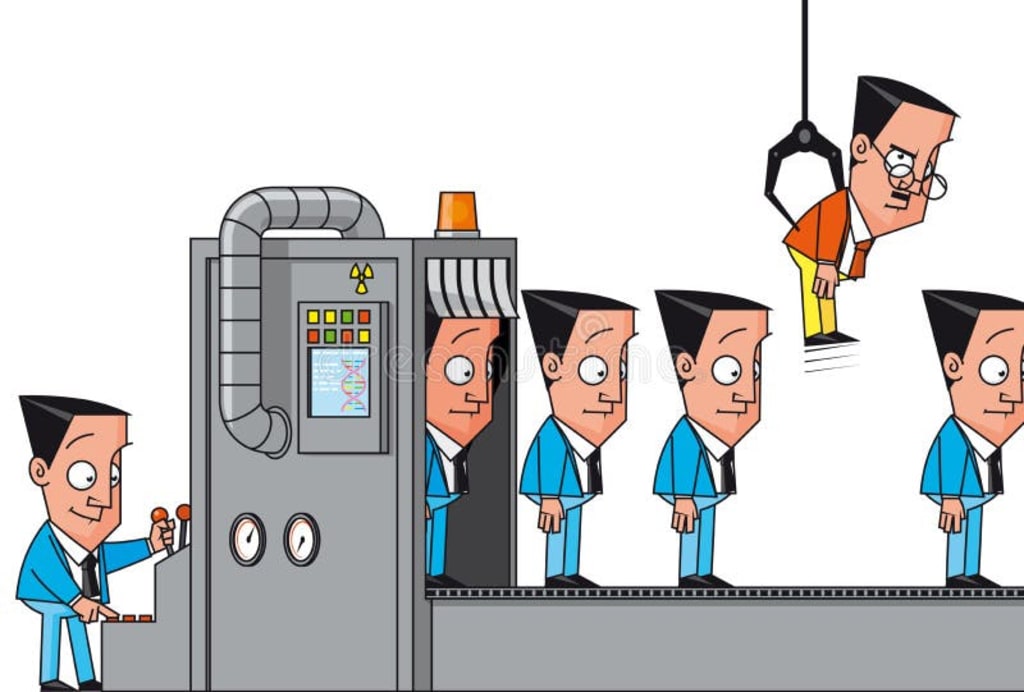
The ethics of cloning has long been a topic of heated debate, sparking questions about the boundaries of science, morality, and human identity. With advancements in genetic engineering and biotechnology, the possibility of cloning living organisms, including humans, has shifted from science fiction to scientific reality. However, these advancements raise profound ethical concerns. Where should we draw the line when it comes to cloning?
Understanding Cloning
Cloning refers to the process of creating genetically identical organisms. It can be divided into three categories:
1. Reproductive Cloning: The creation of an entire organism genetically identical to another.
2. Therapeutic Cloning: The use of cloned cells for medical treatments, such as generating tissues or organs for transplantation.
3. Gene Cloning: The replication of specific DNA sequences for research and medical purposes.
While gene cloning is widely accepted and used in research, reproductive and therapeutic cloning are more controversial due to their ethical implications.
Potential Benefits of Cloning
Cloning has immense potential in medicine, agriculture, and conservation. For instance:
1. Medical Advancements: Therapeutic cloning could revolutionize medicine by producing compatible organs for transplants, potentially eliminating the need for organ donors and reducing transplant rejection.
2. Conservation Efforts: Cloning could help save endangered species by increasing their populations.
3. Agriculture: Cloning livestock with desirable traits could enhance food production and reduce costs.
These benefits make cloning an attractive prospect for many. However, the ethical concerns associated with its use cannot be ignored.
Ethical Concerns
1. Human Cloning:
Human reproductive cloning is one of the most contentious issues. Critics argue that cloning humans could undermine the uniqueness of individuals, disrupt family dynamics, and lead to a commodification of human life. Cloning a human being also raises questions about identity and individuality. Would a clone have the same rights and societal recognition as a naturally born person?
2. Playing God:
Many ethical debates around cloning center on the notion of "playing God." Critics argue that cloning involves tampering with the natural order, which could have unforeseen consequences. This line of reasoning often intersects with religious beliefs, where creating life artificially is viewed as overstepping moral boundaries.
3. Exploitation and Inequality:
Cloning technology could exacerbate existing social and economic inequalities. Wealthy individuals or nations might monopolize cloning for personal or national gain, leaving others behind. Additionally, clones might be exploited for labor, organ harvesting, or other unethical purposes.
4. Animal Welfare:
Cloning animals for research or agriculture raises concerns about animal welfare. The process often involves a high failure rate, leading to suffering and the premature death of many cloned animals. Critics argue that subjecting animals to such experimentation is unethical.
5. Unintended Consequences:
Cloning is still a relatively new science, and the long-term effects are unknown. Genetic defects, health complications, and unforeseen biological consequences could arise, leading to ethical dilemmas about the responsibility of scientists and society.
Legal and Regulatory Challenges
The ethical concerns surrounding cloning have led many countries to implement strict regulations or outright bans. For instance:
In the United States, federal funding for human cloning research is prohibited, although private companies can pursue such projects.
The United Nations has called for a global ban on reproductive cloning, highlighting its ethical and social risks.
European countries such as Germany and France have some of the strictest anti-cloning laws.
Despite these restrictions, the lack of a universal framework creates loopholes, allowing cloning research to progress in less-regulated regions.
Drawing the Line
Given the potential benefits and ethical concerns, where should society draw the line?
1. Ban Reproductive Cloning:
Many agree that human reproductive cloning should be prohibited due to the significant ethical and social implications. Cloning humans raises profound questions about individuality, identity, and human rights that society is not yet equipped to address.
2. Regulate Therapeutic Cloning:
Therapeutic cloning, which focuses on medical advancements, holds promise but must be tightly regulated. Ethical guidelines should prioritize consent, transparency, and the welfare of all involved. Clear boundaries are needed to prevent misuse, such as creating embryos solely for experimentation.
3. Promote Transparency and Public Engagement:
Public understanding of cloning and its implications is crucial. Governments and scientific organizations should engage with communities to address concerns, dispel misconceptions, and ensure that ethical considerations are prioritized.
4. Global Consensus:
A unified international approach to cloning regulation is essential. Collaborative frameworks can help prevent ethical violations and ensure that the benefits of cloning are distributed equitably.
5. Focus on Alternatives:
Researchers should continue exploring alternatives to cloning, such as advancements in stem cell research and regenerative medicine, which could achieve similar goals without the associated ethical dilemmas.
A Balancing Act
The ethics of cloning is a balancing act between scientific progress and moral responsibility. While cloning offers immense potential to improve lives and address global challenges, its risks and ethical concerns cannot be ignored. Society must tread carefully, ensuring that the pursuit of knowledge does not compromise fundamental values.
In the end, the question of where to draw the line in cloning comes down to a collective decision. It requires careful consideration of the potential benefits, risks, and societal values. By fostering open dialogue, implementing robust regulations, and prioritizing ethical principles, humanity can navigate this complex issue responsibly.
The cloning debate reminds us that with great power comes great responsibility. As we stand on the brink of a new era in biotechnology, the choices we make today will shape the future of science, ethics, and humanity. Where we draw the line will ultimately reflect our values and define the kind of world we wish to create.
About the Creator
O2G
I am a storyteller exploring love, resilience, and self-discovery. Through relatable tales, I aim to inspire reflection, stir emotions, and celebrate the courage and beauty in life’s complexities.
About Binding Prometheus
I want to start actively advocating on behalf of my own work, and the most valuable part of my canon is, without a doubt, Binding Prometheus, the play I have been working on since 2019 and only finished in 2023 as part of my MA. The play itself is an amalgamation of a million different inspirations. On one end, it evokes the Ancient Greek myth-play, deriving its own title from the earliest extant work of Western drama we have, Aeschylus’s Prometheus Bound. On the other end, it borrows significantly from the sci-fi bulwarks from over the years, namely Mary Shelley’s Frankenstein and Karel Capek’s Rossum’s Universal Robots. The play could be an episode of Black Mirror, I fear. I don’t know. I’ve only ever seen one episode of Black Mirror.
By Steven Christopher McKnight13 days ago in Futurism
High Purity Alumina Market: Clean Energy Adoption & Material Innovation Trends
According to IMARC Group's latest research publication, global high purity alumina market size reached USD 2,547.04 Million in 2024. Looking forward, IMARC Group expects the market to reach USD 14,575.85 Million by 2033, exhibiting a growth rate (CAGR) of 20.32% during 2025-2033.
By Andrew Sullivana day ago in Futurism



Comments
There are no comments for this story
Be the first to respond and start the conversation.