
Enhancing Visitor Experience with Indoor Navigation Software
Indoor Navigation Software

There’s no greater joy than helping visitors to your museum find what they came for. Some have waited years. They want to spend time with the object of their fascination. Whether you’re a curator at the Louvre or a museum in your community, indoor navigation can help you serve that unique experience.
The gist about indoor navigation software
Indoor navigation software provides accurate real-time mapping of indoor spaces, in this case your museum. But there’s more. Its wayfinding tools are perfect for museum navigation, leading visitors from room to room in the shortest possible time. Visitors access the map on their phones, and every step they take draws them closer to the prize. It repositions them whenever they veer off course.
Getting the most out of your museum experience
They’ll gain time, obviously, but what other ways can you enhance visitor experience using indoor navigation software?
Here’s how to double-squeeze that juicy lemon.
Indoor navigation software uses visitor preferences to customize their route around the museum in real-time. The app will nudge them towards their favorite attractions in real time. There’s usually a lot going on in museums in addition to what they already have - themed events, exhibitions, shows, and film screenings. If they like Egyptian paintings, Native American history, and intend to watch a poetry reading that evokes ancestral worship, an indoor navigation software will provide them with the time, location, and navigation information that incorporates all three experiences.
That way they get there early, engage with every activity, and appear at the next event just in time. The app will even suggest restaurants along their path so they get a bite of their favorite burger on their way to the next exhibition. If they forgot to add a lecture on the importance of Native Americans telling their own stories to their itinerary, the app will suggest it, ensuring they have a more personalized experience.
Helping museums design experiences
Creating inclusive spaces
About a fifth of the world’s population live with some form of disabilities that range from low vision to mobility issues. Knowing where a wheelchair can easily access a ram can be the difference between a bad day at the museum and the experience of a lifetime.
Indoor navigation systems can provide the latest information about safe navigation for persons with disabilities, kids, and senior citizens. These spaces incorporate different audiences and voices, drawing bigger crowds.
Sure, you need that crowd, but you don’t want museum spaces to be overcrowded and spoil the experience for everyone. Real-time data can be used to redirect visitors through routes with lower traffic, improving the experience for everyone. Organizing how people drive in, park, walk in, and exit will also help improve space allocation and security.
Leveraging indoor navigation data
Feedback is invaluable for any museum or curated space. The data that indoor navigation systems track and analyze can be used to improve future experiences for a particular explorer, but also groups with similar interests. What about offering that special group, for instance, teens who love space exhibitions, a themed experience.
You could even offer a discount price! This could work well around low season, keeping the place active and generating buzz.
For businesses managing many museums, they could go further still by using data from past museum visits, adding an element of familiarity and surprise within the same tour.
Designing shared experiences
The Louvre, Smithsonian, and Vatican museums use indoor navigation for a reason. Easy navigation for groups touring together creates lifetime memories. But people visiting an event solo might also want to share their experience in real time with family, friends, and even total strangers. Eliminating navigation hurdles, and improving communications as visitors move around can enhance that community experience and keep people coming.
If you’re a museum curator, seek out ways to implement seamless wayfinding to create personalized experiences. You’ll enjoy watching people get the best out of your museums and exhibitions. Next time you’re picking a museum to visit, try out one with indoor navigation.
About the Creator
About Binding Prometheus
I want to start actively advocating on behalf of my own work, and the most valuable part of my canon is, without a doubt, Binding Prometheus, the play I have been working on since 2019 and only finished in 2023 as part of my MA. The play itself is an amalgamation of a million different inspirations. On one end, it evokes the Ancient Greek myth-play, deriving its own title from the earliest extant work of Western drama we have, Aeschylus’s Prometheus Bound. On the other end, it borrows significantly from the sci-fi bulwarks from over the years, namely Mary Shelley’s Frankenstein and Karel Capek’s Rossum’s Universal Robots. The play could be an episode of Black Mirror, I fear. I don’t know. I’ve only ever seen one episode of Black Mirror.
By Steven Christopher McKnight29 days ago in Futurism
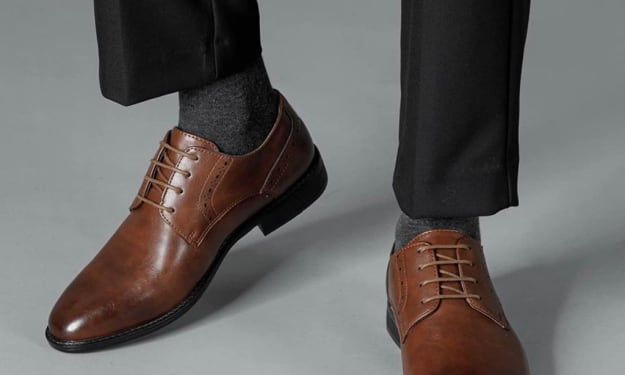
Men Formal Shoe Market: Office Wear Demand, Leather Craftsmanship & Market Forecast
According to IMARC Group's latest research publication, global men formal shoe market size reached USD 10.86 Billion in 2024. Looking forward, IMARC Group expects the market to reach USD 17.51 Billion by 2033, exhibiting a growth rate (CAGR) of 5.18% during 2025-2033.
By sujeet. imarcgroupa day ago in Futurism



Comments
There are no comments for this story
Be the first to respond and start the conversation.