
Elon Musk’s Brain Chip to Help Blind People See Gets Approval
A New Frontier in Medical Technology

Elon Musk’s Brain Chip to Help Blind People See Gets Approval: A New Frontier in Medical Technology
In a groundbreaking move, Neuralink, the neurotechnology company founded by Elon Musk, has received regulatory approval to conduct human trials of its brain chip designed to help blind people regain their sight. The company's ambitious goal is to develop a direct brain-computer interface (BCI) capable of restoring lost vision, among other medical applications. This approval marks a major milestone in Musk's vision of merging humans with artificial intelligence to overcome the limitations of biology.
What is Neuralink’s Brain Chip?
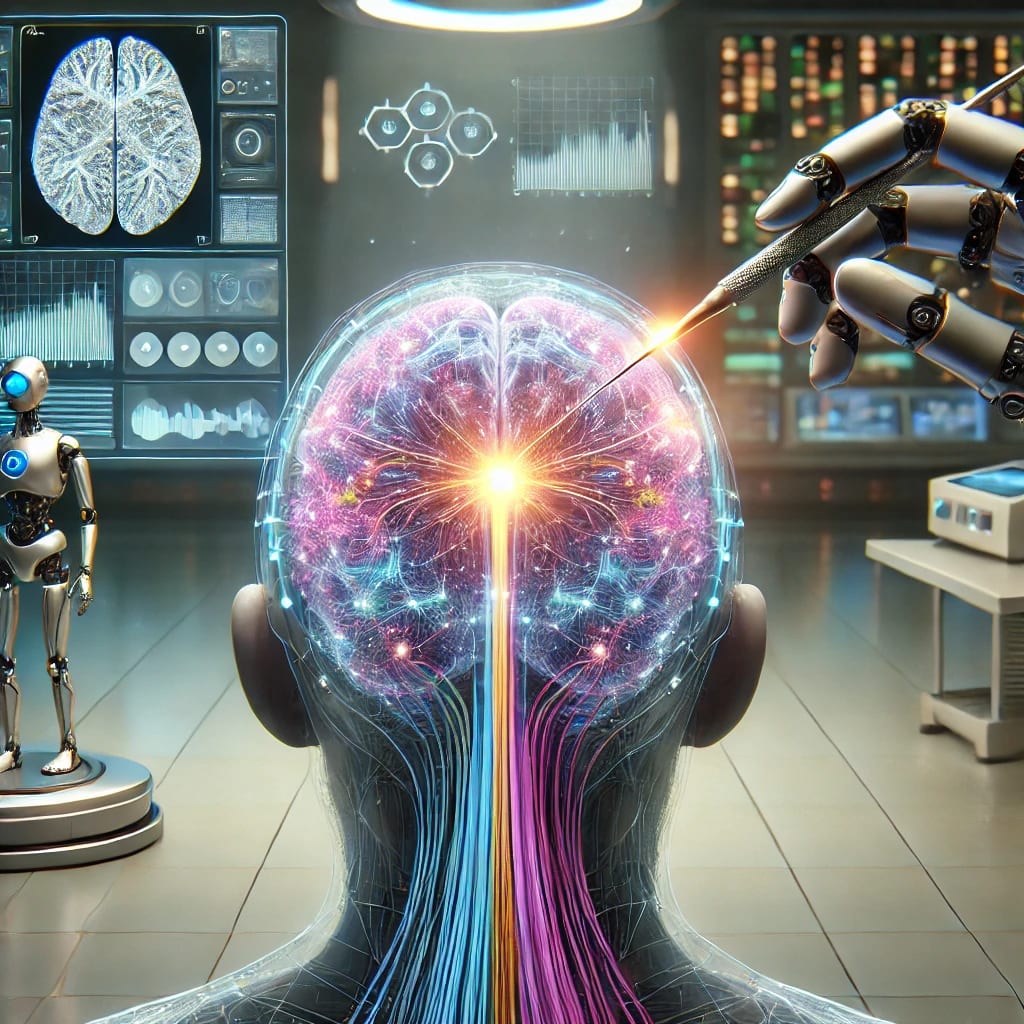
At the heart of Neuralink’s technology is a small, coin-sized brain implant, referred to as the N1 chip. This device is embedded into the brain, where it can stimulate neurons and detect electrical activity. It consists of ultra-thin, flexible threads that are inserted into specific brain regions with the help of a robot designed to minimize damage to surrounding tissue. The threads can monitor and transmit brain signals, enabling a seamless connection between the human brain and external devices, such as computers, or even a direct interface with one’s smartphone.
For individuals who are blind, Neuralink aims to bypass damaged optical nerves by directly stimulating the visual cortex. The hope is that this direct stimulation will enable the brain to process images, thus restoring vision even in people who have suffered severe or total vision loss.
Regulatory Approval and the Path Forward
Neuralink received approval from the U.S. Food and Drug Administration (FDA) to begin human trials for its brain chip. The FDA’s approval is a crucial step, as it allows the company to test the safety and efficacy of the technology on human subjects. This green light follows years of animal testing, where the company reportedly achieved promising results, including successes in linking brain activity with computer interfaces in primates.
While Neuralink has faced scrutiny regarding ethical concerns and the long-term safety of brain implants, the approval signifies confidence in the technology’s potential to provide revolutionary benefits in medical care.
How the Brain Chip Could Help Blind People
Blindness can occur due to damage in various parts of the visual system, including the eyes or the optical nerves, which transmit signals from the eyes to the brain. Neuralink’s chip bypasses these damaged areas by directly stimulating neurons in the visual cortex, the part of the brain responsible for processing visual information.
Using AI algorithms, the chip could interpret input from cameras or other sensory devices, convert it into electrical signals, and send them to the brain. In theory, this would allow individuals who are blind to "see" through this neural stimulation.
Elon Musk has stated that even individuals who were born blind could potentially benefit from this technology. Unlike other therapies or devices that rely on partially functional eyes or nerves, Neuralink's approach does not require the eyes to work at all, as the chip directly interfaces with the brain’s visual processing centers.
Potential Impact on Millions of People
According to the World Health Organization, approximately 39 million people worldwide are blind, and another 246 million suffer from moderate to severe visual impairment. If Neuralink’s technology proves successful, it could provide a life-changing solution for millions of individuals, particularly those for whom current medical or technological interventions offer little hope.
Furthermore, this could revolutionize the treatment of other neurological conditions, including paralysis, neurodegenerative diseases, and cognitive disorders. Musk’s vision of the brain chip is not just to restore lost functions, but to augment the human brain, potentially allowing for advanced computing abilities and cognitive enhancements in the future.
Ethical and Technical Challenges Ahead
While Neuralink’s approval is a major step forward, there are significant hurdles that remain. Implanting a device in the brain comes with inherent risks, such as infection, rejection, and long-term stability of the implant. Additionally, the ethical implications of brain-computer interfaces, especially in healthy individuals, have raised concerns about privacy, consent, and potential misuse.
Some critics worry that such technology could be a stepping stone toward creating a "cybernetic elite" with enhanced capabilities, deepening social and economic inequalities. Others point out the risks of unintended consequences, such as hacking or misuse of data generated by these brain implants.
Neuralink will also have to prove that its devices can be safely implanted and operated over long periods, and that the benefits outweigh any risks associated with surgery and the device itself.
What’s Next for Neuralink?
Following FDA approval, Neuralink will proceed with its first human trials. These trials will likely focus on assessing the safety and functionality of the brain chip in patients with severe vision loss. If successful, this could open the door to broader applications, including mobility for paralyzed individuals and potentially cognitive enhancement.
As Elon Musk’s Neuralink moves closer to its goal of creating a direct brain-computer interface, the world watches with a mix of optimism and concern. The potential to restore sight to the blind is just one of the many incredible, and perhaps controversial, uses of this cutting-edge technology. Should it succeed, Neuralink’s brain chip could redefine the boundaries of what’s possible in medicine, opening new avenues of hope for millions of people suffering from vision loss and other neurological conditions.
In the coming years, this technology may not just help us see the world around us—it could change how we interact with the world altogether.
About the Creator
Adebayo Mahmud
To go straight to the point i like diving into topics that interest me and make me begin to think. Promoting peoples work especially those have interest in, in my articles is an hobby of mine. (I GUESS :-p).
Keep reading
More stories from Adebayo Mahmud and writers in Futurism and other communities.
From Barter to Bitcoin
From Barter to Bitcoin: The Evolution of Money and What Cryptocurrency Means for Our Financial Future Introduction Money, in its various forms, has been a cornerstone of human civilization for millennia. From simple bartering to the rise of digital currencies like Bitcoin, the concept of money has evolved significantly, reflecting the changing needs and technological advancements of society. This article explores the journey of money, from its ancient origins to its potential future, dominated by cryptocurrencies and digital transactions.
By Adebayo Mahmud2 years ago in Futurism
Australia Pro AV Market: Hybrid Work Demand, Digital Signage & Smart AV Technologies
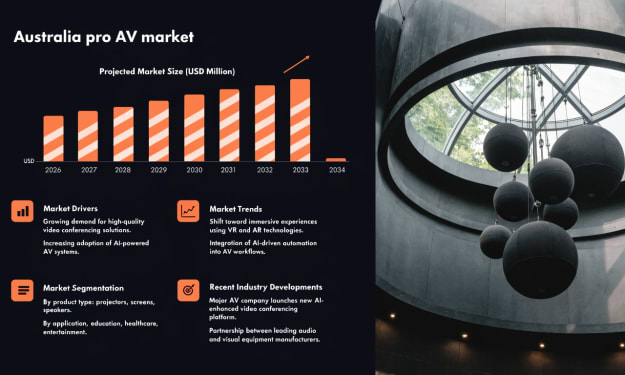
According to IMARC Group, the Australia pro AV market reached a value of USD 93.9 Million in 2025 and is projected to reach USD 133.6 Million by 2034, growing at a compound annual growth rate (CAGR) of 3.88% during 2026–2034. The market is expanding as organizations increasingly adopt advanced audiovisual solutions to support communication, collaboration and digital engagement. Hybrid work environments are encouraging businesses to invest in video conferencing systems, smart displays and integrated collaboration platforms that connect remote and in-office teams. At the same time, industries such as retail, hospitality and tourism are investing in digital signage to improve customer engagement and brand communication. As companies focus on creating interactive and technology-driven environments, professional AV solutions are becoming essential tools for modern workplaces, entertainment venues and commercial spaces across Australia.
By Kevin Cooper5 days ago in Futurism
WhatsApp Business API: A Complete Guide to Business Messaging in 2026
Over the past decade, the way businesses communicate with customers has changed dramatically. Traditional channels such as email and phone support are still widely used, but instant messaging has become one of the most preferred ways for people to interact with brands. Customers increasingly expect quick responses, convenient updates, and support that feels personal rather than formal.
By Olivia Carter2 days ago in Futurism
My First Time Skiing and I Got Lost, Alone, in the French Alps
Looking back, I can trace some of my life’s biggest adventures to a simple action from my sister. She’d introduced me to Tommy (a very long time ago), a colleague of hers, who had overshared his penchant for Italian-looking women, and I ticked that box.
By Chantal Christie Weissabout 20 hours ago in Humans



Comments
There are no comments for this story
Be the first to respond and start the conversation.