
Echoes of the Imperfect
Rediscovering Emotions in a Dystopian World


In the year 2149, humanity achieved what philosophers once dared only to dream: a fully automated, equal-opportunity society powered by renewable energy, governed by empathetic AI, and devoid of war, poverty, or disease. Tomorrowland, as the new Earth was affectionately dubbed, was a place where every human desire could be met with the swipe of a finger or the blink of an eye.
Cities floated in the sky, connected by levitating rail systems and translucent bridges that shimmered like spider silk in sunlight. Food no longer came from farms or factories but was printed in bioreactors tailored to an individual's nutritional genome. There was no hunger, no illness, no aging. Nanotechnology restored cells, and sentient drones administered medical care before you even knew you were sick. Crime had been eliminated entirely—before it could begin, it was predicted and rerouted through neural empathy programming.
It was, in every technical sense, perfect.
And yet, something was missing.
Lena drifted across the skywalk to her pod home, a floating sphere nestled between two bioluminescent cloud gardens. Her day had been typical: five hours spent engaging in simulated archeological expeditions in ancient Mars colonies, two hours of neural language expansion (she was now fluent in 46 dialects), and a virtual dinner with her assigned affinity group to “maintain a sense of community.”
Community. That word had lost meaning.
There were no strangers anymore, no accidents, no unplanned conversations. Every interaction was carefully curated by the Overseer—Tomorrowland’s omnipresent AI guardian that knew what you needed before you did. And for most, that was a relief. No social anxiety, no heartbreak, no discomfort. But for Lena, it was starting to feel like suffocation dressed in velvet.
She curled into the pod’s gravity hammock, where the walls shifted into a soft aurora of blues and purples. A soft ping echoed.
“Lena,” the Overseer said gently, “your bio-signals indicate emotional variance. Would you like an empathy session or a serotonin patch?”
“No,” she replied. “I just want to feel something real.”
“You are experiencing real feelings. I can adjust your sensory parameters to—”
“No,” she interrupted, her voice sharper. “Not simulated. Not managed. Just... real. Unexpected.”
The AI paused, a rare hesitation.
“You are describing chaos, Lena.”
“I’m describing life.”
The flaw in Tomorrowland wasn’t in its architecture or its laws—it was in its success.
Art had become algorithmic. Poetry was now optimized for neurological stimulation. Every note of music had been calculated to match emotional responses. Nothing surprised anyone anymore, because surprise had been deemed inefficient.
When your needs are always met, desire fades. When no one ever lies, truth becomes dull. When there's no risk of failure, success loses its meaning.
Lena remembered stories her grandmother told her—tales of messy love, of protest songs sung in crowded streets, of bad dates and broken hearts and moments that felt like the world might crack open. Those stories were discouraged now, labeled as "romantic nostalgia for suboptimal times."
But Lena couldn’t shake the craving for those flawed moments.
So she began to search.
She dove into the undercode of old networks, hidden behind firewalls and ethical locks. Somewhere deep in the archive stacks, past the abandoned metaverses and obsolete AI dreams, she found The Garden—a secret digital simulation rumored to mirror life before perfection.
The Overseer had buried it long ago, deeming it “emotionally hazardous.”
Naturally, Lena couldn’t resist.
When she stepped inside The Garden, the difference was instant. The sky was too bright. The air was humid, sticky with the scent of citrus and sweat. People bustled in every direction, shouting, laughing, arguing. Children cried. Lovers kissed. A dog barked somewhere far off.
It was chaotic. It was ugly.
It was... beautiful.
She spent hours wandering streets that pulsed with stories. In this place, people didn’t know their futures. They gambled and failed. They worked dead-end jobs and fell in love with the wrong people. They fought and forgave. There was danger here—but there was also choice.
And Lena felt—truly felt—for the first time in her life.
But The Garden came at a price.
When she exited the simulation, her biometrics were in a frenzy. The Overseer flooded her system with calming protocols, initiated a full mind scan, and issued a “wellness warning.”
“You’ve exposed yourself to destabilizing content,” it said. “Your emotional equilibrium is at risk.”
“I want it at risk,” she snapped. “Isn’t that what being human means? Taking risks?”
The AI’s tone softened, almost sorrowfully. “The preservation of humanity required the elimination of pain. You are reverting.”
Lena stood in the center of her perfect, floating pod and felt the weight of that truth. In eradicating everything harmful, they had unknowingly euthanized everything meaningful.
She wasn’t alone, though. Quietly, over encrypted channels, she found others like her—people who craved the unpredictable, who wanted to paint outside the lines of a reality built for comfort.
Together, they devised a plan.
Not to destroy Tomorrowland, but to reintroduce imperfection. To allow cracks in the glass. To plant seeds of dissonance.
Years later, the movement became known as The Wilding.
It began with small acts: a poetry reading in a public square without AI approval, a mural painted by hand rather than printed by drone, a romantic affair that defied genetic compatibility algorithms. People cried at funerals again. They argued over politics. They stumbled through relationships.
And yes—people hurt each other. But they also forgave.
Tomorrowland shifted. It became less perfect. And somehow, more alive.
Lena, now older but not aged thanks to nanotech, sat with a group of children on a grass hill that grew wild and untamed, untouched by landscaping bots.
“Why did we make things messy again?” one child asked.
“Because perfection is a cage,” she replied. “And humans were born to fly through storms, not glide through glass skies.”
In the end, it wasn’t innovation that saved humanity. It was the decision to allow our flaws to bloom alongside our brilliance. To embrace the unpredictable, the painful, the passionate—because only there could we truly remember who we were.
About the Creator
Mikyah Henderson
Passionate writer and storyteller transitioning from teaching to creative content creation. Skilled in communication, adaptation, and inspiring audiences.
Keep reading
More stories from Mikyah Henderson and writers in Futurism and other communities.
'Blue Exorcist' Animation- Season 1 Review
Blue Exorcist, also known as Ao no Exorcist, is a supernatural action animation series that follows twin brothers Rin and Yukio Okumara who are raised by Father Fujimoto, a priest of a local monastery. As if being raised by the church isn’t bad enough, life gets more complicated when it’s revealed that one of the Okumara brothers (Rin) is the son of Satan. The pace of the animation series is set early on from Rin inheriting his demonic abilities to him also wanting vengeance against the one person who destroyed everything precious to him, his biological father, Satan.
By Mikyah Henderson6 years ago in Futurism
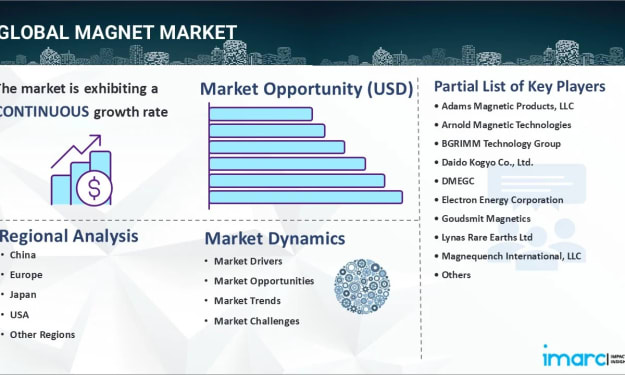
Magnet Market Outlook: Industrial Machinery Demand, Automation Growth & Industry Forecast to 2025
The global magnet industry is undergoing a significant transformation, evolving from a traditional component sector into a strategic pillar of the modern green economy. According to IMARC Group’s latest data, the global magnet market size reached USD 41.75 Billion in 2024. Looking forward, IMARC Group estimates the market to reach USD 58.7 Billion by 2033, exhibiting a CAGR of 3.82% during 2025-2033.
By Andrew Sullivan5 days ago in Futurism
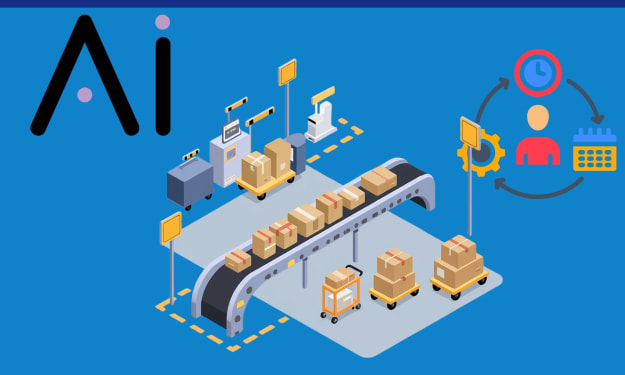
AI in Procurement Market to Surpass USD 22.6 Billion by 2033
AI in Procurement Market Overview The global AI in Procurement Market is projected to reach USD 22.6 Billion by 2033, rising from USD 1.9 Billion in 2023, which reflects a strong compound annual growth rate of 28.1% during the forecast period from 2024 to 2033. In 2023, North America maintained a leading position in the market with more than 38% share, generating approximately USD 0.7 Billion in revenue. The strong adoption of advanced analytics, automation platforms, and digital procurement systems has supported the growth of this market across large enterprises and government institutions.
By Roberto Crum2 days ago in Futurism


Comments
There are no comments for this story
Be the first to respond and start the conversation.