
East Africa Power Market: Renewable Expansion, Grid Modernization & Growth Outlook
How renewable energy expansion, grid modernization, and rising electricity demand are shaping growth opportunities in the East Africa power market.


According to IMARC Group's latest research publication, East Africa power market size reached 21.7 GW in 2025. Looking forward, IMARC Group estimates the market to reach 29.2 GW by 2034, exhibiting a CAGR of 3.33% from 2026-2034.
How Regional Integration is Reshaping the Future of East Africa Power Market
- Cross-Border Electricity Trading: The Eastern Africa Power Pool now connects 13 member nations through four synchronized networks, with Kenya-Tanzania's 510-kilometer interconnector commissioned enabling 2,000 MW transfer capacity and opening massive regional trading opportunities.
- Massive Infrastructure Investments: Tanzania secured USD 900 million from Adani Group and USD 300 million from Gridworks Development Partners for high-voltage transmission lines, while the Tanzania-Zambia interconnector is connecting Eastern and Southern African power pools by November 2025.
- Hydropower Expansion: Tanzania's Julius Nyerere Hydropower Plant commissioned six turbines totaling 2,115 MW in 2024 supplying electricity to Tanzania, Kenya, Uganda and Zambia, while Ethiopia's Grand Ethiopian Renaissance Dam added 800 MW with third and fourth units operational.
East Africa Power Market Trends & Drivers:
The EAPP, the East Africa regional power market, is also expected to drive greater regional integration, interconnections and trade within the Member States, with the establishment of regional centralized day-ahead markets and major interconnections such as the Ethiopia-Kenya highway interconnector, improving regional power trade and cooperation among neighboring countries. In addition aspirations to provide energy security, optimize the surplus of hydro and renewable generations and reduce the isolation of generations independently developed, high levels of multilateral trading are being depended upon to enable utilities to balance supply and demand, and to address the legacy of past infrastructure neglect and to foster regional economic integration.
Rapid growth in generation of hydro, geothermal, solar and wind power is transforming East Africa's electricity sector. An abundance of energy sources and reductions in technology costs are attracting investment in renewable generation projects. Countries choose non-hydro renewables to diversify the energy mix and insulate electricity from climate change-related pressure on existing energy sources. If public policy supports, if financial incentives energize renewable energy technologies, and if international entities cooperate, then non-hydro renewables are commonly adopted near off-grid and mini-grid systems that electrify rural areas. This also has the ancillary effect of supporting overall sustainability goals and resilience for grid demand.
The growing demand for electricity within East Africa can be explained by a rising population, rapid urbanization, and industrialization; all of which require the availability of a reliable and scalable electricity supply for households, businesses and institutions. The push for increased electrification, including in the most remote rural areas, drives infrastructure and business model development. It is a key global energy access and socioeconomic development priority, and it drives a need for an increasing diversity of supply options, enabling regional cooperation and increasing the role of renewable energy to future supply needs.
East Africa Power Industry Segmentation:
The report has segmented the market into the following categories:
Generation Source Insights:
- Thermal
- Hydro
- Renewable
- Others
Breakup by Country:
- Ethiopia
- Kenya
- Tanzania
- Uganda
- Sudan
- Rwanda
- Others
Competitive Landscape:
The competitive landscape of the industry has also been examined along with the profiles of the key players.
Recent News and Developments in East Africa Power Market
- February 2025: East African Breweries Limited (EABL) reported strong HY2025 financial results with a 19.6% increase in profits to KES 8.1 billion, supported by currency stability, easing inflation, and lower interest rates, reinforcing the company's market leadership position in the region.
- August 2025: Kenyan craft beverage producer African Originals expanded operations into Uganda market, targeting upwards of $12 million in revenue by end of 2025, while scaling distribution from 5,000 to 20,000 outlets across Kenya through strategic partnerships.
- November 2025: East African Breweries secured KES 16.7 billion through an oversubscribed corporate bond offering, exceeding initial target by 152.4%, demonstrating strong investor confidence in the company's growth prospects and regional expansion plans across East Africa.
Note: If you require specific details, data, or insights that are not currently included in the scope of this report, we are happy to accommodate your request. As part of our customization service, we will gather and provide the additional information you need, tailored to your specific requirements. Please let us know your exact needs, and we will ensure the report is updated accordingly to meet your expectations.
About the Creator
Fatimah
Market research writer at IMARC Group, turning data into engaging stories. Passionate about trends, insights & real-world impact. Join me on Vocal!
About Binding Prometheus
I want to start actively advocating on behalf of my own work, and the most valuable part of my canon is, without a doubt, Binding Prometheus, the play I have been working on since 2019 and only finished in 2023 as part of my MA. The play itself is an amalgamation of a million different inspirations. On one end, it evokes the Ancient Greek myth-play, deriving its own title from the earliest extant work of Western drama we have, Aeschylus’s Prometheus Bound. On the other end, it borrows significantly from the sci-fi bulwarks from over the years, namely Mary Shelley’s Frankenstein and Karel Capek’s Rossum’s Universal Robots. The play could be an episode of Black Mirror, I fear. I don’t know. I’ve only ever seen one episode of Black Mirror.
By Steven Christopher McKnight21 days ago in Futurism
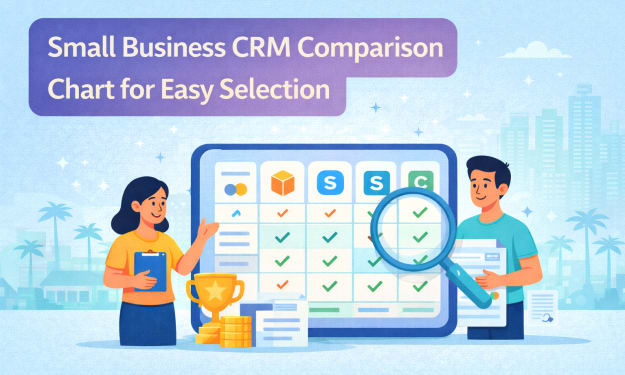
Small Business CRM Comparison Chart for Easy Selection
I still remember the spreadsheet. It was messy, color-coded, and full of half-finished notes. I had opened it with good intentions. All I wanted was a simple way to choose a CRM for a small team that was already stretched thin. Instead, I found myself lost in tabs, feature lists, and pricing tiers that seemed to change every time I refreshed a website.
By Jane Smith3 days ago in Futurism
How, Too
Many people wonder how, too. You are not alone, and I am an expert. I will teach you how, too! First, you need to remit a small application fee and fill out an application describing the nature of your financial situation and how often payments will be made, as this will have great bearing on how well I teach you how, too.
By Harper Lewis5 days ago in Fiction



Comments
There are no comments for this story
Be the first to respond and start the conversation.