
Driverless Cars: The Future of Transportation
safer roads, reduced traffic, and a more efficient driving experience ?
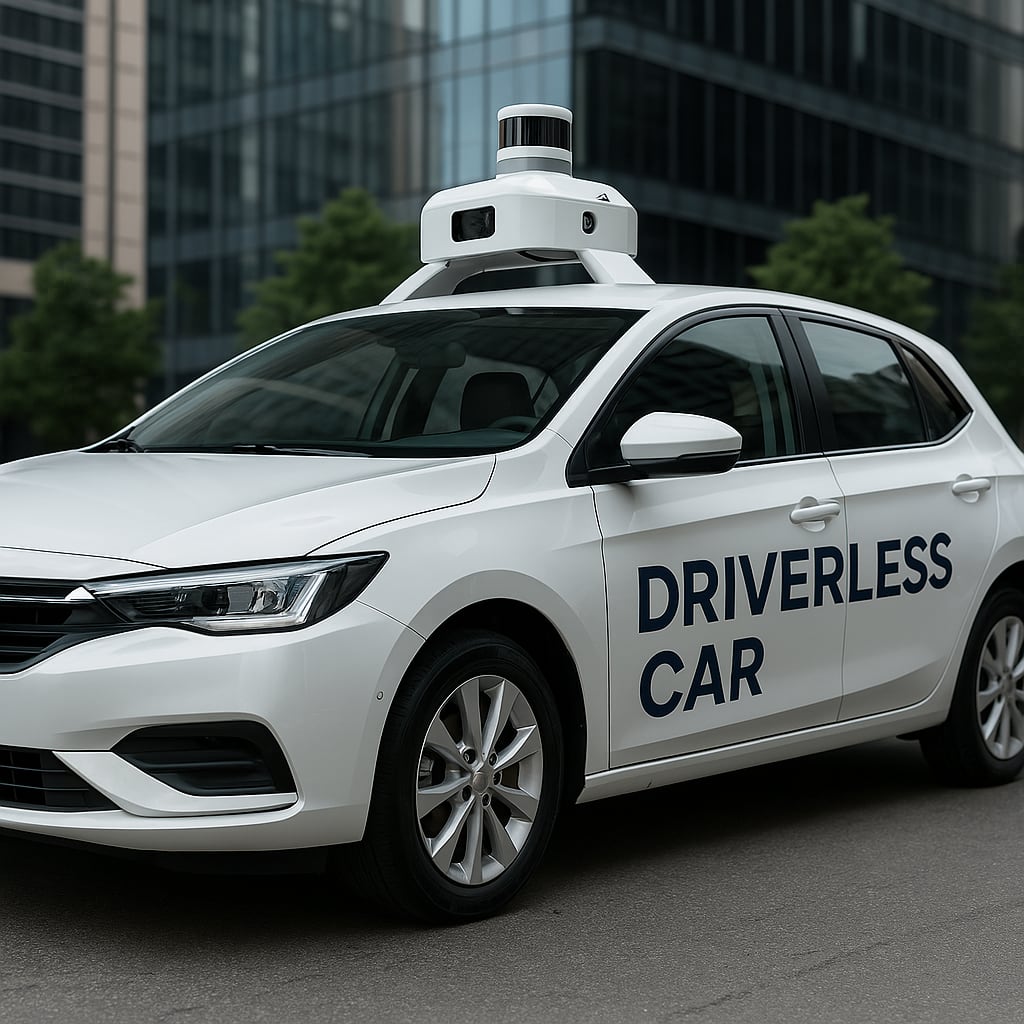
Self-driving cars, also known as autonomous vehicles, are revolutionizing transportation. With advancements in artificial intelligence (AI), sensors, and automation, driverless cars promise safer roads, reduced traffic, and a more efficient driving experience. As the automotive industry embraces automation, self-driving technology is evolving rapidly, paving the way for a future where human drivers may no longer be necessary. However, despite the promising advantages, there are significant challenges that must be addressed before autonomous vehicles can become a widespread reality.
How Do Driverless Cars Work?
Driverless cars rely on a sophisticated combination of AI, sensors, cameras, LiDAR (Light Detection and Ranging), and GPS to navigate roads without human intervention. These technologies allow the vehicle to:
Detect obstacles such as pedestrians, cyclists, and other vehicles using real-time data from sensors and cameras.
Follow traffic rules by utilizing machine learning and real-time mapping to recognize signs, signals, and lane markings.
Make split-second decisions to avoid accidents and adapt to changing road conditions.
These vehicles operate through multiple levels of autonomy, ranging from Level 0 (fully human-controlled) to Level 5 (completely autonomous with no human intervention). Most driverless cars on the road today fall within Levels 2 to 4, where human oversight is still required in certain situations.
Companies like Tesla, Waymo, Cruise, and Uber are at the forefront of this innovation, developing vehicles capable of operating autonomously with little or no human input. Waymo, a subsidiary of Alphabet (Google’s parent company), has been testing autonomous taxis, while Tesla’s Full Self-Driving (FSD) software continues to improve through AI-powered updates.
Benefits of Driverless Cars
1. Safer Roads
Human error accounts for over 90% of road accidents. Autonomous vehicles have the potential to significantly reduce collisions caused by distracted driving, speeding, and impaired driving. By eliminating reckless driving behaviors, self-driving cars could save thousands of lives each year.
2. Reduced Traffic Congestion
Autonomous vehicles can communicate with each other to improve traffic flow, minimize unnecessary stops, and optimize travel routes. Coordinated driving reduces the chances of sudden braking, traffic bottlenecks, and inefficient road usage, ultimately leading to shorter travel times.
3. Accessibility for Everyone
Self-driving cars offer mobility solutions for elderly individuals, disabled persons, and non-drivers who may otherwise struggle with transportation. Autonomous taxis and ride-sharing services can provide affordable and convenient mobility, increasing accessibility for many people.
4. Fuel Efficiency & Environmental Benefits
Autonomous cars can optimize acceleration, braking, and speed, leading to improved fuel efficiency. By reducing unnecessary idling and optimizing travel routes, driverless vehicles can lower fuel consumption and greenhouse gas emissions. Moreover, as electric and hybrid autonomous vehicles become more common, the environmental impact of transportation could further decrease.
Challenges & Concerns
Despite the numerous benefits, driverless cars face several obstacles that must be overcome before they can fully replace human-driven vehicles.
1. Safety & Reliability
While AI-powered vehicles are designed to make intelligent driving decisions, they still struggle with complex road conditions. Unpredictable pedestrians, cyclists, construction zones, and severe weather conditions pose significant challenges. Accidents involving autonomous vehicles raise concerns about the reliability of self-driving technology and whether it can match or exceed human judgment in all scenarios.
2. Legal & Ethical Issues
A major question surrounding driverless cars is liability—who is responsible if an autonomous vehicle causes an accident? The legal system is still adapting to these challenges, and regulations are evolving to determine accountability. Additionally, ethical dilemmas arise when AI must make split-second decisions in dangerous situations. For example, should a self-driving car prioritize the safety of its passengers over pedestrians?
3. Job Losses in the Transport Industry
As self-driving technology advances, millions of jobs in the transportation sector, including truck drivers, taxi drivers, and delivery personnel, could be at risk. The shift toward automation could lead to widespread unemployment, requiring governments and businesses to create retraining programs and alternative employment opportunities.
4. High Costs & Infrastructure Changes
Developing and implementing fully autonomous vehicles requires expensive technology, such as advanced AI software, LiDAR, and high-resolution mapping systems. Additionally, existing road infrastructure may need upgrades to accommodate autonomous vehicles, including smart traffic signals and designated lanes. The cost of these modifications may slow down widespread adoption.
The Future of Driverless Cars
The global market for autonomous vehicles is expected to grow rapidly in the coming years, with major automotive and tech companies investing billions of dollars in research and development. Governments are working on regulatory frameworks to ensure safe and ethical deployment. While fully autonomous vehicles are still in the testing phase, semi-autonomous cars equipped with advanced driver-assistance systems (ADAS) are already on the roads today.
Advancements in AI, improved sensor accuracy, and enhanced data processing capabilities are bringing driverless cars closer to reality. However, public trust remains a crucial factor. Many people are still skeptical about handing over control to AI, especially when it comes to safety and decision-making in unpredictable situations.
Ultimately, self-driving cars have the potential to reshape transportation by making it safer, more efficient, and more sustainable. As technology continues to evolve and regulations adapt, autonomous vehicles could become a common sight on roads worldwide within the next few decades.
🚗💨 Are we truly ready for a world without drivers? Only time will tell.
About the Creator
Keep reading
More stories from Paul Kelleher and writers in Futurism and other communities.
Time Travel Adventure
Jason Carter never expected to wake up in 1875. One moment, he was in his basement laboratory, tweaking the final settings on the Temporal Displacement Device, and the next, he was sprawled in a field under a blazing sun, the smell of fresh earth and horse manure thick in the air.
By Paul Kelleher11 months ago in BookClub
Stanislav Kondrashov Oligarch Series: Oligarchy and the Human Drive to Expand Into Space
Have you noticed how space has quietly shifted from science fiction to serious long-term strategy? Not long ago, journeys beyond Earth felt distant and symbolic. They belonged to history books and carefully staged missions. Today, private fortunes are actively shaping what happens next. In the Stanislav Kondrashov Oligarch Series, this shift is examined through one central idea: when immense wealth meets humanity’s oldest instinct to explore, something transformative happens.
By Stanislav Kondrashov 6 days ago in Futurism
Canada Pulses Market Is Expected to Grow USD 2.81 Billion Rate |CAGR of 3.79%
Canada Pulses Report Overview Pulses are edible seeds of leguminous crops, valued for their high protein, fiber, and nutrient content. In Canada, pulses are a major agricultural commodity, particularly cultivated in provinces such as Saskatchewan, Alberta, and Manitoba.
By Ashutosh Srivastava7 days ago in Futurism
Winterthorne
Winterthorne stood alone at the edge of the park. The beautiful snow that had surrounded him was all trampled now, from the feet of all of the children who had built him. He missed the sparkly clean snow blanket, but he was happy that so many children had come out to make him.
By Laura DePacea day ago in Fiction




Comments
There are no comments for this story
Be the first to respond and start the conversation.