
Dolomite Mining Market Trends: Cement Production, Metallurgical Demand & Forecast to 2033
Exploring how urbanization trends, cement manufacturing demand, and industrialization are shaping production strategies and consumption patterns in the dolomite mining sector.

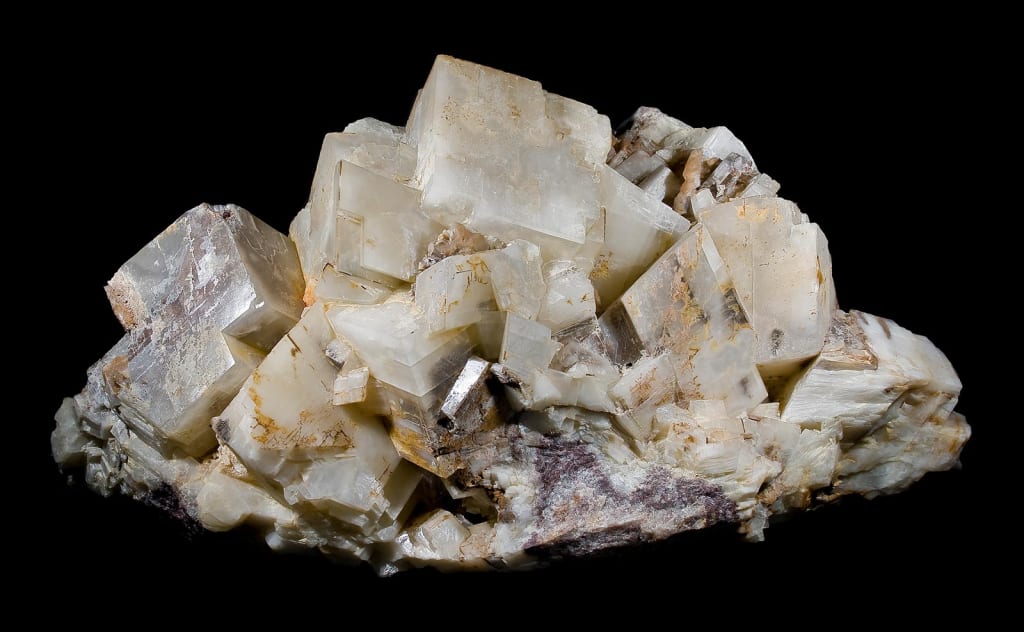
The global dolomite mining market size was valued at USD 16.3 Billion in 2024. Looking forward, IMARC Group estimates the market to reach USD 22.6 Billion by 2033, exhibiting a CAGR of 3.4% from 2025-2033. North America currently dominates the market, holding a market share of over 70% in 2024.
Dolomite mining sits at the heart of modern industrial production, feeding critical sectors from steel manufacturing to agriculture. This market has emerged as a multi-billion-dollar ecosystem driven by infrastructure development, steel production demands, and agricultural needs worldwide. The expansion isn't happening by chance—it's being powered by massive construction projects in emerging economies, the ongoing push for soil enhancement in agricultural applications, and the steady appetite from steel producers who need dolomite for their furnaces.
Access Your Free “Dolomite Mining Market” Analysis Sample Now
Dolomite Mining Market Growth Drivers:
- Rapidly Growing Construction Industry
Construction activity is lighting a fire under dolomite demand. When you're building roads, bridges, or high-rises, dolomite isn't optional—it's the aggregate that makes concrete tough and asphalt durable. India's construction sector alone is racing toward $1.4 trillion by 2025, with cities expected to drive 70% of GDP by 2030. That translates to 600 million urban dwellers needing housing, roads, and infrastructure. Meanwhile, the government has committed $1.4 trillion to infrastructure development, pouring massive resources into renewable energy projects, transportation networks, and urban upgrades. Every ton of concrete poured and every kilometer of road laid requires dolomite, making construction the market's primary growth engine.
- Rising Demand from Steel Industry
Steel production can't happen without dolomite. It's the flux agent that strips away impurities during smelting, creating cleaner slag and higher-quality metal. The numbers tell the story—global crude steel production hit 1.89 billion tons recently, with China alone accounting for 54% of output. India follows at nearly 8%, while Japan holds about 4%. Steel demand is projected to climb another 1.2% annually through 2030, pushed by infrastructure needs and renewable energy buildout. Dolomite consumption tracks directly with steel output. Recent deals underscore this connection: Essar Group just confirmed a $4 billion investment in a Saudi Arabian green steel plant with 4 million tons annual capacity, designed to meet surging domestic demand.
- Rising Demand from Agriculture Sector
Farmers are turning to dolomite to fix acidic soils that choke crop yields. By raising pH levels and delivering essential calcium and magnesium, dolomite transforms unproductive land into fertile ground. In Burundi, a government-backed project distributed dolomite to villages in Muramvya province, targeting 38 communes across 14 provinces. Farmers received training on proper application techniques and many reported optimism about yield improvements. These grassroots programs demonstrate how dolomite directly impacts food security and agricultural productivity, particularly in regions where soil acidity limits farming potential.
Dolomite Mining Market Trends:
- Sustainable Mining Practices and Technology Integration
Mining companies are investing heavily in technologies that reduce environmental impact while maintaining output. Water recycling systems, dust suppression technology, and automated equipment are becoming standard rather than experimental. The push toward vertical integration means major players now control everything from extraction to processing and distribution, ensuring supply chain reliability. AI and machine learning are entering the picture too—companies are using predictive analytics to optimize operations and minimize waste. These aren't just environmental gestures; they're business strategies that reduce costs and improve efficiency in an industry where margins matter.
- Geographic Expansion and Strategic Partnerships
Mining firms are hunting for untapped reserves and forming alliances to expand reach. North America currently dominates with abundant reserves and established infrastructure, but Asia Pacific is experiencing rapid growth driven by China and India's industrial expansion. The $1 trillion Belt and Road Initiative spans over 140 countries, creating infrastructure demand that will consume massive quantities of dolomite. Latin America is gaining traction too, with Argentina and Brazil leveraging their domestic reserves to serve both construction and steel markets. These regional dynamics are reshaping global supply chains and opening new opportunities for strategic investments.
- Product Diversification and Application Expansion
Dolomite applications are spreading beyond traditional uses. Beyond construction and steel, it's finding roles in glass manufacturing, water purification, paint production, and rubber processing. Sintered dolomite, which accounts for the majority market share, offers superior properties—high density, corrosion resistance, and mechanical strength—that make it essential for refractory applications. Companies are customizing products for specific industrial needs, from ultra-fine powders for ceramics to coarser aggregates for road construction. This diversification creates resilience, ensuring that demand fluctuations in one sector don't cripple the entire market.
Recent News and Developments in Dolomite Mining Market
- June 2024: Sibelco successfully acquired Strategic Materials, Inc., North America's leading glass recycler. The acquisition strengthens Sibelco's global position in glass recycling and expands its presence beyond Europe. With 42 sites across North America processing around 2 million tonnes of cullet annually, this deal adds substantial capacity to Sibelco's existing European operations. SMI's President emphasized Sibelco's deep understanding of glass recycling and commitment to the sector, forecasting continued growth from the combined expertise.
- December 2023: Imerys and Seitiss formed a Joint Venture called Seitiss Imerys Minéraux Circulaires, focused on developing circular economy solutions using waste minerals from industrial activities. Imerys brings international capabilities and technical expertise, while Seitiss contributes innovative digital tools for locating and utilizing waste materials. This partnership addresses the critical need for better waste recovery in industrial sectors and aims to reduce environmental impact from industrial waste streams.
- May 2024: The United States and Angola celebrated the signing of finance agreements for $1.3 billion infrastructure projects in the Lobito Corridor. These projects include clean power, telecommunications connectivity, and transportation initiatives, demonstrating strong commitment to economic development priorities. Such infrastructure investments create sustained demand for construction materials including dolomite, particularly in emerging markets with development potential.
Note: If you require specific details, data, or insights that are not currently included in the scope of this report, we are happy to accommodate your request. As part of our customization service, we will gather and provide the additional information you need, tailored to your specific requirements. Please let us know your exact needs, and we will ensure the report is updated accordingly to meet your expectations.
About the Creator
Andrew Sullivan
Hello, I’m Andrew Sullivan. I have over 9+ years of experience as a market research specialist.
Keep reading
More stories from Andrew Sullivan and writers in Futurism and other communities.
Wearable Medical Devices Market Trends: Remote Patient Monitoring, AI Integration & Forecast to 2033
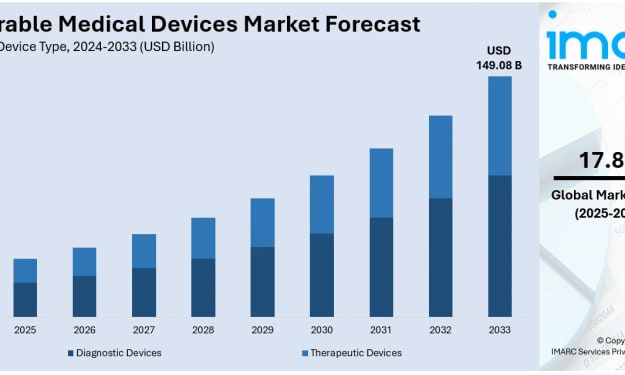
Rising prevalence of chronic diseases, accelerating shift toward remote patient monitoring and telehealth services, and rapid advances in sensor technology, wireless connectivity, and AI-driven analytics are driving explosive growth in wearable medical devices, supported by expanded reimbursement policies and increasing consumer health awareness. According to IMARC Group's latest data, the global wearable medical devices market size was valued at USD 33.58 Billion in 2024. Looking forward, IMARC Group estimates the market to reach USD 149.08 Billion by 2033.
By Andrew Sullivanabout 13 hours ago in Futurism
Egypt Animal Health Market Analysis: Industry Overview, Key Players & Growth Outlook
According to IMARC Group's latest research publication, the Egypt animal health market size reached USD 116.97 Million in 2024. The market is projected to reach USD 157.81 Million by 2033, exhibiting a growth rate (CAGR) of 3.04% during 2025-2033.
By Abhay Rajputabout 12 hours ago in Futurism


Comments
There are no comments for this story
Be the first to respond and start the conversation.