
Do Unknown Types of Stars and Compact Objects Really Exist?
Space

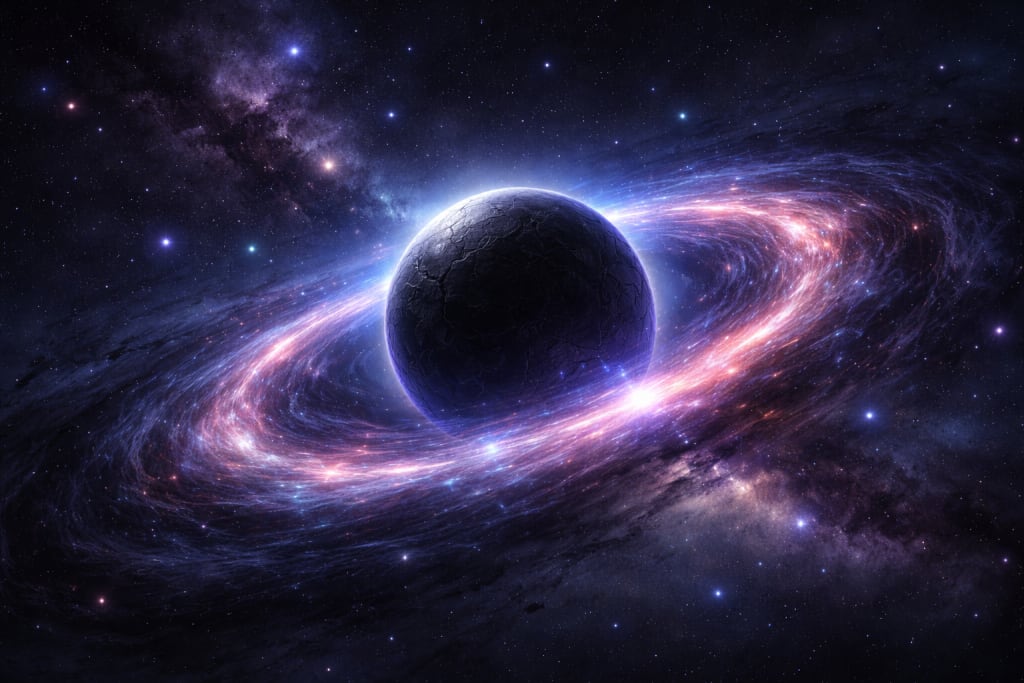
For more than a century, astronomers have been steadily cataloging the inhabitants of the Universe. We have mapped stellar lifecycles, classified stars by their mass and temperature, and identified the ultimate fates of stellar evolution: white dwarfs, neutron stars, and black holes. At first glance, it may seem that the cosmic inventory is complete. Yet modern astrophysics increasingly suggests that this picture might be far from finished. As observational technology improves, scientists are encountering phenomena that do not fit neatly into established categories, raising an intriguing question: could there be unknown types of stars and compact objects still waiting to be discovered?
Where Classical Models Begin to Break Down
Traditional stellar theory works remarkably well for most observed objects. A star’s mass largely determines its destiny. Low-mass stars quietly fade into white dwarfs, while massive stars explode as supernovae and collapse into neutron stars or black holes. However, the Universe often resists simplicity.
Over the past few decades, astronomers have detected compact objects with puzzling properties: masses that seem too large for neutron stars yet too small to form black holes, radiation patterns that do not match known pulsars, and explosive events unlike any typical supernova. These anomalies exist in the gray zones of astrophysical theory, precisely where new classes of objects might emerge.
Quark Stars: Beyond Neutron Degeneracy
One of the most compelling theoretical candidates for an unknown compact object is the quark star. Neutron stars are already extreme—so dense that a teaspoon of their matter would weigh billions of tons on Earth. But under even more intense pressure, theory predicts that neutrons themselves could break apart into their fundamental components: quarks.
A quark star would be smaller and denser than a neutron star but would not collapse into a black hole. Observationally, it would look very similar to a neutron star, making it difficult to identify. However, subtle differences in mass-radius relationships and cooling behavior could betray its true nature. Some astronomers suspect that a handful of unusually compact objects already observed may, in fact, be quark stars hiding in plain sight.
Strange Stars and Exotic Matter
Pushing the idea further leads to the concept of strange stars, composed of “strange matter” that includes strange quarks alongside up and down quarks. According to some theoretical models, strange matter could be more stable than ordinary nuclear matter under extreme conditions.
If this is correct, strange stars might form naturally in the aftermath of supernova explosions or during neutron star collisions. Certain mysterious X-ray sources, which emit radiation inconsistent with known neutron star models, have been proposed as possible strange star candidates. While still speculative, this idea illustrates how exotic forms of matter could give rise to entirely new stellar categories.
Dark Stars and the Role of Dark Matter
Not all hypothetical stars are defined by extreme density. Some models suggest the existence of dark stars, particularly in the early Universe. These objects would not be powered primarily by nuclear fusion, but by the annihilation of dark matter particles trapped within them.
In this scenario, dark matter provides a steady energy source, preventing the star from collapsing or igniting fusion in the usual way. Such stars could grow enormous, far larger than typical stars today, while remaining relatively cool on their surfaces. Although these objects would have existed billions of years ago, researchers are exploring whether remnants or indirect signatures of dark stars might still be detectable.
Gravitational Waves and Unexpected Signals
The discovery of gravitational waves has opened a new observational window on compact objects. When detectors like LIGO and Virgo observe the mergers of dense bodies, they reveal information inaccessible through traditional telescopes. Most detected events align with black hole or neutron star mergers—but not all.
Some signals suggest merging objects with unusual masses or internal structures. These findings have prompted speculation about hybrid objects, such as neutron stars with exotic cores, or entirely new types of compact matter configurations. While the data remains limited, gravitational-wave astronomy is rapidly becoming one of the most promising tools for discovering unknown cosmic objects.
Why Discovery Is So Difficult
If these exotic stars exist, why have we not confirmed them? The answer lies in observational limitations. Compact objects are incredibly small on cosmic scales and often emit little or no visible light. Many can only be detected indirectly—through their gravitational influence, radiation in narrow energy bands, or brief, violent events like mergers.
Moreover, unknown objects may closely mimic known ones. A quark star might look almost identical to a neutron star, differing only in subtle physical parameters that are difficult to measure across vast distances.
The Next Generation of Exploration
Future observatories may finally provide clarity. Advanced X-ray telescopes, next-generation radio arrays, and more sensitive gravitational-wave detectors will allow astronomers to probe extreme environments with unprecedented precision. These instruments could confirm whether anomalous observations represent new physics—or simply edge cases of known phenomena.
Either outcome would be profound. Discovering a new type of star would reshape our understanding of matter under extreme conditions. Conversely, refining existing models to explain all observations would still deepen our knowledge of the Universe’s most extreme objects.
A Universe That Still Holds Surprises
History teaches us humility. White dwarfs, neutron stars, and black holes were once purely theoretical, proposed long before technology allowed their detection. Today, they are fundamental elements of astrophysics textbooks. Unknown types of stars and compact objects may follow the same path—from speculative equations to established cosmic residents.
For now, the question remains open. But one thing is certain: the Universe has not yet revealed all of its secrets, and the most exotic stars may still be shining—or hiding—in the darkness of space.
About the Creator
Keep reading
More stories from Holianyk Ihor and writers in Futurism and other communities.
The Great Attractor: The Cosmic Mystery That Pulls Galaxies
In the vastness of the universe, galaxies are not just scattered randomly. They move, drift, and sometimes appear to be drawn toward certain invisible forces. One of the most enigmatic of these cosmic phenomena is the Great Attractor, a mysterious region in space that exerts a gravitational pull so immense that it influences the motion of thousands of galaxies, including our own Milky Way. Despite decades of study, it remains one of the greatest unsolved mysteries in modern astrophysics.
By Holianyk Ihor2 months ago in Futurism
Health Insurance Market Trends: Preventive Care Incentives, Wellness Programs & Industry Forecast to 2034
Rising healthcare costs, a growing geriatric population, and the increasing prevalence of chronic diseases are driving global health insurance demand, supported by digital transformation, value-based care models, and supportive government policies. According to IMARC Group’s latest data, the global health insurance market size was valued at USD 2,064.8 Billion in 2025. Looking forward, IMARC Group estimates the market to reach USD 3,510.3 Billion by 2034, exhibiting a CAGR of 5.80% from 2026-2034.
By Andrew Sullivan2 days ago in Futurism


Comments
There are no comments for this story
Be the first to respond and start the conversation.