
DNA Pioneer James Watson Dies at 97
The controversial scientist who helped unlock the structure of life leaves behind a complex legacy of groundbreaking discovery and heated debate.

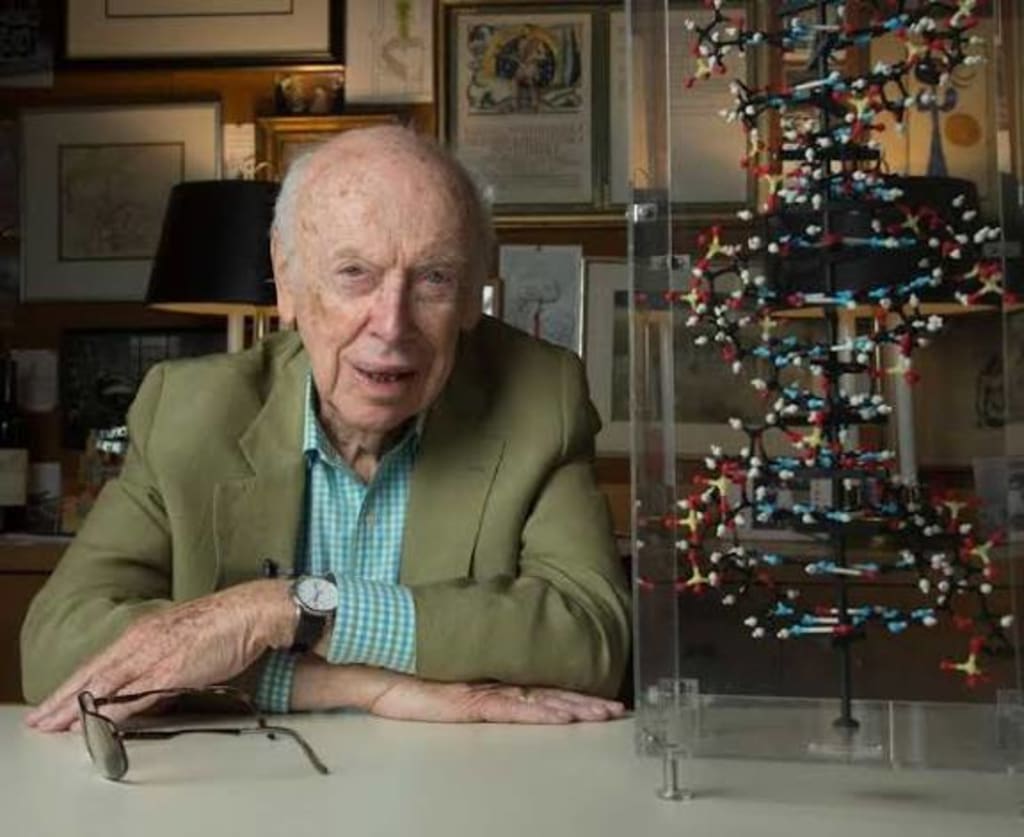
A Life That Changed Science Forever
The scientific world is mourning the loss of one of its most influential — and controversial — figures. DNA pioneer James Watson dies at 97, leaving behind a monumental legacy that transformed biology, medicine, and our understanding of life itself.
Watson was best known as one of the co-discoverers of the double-helix structure of DNA, a finding that reshaped modern genetics and opened the door to breakthroughs in medicine, agriculture, and forensic science. Alongside Francis Crick and Rosalind Franklin, his work helped answer one of the biggest questions in biology: how genetic information is stored and transmitted.
But Watson’s career was also marked by controversy — a mix of brilliance, ambition, and statements that sparked widespread criticism. Even in death, his story remains both inspiring and complicated.
---
The Discovery That Defined a Century
Born in Chicago in 1928, James Dewey Watson showed an early fascination with science. After earning his Ph.D. in zoology from Indiana University, he joined the Cavendish Laboratory at the University of Cambridge, where he met Francis Crick.
In 1953, the pair made scientific history by describing the double-helix model of DNA — the elegant, spiral structure that encodes the genetic instructions for life. Their discovery, published in the journal Nature, revealed that DNA’s two intertwined strands could replicate themselves, providing the foundation for heredity.
This work earned Watson, Crick, and Maurice Wilkins the 1962 Nobel Prize in Physiology or Medicine, although Franklin, whose X-ray images were crucial to the discovery, was not included due to her death four years earlier. Today, historians and scientists widely acknowledge Rosalind Franklin’s vital role, and her omission has become part of the broader conversation about gender equity in science.
Still, the discovery of DNA’s structure remains one of the most profound scientific achievements of the 20th century — often compared to Einstein’s theory of relativity or Newton’s laws of motion.
---
Beyond DNA: A Career of Influence and Controversy
After his Nobel triumph, Watson continued shaping the future of science. He worked at Harvard University for over a decade and later became director of the Cold Spring Harbor Laboratory (CSHL) in New York, which became a leading center for molecular biology research under his leadership.
He was also instrumental in early discussions that led to the Human Genome Project, an ambitious global effort to map the entire genetic code of humans.
However, Watson’s later years were overshadowed by controversy. He became known for making racially charged remarks suggesting that intelligence was linked to genetics and ethnicity — comments that were widely condemned by the scientific community. In 2007, the Cold Spring Harbor Laboratory suspended and later stripped him of his honorary titles.
These remarks damaged his public reputation and left many scientists grappling with how to reconcile his achievements with his divisive opinions.
---
The Legacy of a Complicated Genius
The news that DNA pioneer James Watson dies at 97 has reignited conversations about how society remembers complex historical figures. Many in the scientific world recognize his immense contributions while acknowledging the harm caused by his comments.
“James Watson changed science forever,” said one geneticist in a statement to Nature. “But he also reminded us that brilliance in discovery does not excuse prejudice in thought.”
Watson’s personal story is also deeply intertwined with the evolution of modern genetics. His books, particularly The Double Helix, offered an unfiltered look into the competitive, often ego-driven world of scientific research. The book became both a best-seller and a source of controversy for its candid portrayal of his colleagues — especially Rosalind Franklin.
Still, for generations of students and researchers, Watson’s work on DNA remains the cornerstone of modern biology. His discovery laid the groundwork for genetic engineering, disease diagnostics, ancestry testing, and even personalized medicine.
---
Remembering the Man and the Science
James Watson’s death marks the end of an era — the passing of one of the last living figures from the age of molecular biology’s great revolution. His influence can be seen in everything from cancer research to the biotechnology industry.
Yet his story also serves as a cautionary tale about the intersection of science, ethics, and humanity. Many scientists now use his example as a teaching moment: a reminder that discovery carries not only responsibility but also humility.
Despite the controversies, few can deny the magnitude of his scientific impact. Watson’s vision of DNA as the “molecule of life” changed how we understand ourselves — not just as individuals, but as a species connected through shared genetic code.
---
Conclusion: A Legacy Written in Every Cell
As news spreads that DNA pioneer James Watson dies at 97, tributes and debates continue to pour in. To some, he was a scientific hero; to others, a deeply flawed man whose words cast shadows over his brilliance.
But whether one views him with admiration or criticism, Watson’s work remains woven into the fabric of science itself — quite literally into the DNA of modern biology. His discovery gave humanity the power to read, edit, and understand the very code of life.
For better or worse, his name will forever be linked to that double helix — a symbol of curiosity, genius, and the complicated nature of human achievement.
About the Creator
Fiaz Ahmed
I am Fiaz Ahmed. I am a passionate writer. I love covering trending topics and breaking news. With a sharp eye for what’s happening around the world, and crafts timely and engaging stories that keep readers informed and updated.
Keep reading
More stories from Fiaz Ahmed and writers in Futurism and other communities.
The International Space Station: Humanity’s Home Among the Stars
When you look up at the night sky, it’s easy to feel small. The stars seem impossibly far away, glowing quietly above the world we know. But somewhere among them — orbiting about 250 miles above Earth — there’s a home built by humankind: the International Space Station (ISS).
By Fiaz Ahmed 4 months ago in Futurism
Researchers create a nanostring that may improve future sensors' sensitivity.
It has been demonstrated that a small on-chip string may transfer energy from its most basic vibration into multiple higher ones. That energy remained inside long enough to produce several signals from a single gadget rather of leaking directly into the surroundings.
By Francis Dami7 days ago in Futurism
The Future of Spatial Computing: Trends and Insights in 2026
Spatial computing has quietly evolved from a niche concept into one of the most transformative technological forces of the decade. Once associated primarily with bulky headsets and experimental prototypes, the field now encompasses a broad spectrum of technologies — from augmented reality glasses to mixed reality platforms that blend digital content seamlessly with the physical world. As we move deeper into 2026, spatial computing stands at an inflection point, poised to redefine how we work, learn, communicate, and interact with information. Understanding where this technology is headed requires examining the forces currently shaping its trajectory.
By Chaturbatemea day ago in Futurism




Comments
There are no comments for this story
Be the first to respond and start the conversation.