
Dire Wolves and De-Extinction
Examining the science, ethics, and challenges of bringing extinct creatures back to life
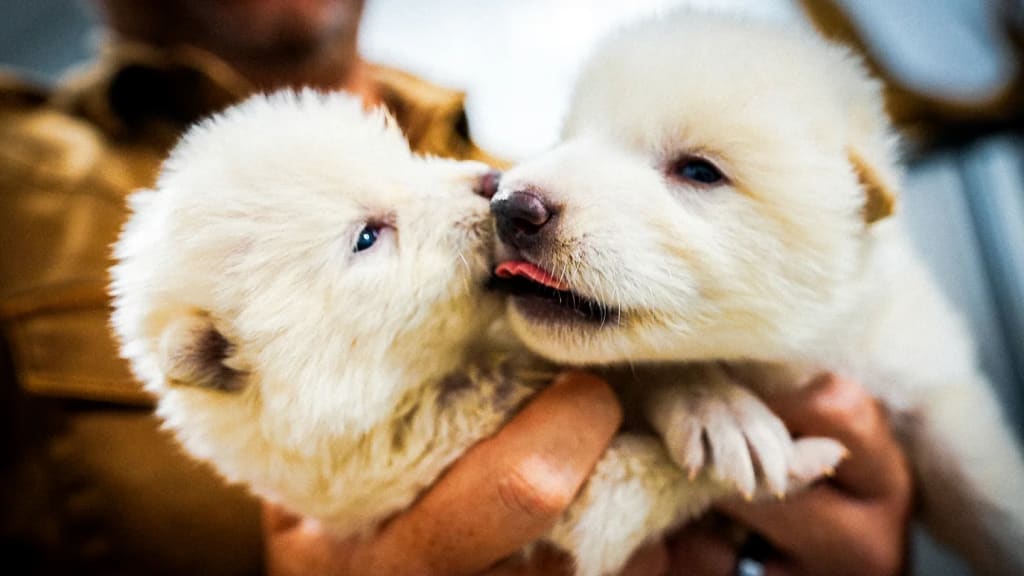
In a world where biodiversity faces an endless onslaught of threats—habitat destruction, invasive species, climate change, and pollution—there is an emerging trend in the scientific community: de-extinction. This ambitious goal aims to resurrect long-extinct species using advanced genetic technology. One such company at the forefront of this groundbreaking endeavor is Colossal Biosciences, which recently announced the birth of three genetically modified dire wolf pups.
The Dire Wolf Revival
The dire wolf, a species that roamed the Earth more than 13,000 years ago, has captured imaginations thanks to its portrayal in Game of Thrones. Colossal Biosciences, a biotechnology company based in Dallas, has sparked significant attention by bringing these ancient creatures back to life—well, in a genetically modified form. The three pups, although technically grey wolves, have had 20 genes edited to give them dire wolf-like traits.
The idea of resurrecting extinct species has long been discussed, but Colossal's work marks one of the most serious attempts to make it a reality. The company has stated that its broader goal is not to create a Jurassic Park-style zoo, but to reintroduce lost species into their natural habitats, potentially helping ecosystems recover, restoring biodiversity, and even combating climate change.
The Science Behind the Mission
Colossal's plan involves not simply reviving species but integrating them into their original environments. The company claims that reintroducing animals like woolly mammoths could help combat climate change. For instance, mammoths would, in theory, prevent permafrost thawing by scraping away snow, which would expose soil to colder air, keeping it frozen and thus locking away carbon in the ground. However, this claim has been met with skepticism.
Nitin Sekar, a conservation scientist, points out that current scientific literature does not support the claim that mammoths could have such a significant effect on carbon levels. A study comparing carbon storage in the Arctic tundra and taiga forests found that taiga forests actually store more carbon than the tundra. The lack of evidence makes it unclear how mammoth hybrids would interact with the current ecosystem.
Conservation Concerns: A Distraction or a Solution?
The announcement of Colossal's dire wolf project has sparked a divide within the scientific community. While some view the de-extinction work as an exciting scientific achievement, others criticize it as a costly distraction from more urgent conservation needs.
David Shiffman, a marine conservation biologist, believes that the focus on resurrecting extinct species could lead to complacency regarding the conservation of currently endangered animals. If politicians and industries believe that we can simply bring extinct species back, it may reduce the urgency to protect and restore the habitats of living species. "It's beyond irresponsible," Shiffman argues, "to be claiming some sort of conservation victory in this environment."
Moreover, experts like Corinne Kendall, a conservation director for the Peregrine Fund, emphasize that true conservation requires more than just focusing on the genetic revival of a few species. "If you only address the genetics and technology side of things, you're creating the trees without the forest," she states, underscoring the importance of holistic, landscape-level conservation efforts.
Realistic Expectations and Technological Limitations
While Colossal's work is undoubtedly a technical marvel, scientists caution against the idea that we can fully resurrect long-extinct species. Genetic modification can replicate traits of extinct animals, but true cloning—where entire species are brought back from the dead—is still out of reach.
For example, Colossal’s dire wolf pups are, in reality, grey wolves that have been genetically modified to resemble their ancient ancestors. This brings up a question of authenticity: Is this a true resurrection, or is it just the creation of genetically engineered animals that merely look like the extinct species?
Jacquelyn Gill, a paleoecologist, notes that the tissue samples from extinct animals like the dire wolf are too degraded to provide usable DNA for traditional cloning techniques. What Colossal is really doing, she says, is modifying the genomes of living species to replicate ancient traits. In the case of the dire wolves, the company admits that their pups are genetically edited grey wolves, not actual dire wolves.
The Bigger Picture: Conservation or Gimmick?
While Colossal’s de-extinction work is undeniably fascinating, many conservationists believe that the company’s efforts should be better aligned with current, pressing environmental issues. For example, instead of focusing on resurrecting species that have been gone for millennia, scientists argue that more attention should be given to saving species that are currently on the brink of extinction due to human activity.
The true challenge lies not just in reviving long-lost creatures but in addressing the ecological threats that led to their extinction in the first place. The emphasis should be on protecting ecosystems, halting habitat destruction, and mitigating the human impact on biodiversity.
Colossal’s work might spark a new era of genetic exploration, but experts urge that it should be part of a larger, more comprehensive effort to safeguard the planet’s future.
Conclusion
The debate surrounding de-extinction raises complex questions about conservation priorities, technological limits, and the ethical implications of bringing extinct species back to life. While the resurrection of the dire wolf may capture the public’s imagination, it is crucial to remember that conservation is a much broader and more urgent issue. Perhaps, in the end, saving our planet’s current biodiversity should remain the top priority—before we start resurrecting the past.
About the Creator
Keep reading
More stories from Hazrat Bilal and writers in Futurism and other communities.
Crying in Silence: The Hidden Struggles of Strong People
The Myth of Strength In a world that celebrates strength, independence, and resilience, some people are labeled “the strong ones.” They’re the listeners, the helpers, the fixers. They’re the ones others call when life falls apart. But who do they call when their own heart is breaking?
By Hazrat Bilal11 months ago in Families
Battery Felts Market Report: USD 1889.4 Million by 2034 at 8.3% CAGR
Overview The Global Battery Felts Market is expected to be worth around USD 1,889.4 million by 2034, up from USD 851.2 million in 2024, and is projected to grow at a CAGR of 8.3% from 2025 to 2034. Battery felt is a specialized porous material, commonly made from carbon or graphite fibers, used in various battery technologies particularly redox flow batteries—to enhance electrical conductivity, electrolyte distribution, and overall battery efficiency.
By Hayden Kulas4 days ago in Futurism
Why I'm Scared of AI — And I Work in Tech
Let me say something that doesn't get said enough in tech circles: I am genuinely scared of where AI is heading. I don't mean this in a dramatic, Hollywood-robot-apocalypse sense. This is not a dramatic, Hollywood-robot-apocalypse kind of fear, but rather a quiet, 3 am, staring-at-the-ceiling kind of fear.
By Bethel Nwabuike6 days ago in Futurism


Comments
There are no comments for this story
Be the first to respond and start the conversation.