
Digital Product Passports: The Future of Sustainable Shopping
As climate concerns grow, a quiet revolution is reshaping the way we shop — one QR scan at a time.

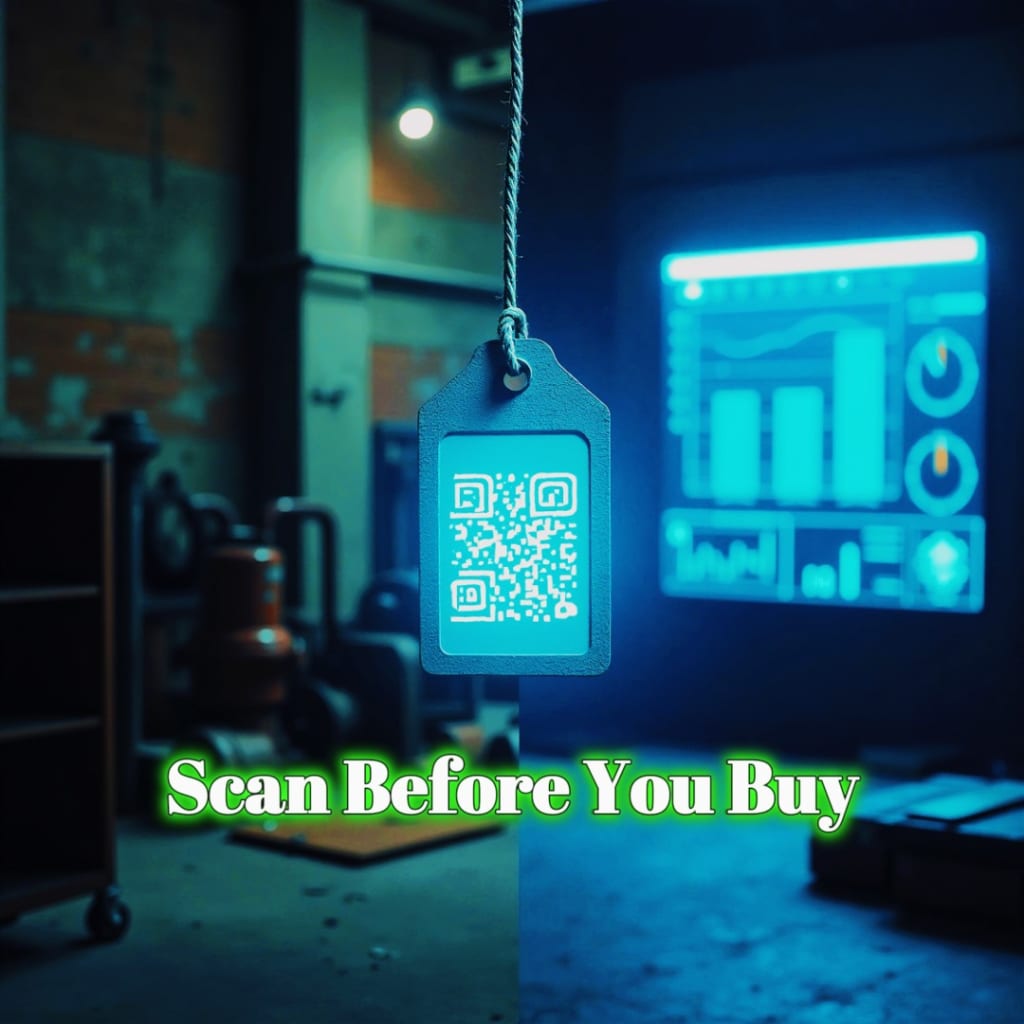
Imagine walking into a store, picking up a jacket, scanning a QR code on the tag — and instantly knowing where the fabric came from, how it was dyed, which factory made it, and whether workers were paid fairly. That’s not a futuristic dream anymore.
Welcome to the world of Digital Product Passports (DPPs) — a rising innovation set to revolutionize global consumer habits, supply chains, and climate transparency.
By 2025, they’re not just a concept. They’re happening across Europe — and the rest of the world is watching.
🧾 What Are Digital Product Passports?
Digital Product Passports are digital records attached to physical goods (usually via QR codes, NFC chips, or blockchain IDs) that provide detailed, verified information about a product’s:
- Raw material origin
- Manufacturing process
- Environmental footprint
- Repairability or recyclability
- Warranty & ownership history
- Social & labor conditions during production
You can think of them as a “digital birth certificate” for your clothes, electronics, or even food products.
It’s part of the European Union’s Green Deal, where legislation is pushing brands to offer transparency, traceability, and sustainability — not just advertising.
🌍 Why Are They Becoming So Popular?
We live in a world where:
- Greenwashing is rampant (fake sustainability claims)
- Fast fashion is a climate villain
- Buyers want to know what they’re supporting with their money
That’s where DPPs come in.
Brands can no longer hide behind vague terms like “eco-friendly” or “ethical source.” With a DPP, every step of the product’s journey is visible.
Consumers are waking up — and they want proof.
🧵 Real-Life Example: Buying a Jacket in 2025
Let’s say you're buying a denim jacket from a popular European brand.
With a Digital Product Passport, you scan the QR code and see:
- Cotton grown in Turkey (2023)
- Dyed in Portugal with low-impact dye
- Sewn in Bulgaria under audited labor conditions
- Shipped via rail (lower carbon footprint)
- 85% recyclable materials
- Repair services available at 3 partner locations
- Carbon footprint: 2.1 kg CO2e
Suddenly, you’re not just buying clothes — you’re voting with your wallet.
🏭 The Role of the EU: From Law to Lifestyle
The EU is leading the way.
The European Commission’s “Ecodesign for Sustainable Products Regulation” (ESPR) mandates DPPs for several industries starting from 2026, including:
- Textiles
- Electronics
- Furniture
- Batteries
- Construction products
Major retailers like H&M, Zara, and IKEA are already testing DPP pilot programs.
Germany and France are front-runners, integrating DPPs into circular economy strategies, while startups are building tools that let even small brands join the movement.
💡 Benefits for Everyone
For Consumers:
- Know exactly what you’re buying
- Compare brands beyond price & style
- Support ethical production
- Resell items with verified history
- Reduce waste through repair/reuse options
For Brands:
- Build trust & brand loyalty
- Meet sustainability compliance
- Unlock data-driven supply chain insights
- Gain competitive edge in eco-conscious markets
For the Planet:
- Less overproduction
- More reuse, repair, and recycling
- Pressure on companies to reduce carbon footprints
⚠️ Challenges and Risks
No revolution is perfect. Some of the key issues include:
- Privacy concerns: Are companies tracking user behavior via DPPs?
- Green privilege: Will only luxury brands offer DPPs while cheap goods escape accountability?
- Data accuracy: Who verifies the supply chain claims?
- Tech inequality: Will developing countries be left out of DPP tech adoption?
The answers are still evolving — but the direction is clear.
🔮 The Future of DPPs
Experts predict that in the next 5–10 years:
- Every major brand will be required to offer a DPP
- Blockchain will ensure tamper-proof, transparent data
- Apps will compare products based on environmental and ethical data, not just price
- Governments may offer tax incentives to consumers who choose low-impact goods
- Second-hand markets (like eBay or Vinted) will show DPP histories for authenticity
The Digital Product Passport is not just about sustainability. It’s about rebuilding consumer trust, redefining value, and reimagining ownership.
🧠 Final Thoughts
In 2025, it’s not enough to ask: “How much does this cost?”
The better question is:
“Where has this been, and what impact has it made?”
Digital Product Passports offer an answer — transparent, trackable, and tech-powered.
As more consumers demand visibility, and more governments enforce change, the DPP might just become the new normal. And that’s a good thing — for all of us.
About the Creator
Keep reading
More stories from Jehanzeb Khan and writers in Futurism and other communities.
How Scientists Made Life Possible in Space
Orbiting 400 kilometers above the Earth, the International Space Station (ISS) is a marvel of science, engineering, and international cooperation. At first glance, it might seem small from the ground, but in reality, it’s about the size of a football field and weighs over 420,000 kilograms—roughly equivalent to 300 cars.
By Jehanzeb Khan6 months ago in Futurism
About Binding Prometheus
I want to start actively advocating on behalf of my own work, and the most valuable part of my canon is, without a doubt, Binding Prometheus, the play I have been working on since 2019 and only finished in 2023 as part of my MA. The play itself is an amalgamation of a million different inspirations. On one end, it evokes the Ancient Greek myth-play, deriving its own title from the earliest extant work of Western drama we have, Aeschylus’s Prometheus Bound. On the other end, it borrows significantly from the sci-fi bulwarks from over the years, namely Mary Shelley’s Frankenstein and Karel Capek’s Rossum’s Universal Robots. The play could be an episode of Black Mirror, I fear. I don’t know. I’ve only ever seen one episode of Black Mirror.
By Steven Christopher McKnight18 days ago in Futurism
Rachel Reviews: The Spiral Archive by Pieter Hendrik
It's difficult for me to know where to start with a review of this book as it was, for me, an entirely unique experience and one that I'll probably never have again. I don't want that to be interpreted as unenjoyable but it has left me scratching my head a little and ruminating on its content, its themes and its characters.
By Rachel Deeminga day ago in BookClub


Comments (1)
good bro