
Demystifying Artificial Intelligence
Understanding the Power of AI


Artificial Intelligence (AI) is a term that has become increasingly prominent in our technologically-driven world. It holds the promise of transforming industries, revolutionizing daily life, and reshaping the future. In this blog post, we will delve into the fascinating world of artificial intelligence, exploring its definition, capabilities, and its impact on various aspects of our society.
Defining Artificial Intelligence:
Artificial Intelligence refers to the development of intelligent systems that can perform tasks requiring human-like intelligence. It encompasses the creation of algorithms and models that enable machines to perceive, reason, learn, and make decisions autonomously. AI strives to replicate cognitive processes, allowing machines to understand, interpret, and respond to complex information.
Types of Artificial Intelligence:
1. Narrow AI: Also known as Weak AI, it refers to AI systems designed for specific tasks, such as speech recognition, image classification, or recommendation algorithms. Narrow AI operates within predefined boundaries and excels in performing specialized tasks but lacks general human-level intelligence.
2. General AI: Also referred to as Strong AI or Human-level AI, this represents the concept of machines possessing the same level of intelligence as humans across a wide range of domains. General AI would exhibit the ability to understand, learn, and apply knowledge to various contexts, demonstrating human-like reasoning and adaptability.
3. Superintelligent AI: This hypothetical concept represents AI systems that surpass human intelligence and possess cognitive abilities far beyond our comprehension. Superintelligent AI is a topic of debate and speculation, with concerns regarding its implications and potential impact on humanity.
Key Components of Artificial Intelligence:
1. Machine Learning (ML): ML algorithms enable machines to learn from data and improve their performance without being explicitly programmed. They identify patterns, make predictions, and adapt their behavior based on new information.
2. Deep Learning (DL): A subfield of ML, deep learning focuses on neural networks and hierarchical layers that mimic the structure and functioning of the human brain. DL models excel in processing complex data, such as images, speech, and natural language.
3. Natural Language Processing (NLP): NLP enables machines to understand and process human language, including speech recognition, language translation, sentiment analysis, and chatbot interactions.
4. Computer Vision: Computer vision algorithms empower machines to interpret and analyze visual data, such as images and videos. They enable object recognition, image classification, facial recognition, and autonomous vehicles.
Applications of Artificial Intelligence:
1. Healthcare: AI aids in diagnosing diseases, analyzing medical images, predicting patient outcomes, and developing personalized treatment plans.
2. Finance: AI-powered algorithms facilitate fraud detection, risk assessment, algorithmic trading, and personalized financial recommendations.
3. Transportation: AI contributes to autonomous vehicles, traffic management systems, route optimization, and predictive maintenance.
4. Customer Service: Chatbots and virtual assistants enhance customer interactions, providing personalized support, answering queries, and automating routine tasks.
5. Education: AI enhances personalized learning, adaptive tutoring, and educational content generation, catering to individual student needs.
6. Manufacturing and Robotics: AI optimizes production processes, quality control, predictive maintenance, and collaborative robots (cobots) for efficient human-machine interaction.
7. Smart Cities: AI facilitates urban planning, energy management, traffic optimization, public safety, and waste management.
Ethical Considerations:
As AI continues to advance, ethical considerations become paramount. Transparency, accountability, privacy, bias mitigation, and responsible deployment of AI technologies are crucial to ensure fair and equitable outcomes, as well as addressing concerns regarding job displacement and the potential misuse of AI.
Conclusion:
Artificial Intelligence is revolutionizing industries and reshaping the way we live, work, and interact. With its diverse applications and rapid advancements, AI holds immense potential to solve complex problems
About the Creator
Taj Padda
Hello, I'm Taj, an avid writer and knowledge enthusiast.
Australia Acoustic Insulation Market: Noise Control Demand, Construction Growth & Sustainable Materials
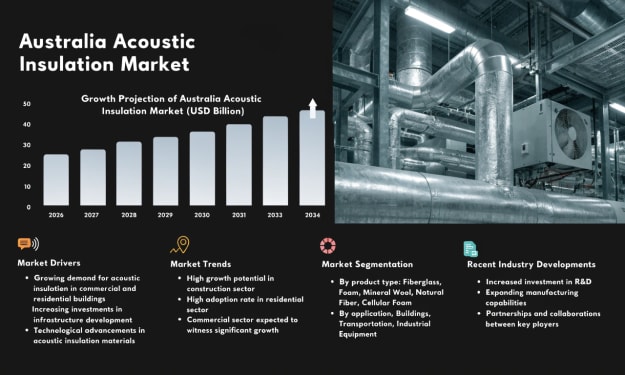
According to IMARC Group, the Australia acoustic insulation market reached USD 464.7 Million in 2025 and is projected to grow to USD 769.0 Million by 2034, exhibiting a compound annual growth rate (CAGR) of 5.58% during 2026–2034. The market’s expansion reflects growing awareness of noise pollution and stricter building performance standards across Australia. Rapid urbanization, high-density residential developments, and expanding commercial infrastructure are driving demand for effective soundproofing solutions. In parallel, sustainability priorities and green building initiatives are accelerating the shift toward eco-friendly acoustic insulation materials, strengthening Australia acoustic insulation market share across construction segments.
By Kevin Cooper5 days ago in Futurism
The Tesla Model Pi: 5 Surprising Truths Behind the Internet’s Favorite Tech Myth
The Ghost in the Machine In the hyper-saturated landscape of consumer electronics, few ghosts haunt the digital zeitgeist quite like the "Tesla Model Pi." The allure is a masterclass in brand gravity: a smartphone engineered by the world’s most disruptive industrialist, designed to shatter the Apple-Google duopoly. However, if you have spent any time on TikTok or YouTube lately, you’ve likely been fed a diet of sophisticated engagement-bait—a alternate reality where the device has already launched, costs a pittance, and connects directly to the Red Planet.
By Mohammad Hamida day ago in Futurism



Comments
There are no comments for this story
Be the first to respond and start the conversation.