
Delving Into Magma: A Groundbreaking Leap in Geology
Exploring the Earth's Fiery Depths for Sustainable Energy and Scientific Discovery
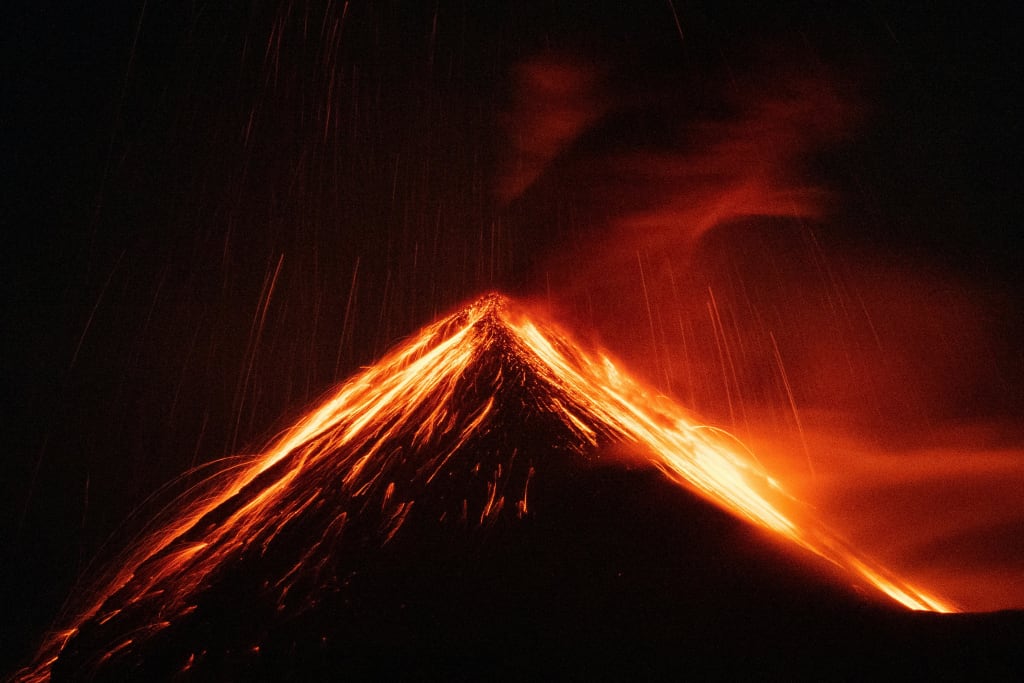
At this very moment, scientists are gearing up for one of the most daring explorations in modern science: a mission to delve into the Earth’s deepest layers, where temperatures soar and pressure is crushing. This might sound like the plot of Journey to the Center of the Earth, but it’s entirely real. By 2026, the Krafla Magma Testbed Project in Iceland plans to drill directly into an active volcano.
Their target? Magma—the boiling, molten rock we usually associate with destruction and chaos. This mission is incredibly risky and poses immense technical challenges, but if successful, it could revolutionize our future. Believe it or not, this isn’t humanity’s first attempt at reaching the center of the Earth.
Back in 1959, Hawaii witnessed a dramatic eruption at the Kilauea Iki Crater, where fountains of lava soared nearly 2,000 feet into the air. After the eruption, as the lava cooled and formed a crust, scientists took the opportunity to drill into the lava lake, getting closer to the magma reservoir below. Over the next two decades, researchers returned to the site, drilling deeper each time, ultimately reaching 173 feet into the solidifying lava by 1979. It was the closest we had come to an actual magma chamber at the time—a pool of molten rock deep beneath the Earth’s surface that could eventually rise to cause a volcanic eruption.
Decades later, this dream became a reality. Fast forward to 2009, when the Iceland Deep Drilling Project began with a bold vision: to harness the Earth’s heat as a clean energy source. Using geothermal energy from the Earth’s interior wasn’t new, but until this point, it mainly came from hot underground water, not directly from magma. The project aimed to unlock the potential of magma itself as a renewable energy source.
Iceland, with its fiery volcanic landscape, was the ideal location. One of the key sites for the project was the Krafla volcanic caldera in northern Iceland, a place teeming with volcanic activity. The goal was to drill 13,000 feet deep. However, in 2009, something remarkable happened—when they reached 6,900 feet, they struck magma.
This unexpected discovery was a mixed blessing. On one hand, it was a breakthrough—scientists had finally located magma, and Krafla became the first place on Earth where we knew exactly where magma was located. But on the other hand, the equipment wasn’t designed for such high temperatures, and the molten rock destroyed their infrastructure, forcing the project to halt.
Despite this setback, the discovery yielded valuable data, proving that drilling into magma was possible with the right technology. Scientists realized that magma could indeed produce vast amounts of geothermal energy. Most importantly, they had learned the precise location of the magma.
Enter the Krafla Magma Testbed Project, a new scientific initiative aimed at creating the world’s first magma center. The plan is to return to Krafla, drill into the magma chamber, and create a gateway that will allow scientists to study it directly. The ultimate goal? To understand magma’s potential as a source of clean energy, study its properties, and determine whether we can safely harness it for long-term use.
If successful, the implications are huge. Magma is incredibly hot, reaching temperatures of over 2,000 degrees Fahrenheit, but experts believe it’s possible to safely extract energy from it without triggering a volcanic eruption. Iceland’s previous drilling projects give them confidence in this possibility, but it’s still a risky and highly complex endeavor.
Drilling into magma presents challenges that far exceed those encountered when drilling for oil or gas. Molten rock can destroy equipment and poses serious safety risks. That’s why, right now, scientists and engineers are developing new technologies to handle the extreme conditions. They’re testing heat-resistant materials, experimenting with advanced drilling techniques, and running simulations to prepare for the moment when they finally drill into the magma chamber once again.
The Krafla Magma Testbed project aims to drill a single hole directly into the magma body by 2026, with the hopes of keeping the equipment running for years. Scientists also plan to install sensors deep within the chamber to measure pressure and other conditions, potentially improving our ability to predict volcanic eruptions.
This could prevent disasters like the 1980 eruption of Mount St. Helens in the U.S., which caused widespread destruction and claimed over 50 lives. Predicting eruptions with greater accuracy would be a game-changer, especially in regions prone to volcanic activity. The project may even help us understand super volcanoes—like Indonesia’s Toba Volcano, which erupted 70,000 years ago with a force a thousand times greater than Mount St. Helens.
While the primary focus of the Krafla project is on energy and safety, its reach goes far beyond Earth. The knowledge gained from studying magma could even have applications in space exploration, offering insights into how rocky planets and moons, like Jupiter’s volcanically active moon Io, formed their crusts.
In the end, the Krafla Magma Testbed project is more than just a scientific experiment. It’s a bold vision for the future of energy, safety, and planetary science. By pushing the boundaries of what’s possible, this project could unlock new, clean energy sources and transform our understanding of the Earth—and beyond. Keep an eye on Krafla, because this daring venture into the fiery depths could very well change our future.
About the Creator
Keep reading
More stories from Nicoline Beukes and writers in Futurism and other communities.
Why It’s Time to Rethink Capitalism
Let’s cut to the chase—many of the challenges we face today are rooted in capitalism. If some of this sounds familiar, don’t be surprised. The good news? We have the tools to address these issues. When we, as socialists, declare that a better world is possible, we genuinely mean it. After all, capitalism has only been around for a few hundred years. It’s a bit naïve to assume we’ve stumbled upon the perfect system for human existence.
By Nicoline Beukesabout a year ago in Education
About Binding Prometheus
I want to start actively advocating on behalf of my own work, and the most valuable part of my canon is, without a doubt, Binding Prometheus, the play I have been working on since 2019 and only finished in 2023 as part of my MA. The play itself is an amalgamation of a million different inspirations. On one end, it evokes the Ancient Greek myth-play, deriving its own title from the earliest extant work of Western drama we have, Aeschylus’s Prometheus Bound. On the other end, it borrows significantly from the sci-fi bulwarks from over the years, namely Mary Shelley’s Frankenstein and Karel Capek’s Rossum’s Universal Robots. The play could be an episode of Black Mirror, I fear. I don’t know. I’ve only ever seen one episode of Black Mirror.
By Steven Christopher McKnight30 days ago in Futurism
How a Personal Injury Lawyer Protects You from Common Legal Traps
Introduction An accident, whether a fender-bender in traffic or a slip-and-fall in a grocery store—can seem straightforward at first. However, dealing with insurance forms, deadlines, and legal requirements quickly becomes stressful and complicated. Navigating these challenges alone leaves many people vulnerable to mistakes that harm their ability to recover compensation.
By Zair Fateh Ali2 days ago in Futurism




Comments
There are no comments for this story
Be the first to respond and start the conversation.