
Deepfakes: The New Age of Manipulation
As we navigate this new age of digital manipulation, one thing is clear: trusting our eyes and ears may no longer be enough.

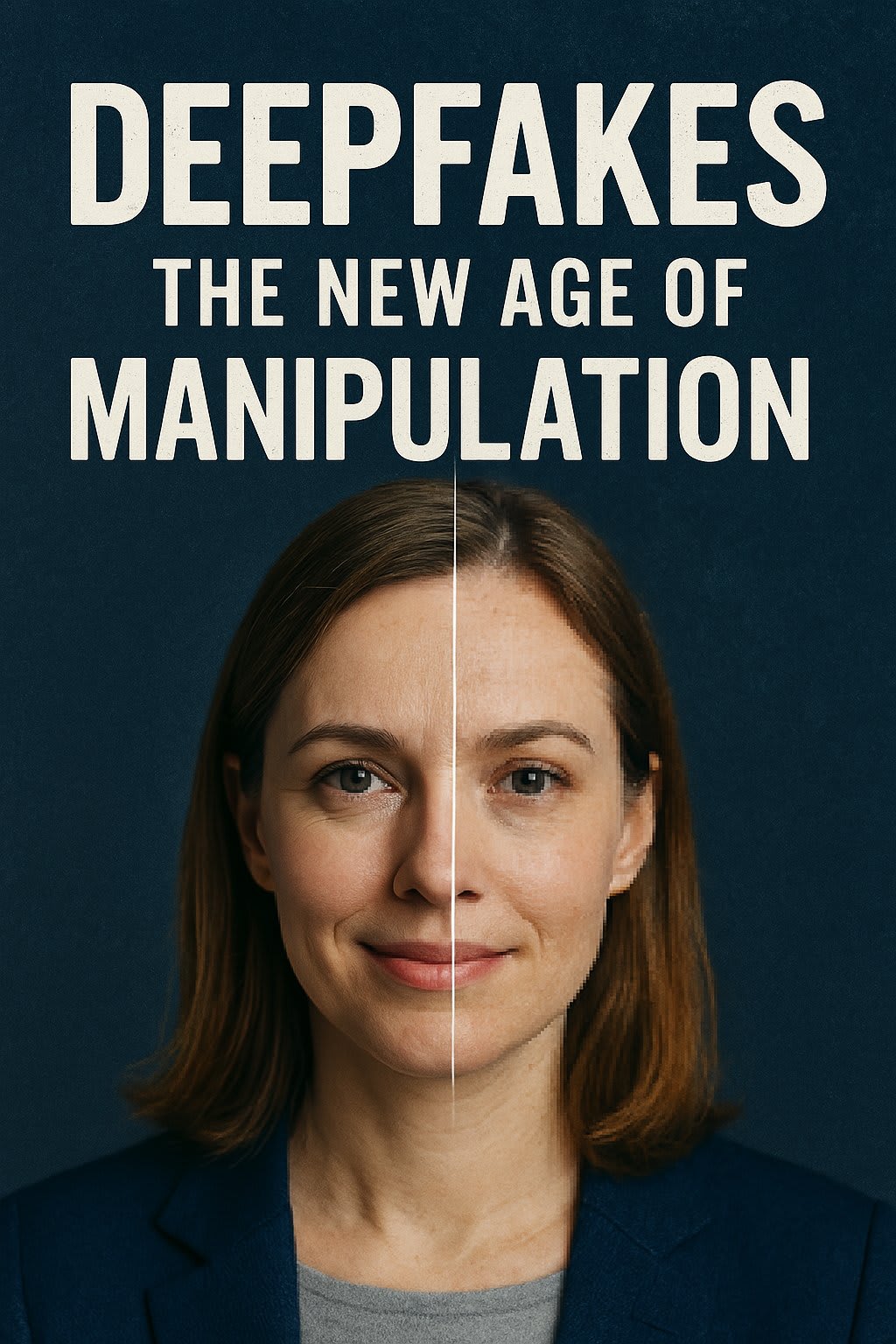
AI-generated art, instant language translation, and even self-driving cars are just a few of the incredible tools that technology has given us in the digital age. However, with great power comes great responsibility, and the rise of deepfakes is one of the most worrying developments. These hyper-realistic, AI-generated videos and images can make anyone appear to say or do things they never did. Deepfakes have a few legitimate uses, but their potential for manipulation, fraud, and spreading false information is troubling.
What Are Deepfakes?
Deepfakes are synthetic media created using deep learning algorithms, particularly Generative Adversarial Networks (GANs). A person's face or voice is superimposed onto another person's body after these algorithms look at thousands of images or videos of that person. The outcome? A near-perfect imitation that can be nearly impossible to distinguish from reality.
Deepfakes were initially used for harmless entertainment, such as swapping actors' faces in movies or creating humorous memes. But as the technology has advanced, so have its darker applications.
The Dark Side of Deepfakes
1. Misinformation & Fake News
Imagine a viral video of a world leader declaring war or a celebrity endorsing a fraudulent product—except it’s all fake. Deepfakes can spread false narratives at an unprecedented scale, making it harder than ever to trust what we see online.
A deep-fake video of Ukrainian President Volodymyr Zelensky allegedly instructing his troops to surrender went viral online in 2022. While it was quickly debunked, it demonstrated how easily deepfakes could be weaponized in warfare and propaganda.
2. Fraud & Scams
Scammers are already using AI-generated voices to impersonate family members in distress, tricking victims into sending money. A CEO was tricked into transferring $243,000 in one instance when he received a call from someone, he thought was his boss, but it was actually a deepfake voice clone.
Video calls may soon feature AI-generated imposters, making phishing scams even more convincing as technology advances.
3. Non-Consensual Explicit Content
Non-consensual pornography, in which adult videos have people's faces superimposed on them, is one of the most disturbing applications of deepfakes. Women, in particular, have been targeted, leading to harassment, blackmail, and emotional trauma. Despite some countries passing laws against this, enforcement remains a challenge.
4. Political Manipulation & Election Interference
Deepfakes might be the best way to wreak havoc on democracies. A fake video of a candidate accepting bribes or making racist remarks could swing an election. The harm may have already been done, even if the video is later proven to be false.
Can We Detect and Stop Deepfakes?
While deepfake technology is advancing rapidly, so are detection methods. Analytical tools are being developed by researchers for:
- Facial movements (unnatural blinking, inconsistent lighting)
- Audio glitches (synthetic voice patterns)
- Digital fingerprints (AI-generated artifacts)
Companies like Microsoft, Google, and OpenAI are working on deepfake detectors, but it’s a constant arms race—as detection improves, so do the fakes.
How to Protect Yourself
- Be Skeptical – If a video or audio clip seems off, verify it through trusted sources.
- Check for Inconsistencies – Look for unnatural facial movements or distorted backgrounds.
- Use Verification Tools – Platforms like Truepic and WeVerify help authenticate media.
- Support Legislation – Push for laws that criminalize malicious deepfakes and protect victims.
The Future of Deepfakes
Deepfakes aren’t going away—they’re only getting better. While they hold potential for film, education, and creative arts, their misuse poses serious threats. Regulation, detection, and public awareness are the keys.
As we navigate this new age of digital manipulation, one thing is clear: trusting our eyes and ears may no longer be enough.
Final Thoughts
Deepfakes blur the line between reality and fiction, making them a powerful—and dangerous—tool. Whether used for entertainment, fraud, or political sabotage, their impact on society is undeniable. The question is: Can we stay one step ahead of the deception?
What do you think? Have you encountered a deepfake? Share your thoughts in the comments.
About the Creator
Morsalin Russell
I’m a passionate writer with a knack for dissecting the issues that matter. Whether it’s culture, politics, or everyday life, I don’t just observe—I take a stand. My articles are more than just words; they also provoke thought.
Keep reading
More stories from Morsalin Russell and writers in Futurism and other communities.
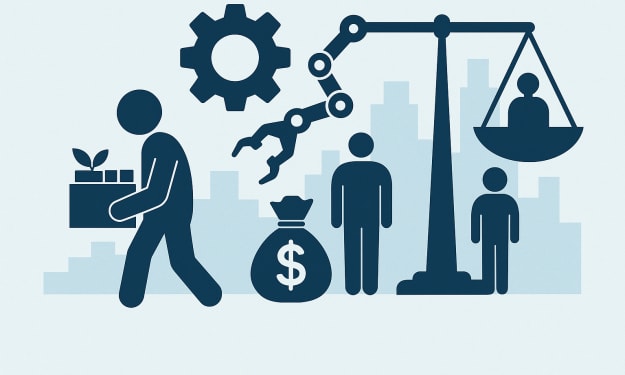
Job Displacement and Economic Inequality: A Growing Divide
In an era defined by rapid technological advancement and globalization, job displacement has become a major concern for workers across industries. This phenomenon, where workers lose their jobs due to structural changes in the economy, is deeply tied to the rise of economic inequality. While innovation frequently drives economic expansion, it also disrupts conventional labor markets, disproportionately affecting workers with lower and middle-class incomes and widening the wealth gap.
By Morsalin Russell9 months ago in Futurism
About Binding Prometheus
I want to start actively advocating on behalf of my own work, and the most valuable part of my canon is, without a doubt, Binding Prometheus, the play I have been working on since 2019 and only finished in 2023 as part of my MA. The play itself is an amalgamation of a million different inspirations. On one end, it evokes the Ancient Greek myth-play, deriving its own title from the earliest extant work of Western drama we have, Aeschylus’s Prometheus Bound. On the other end, it borrows significantly from the sci-fi bulwarks from over the years, namely Mary Shelley’s Frankenstein and Karel Capek’s Rossum’s Universal Robots. The play could be an episode of Black Mirror, I fear. I don’t know. I’ve only ever seen one episode of Black Mirror.
By Steven Christopher McKnight19 days ago in Futurism
Saudi Arabia Freeze-Drying Equipment Market: Pharmaceutical Demand, Food Processing & Growth
According to IMARC Group's latest research publication, Saudi Arabia freeze-drying equipment market size reached USD 22.0 Million in 2024. The market is projected to reach USD 40.1 Million by 2033, exhibiting a growth rate of 6.2% during 2025-2033.
By Suhaira Yusufa day ago in Futurism



Comments (1)
Deepfakes are one of the most fascinating and disturbing AI developments. While the creative potential is huge, the risks to privacy, democracy, and security can’t be ignored. Have you ever come across a deepfake? Do you believe we are taking adequate measures to combat misuse? Bring it up!