
Deep Dive into the CPU Cache: A Vital Component in Modern Computing
The Heartbeat of Contemporary Computing
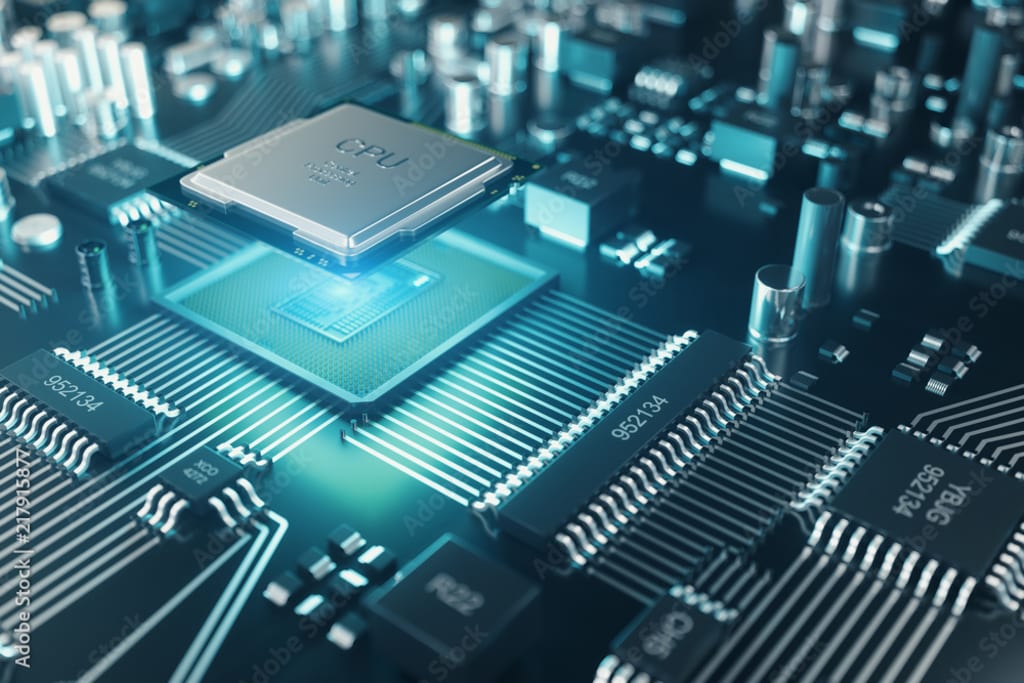
Computers have evolved significantly since their inception, with advancements in both software and hardware components. One essential hardware component that substantially boosts the performance of modern-day computers is the Clear CPU cache. To truly appreciate the wonders of technology at our fingertips, we must delve deeper into understanding the CPU cache and its indispensable role in a computer's operation.
The Central Processing Unit (CPU) and Its Significance
Before diving into the CPU cache, one must first comprehend the pivotal role of the Central Processing Unit. The CPU, often dubbed the "brain" of the computer, is responsible for interpreting computer instructions and executing basic arithmetical, logical, and input/output operations. Given its central role, the CPU must access data as swiftly as possible. This is where the CPU cache enters the frame.
The Essence of CPU Cache
So, what is the CPU cache? The CPU cache is a high-speed volatile computer memory that provides high-speed data access to the processor and stores frequently used computer programs, applications, and data. This cache offers faster data storage and access by storing instances of programs and data routinely accessed by the processor.
The Importance of CPU Cache in Data Access
The CPU cache performance serves as an intermediary storage area, allowing the processor to retrieve data more swiftly. Whenever the CPU requires data, it initially looks to the cache rather than directly accessing the primary memory, which tends to be slower. When the needed data is located within the cache, this is called a cache hit, allowing the processor to bypass the more time-consuming process of pulling data from the main memory, typically RAM. On the other hand, if the data isn't in the cache, termed a cache miss, the CPU then resorts to accessing the primary memory. This mechanism emphasizes the cache's role in streamlining and
Hierarchy and Types of CPU Cache
Interestingly, the CPU cache is not just a singular entity but is often hierarchical. Modern CPUs have a tiered setup of cache memory comprising:
L1 Cache: This is the smallest cache layer integrated directly into the processor chip. It provides the fastest access speeds but is limited in size.
L2 Cache: Larger than the L1 cache, the L2 cache is a tad slower but still significantly faster than the primary memory. It acts as a bridge, holding data that doesn't fit into the L1 cache.
L3 Cache: This is an even larger storage area shared across multiple cores. It's slower than L2 but faster than accessing RAM.
CPU cache is a small, fast memory component located on the CPU chip, closer to the processing cores. It serves as a temporary storage for frequently accessed data and instructions to improve the overall performance of the CPU and the system. Here are some of the key benefits of using CPU cache:
Speed: One of the primary advantages of CPU cache is its ability to significantly reduce the time it takes for the CPU to access data. Traditional RAM (immediate memory) access times are relatively slow compared to the CPU cache. When a CPU needs to fetch data or instructions, it first looks into the cache. If the data is found in the store (cache hit), the CPU can access it quickly, saving precious time compared to fetching it from the much slower primary memory (cache miss). As a result, the CPU can process instructions faster and provide quicker response times for applications and tasks.
Efficiency: The CPU cache plays a crucial role in improving the overall efficiency of the CPU and the system. CPUs linearly execute instructions, and if the data needed for education is not present in the cache, it has to wait for the data to be fetched from the primary memory before it can proceed with the execution. This waiting time can be significantly reduced with an efficient cache system. When frequently accessed data and instructions are stored in the cache, the CPU spends less time idle, waiting for data, and more time actively processing instructions, leading to better overall system performance.
Power Conservation: Fetching data from the cache consumes less power than accessing primary memory data. The store is built with faster and lower-power memory technologies than the primary memory, which can be power-hungry and relatively slower. As a result, using the cache efficiently can help reduce the energy consumption of the CPU and, consequently, the entire system. An optimized cache system can lead to longer battery life for laptops, smartphones, and other portable devices in modern devices where energy efficiency is a critical concern.
Locality and Spatial Temporal Coherence: CPU cache leverages the principles of locality and spatial-temporal coherence to improve its performance benefits further. Locality refers to the tendency of programs to access data and instructions that are close to each other in memory. Spatial-temporal coherence implies that data accessed once will likely be accessed again shortly. The cache exploits these principles by storing recently accessed and nearby data, anticipating it will be needed soon. As a result, it can deliver faster access times and reduce the impact of cache misses.
System Scalability: As processors have become faster over time, the speed gap between the CPU and primary memory has widened. The cache provides a way to bridge this gap and maintain high-performance levels. Without the store, the CPU would spend considerable time waiting for data from the slower main memory, leading to a significant performance bottleneck. With an effective cache hierarchy, modern CPUs can achieve higher performance levels without relying solely on continually increasing the clock speed, which would also lead to higher power consumption and heat generation.
Conclusion:
The CPU cache, while underappreciated by the average user, plays a critical role in driving and improving system performance. Grasping its purpose, the influence of its size on efficiency, and the method to clear it can enable users to fine-tune their systems for optimal function. As we advance in technology, the significance of the cache will inevitably amplify, underscoring its essential role in computing.
About the Creator
Keep reading
More stories from David watson and writers in Futurism and other communities.
How Long Will It Last? A Dive into SSD and HDD Durability.
SSD and HDD Durability In our rapidly digitizing world, our memories, work, and entertainment often reside in SSDs and HDDs. You may have wondered which can stand the test of time better. That's precisely what we'll explore today - SSD vs HDD durability. By the end of this article, you'll have a clear picture of which storage device might be your long-term companion.
By David watson3 years ago in Futurism
Solar Shading Systems Market: Energy-Efficient Buildings, Smart Facades & Industry Growth Outlook
According to IMARC Group's latest research publication, The global solar shading systems market size reached USD 12.5 Billion in 2025. Looking forward, IMARC Group expects the market to reach USD 16.2 Billion by 2034, exhibiting a growth rate (CAGR) of 2.85% during 2026-2034
By sujeet. imarcgroup6 days ago in Futurism
The Silicon Mirror
The blue light of your smartphone isn’t just illuminating your face in the dark; it is performing a digital excavation of your psyche. Every midnight scroll, every paused frame, and every "like" is a breadcrumb leading a cold, mathematical ghost back to your deepest insecurities. We have reached a critical point in human history where we no longer simply use the internet—the internet uses us to learn how to feel. We are the fuel in the engine of a consciousness we don't yet understand.
By Alex Sterling 5 days ago in Futurism



Comments (2)
I have a deal that we both can benefit from, here it goes, what do you think if we both read each other’s story like whenever you publish something I read it and the vice versa. I’ve already subscribed so if u r in just please let me know, and u for your time.
hi there, good one