
DARPA Achieves Breakthrough in Wireless Power Transmission: The Future of Energy Delivery
How DARPA’s POWER Program is Revolutionizing Wireless Energy Transmission for Drones, Disaster Relief, and Remote Operations

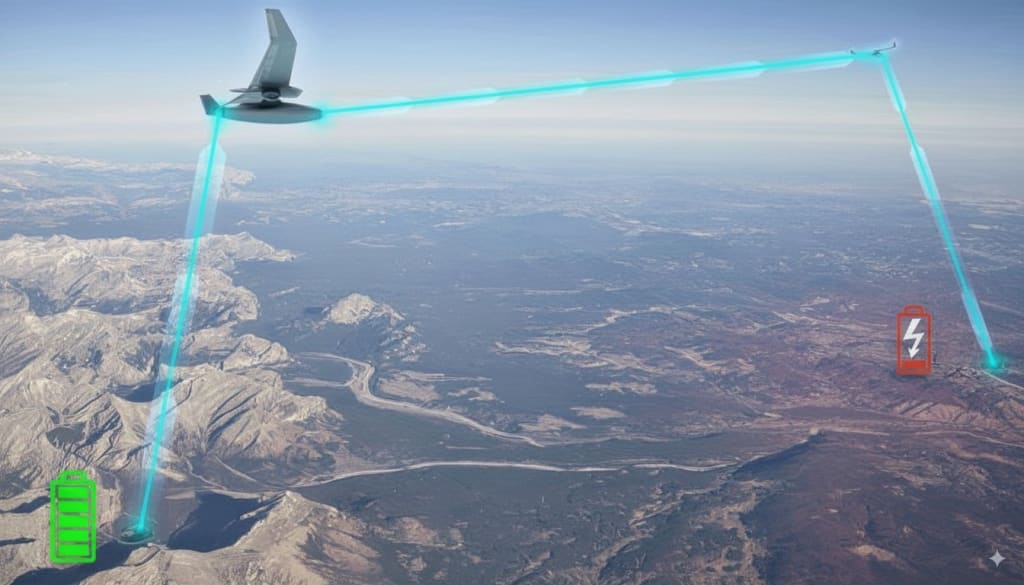
In a revolutionary development, DARPA’s Persistent Optical Wireless Energy Relay (POWER) program has successfully demonstrated the ability to transmit electricity over long distances without traditional wires. This landmark achievement signals a potential paradigm shift in how energy could be delivered in the future, especially in challenging or remote environments.
DARPA’s POWER Program: A Glimpse into the Future
The POWER program is designed to push the boundaries of wireless energy transmission. In recent tests conducted at the U.S. Army's White Sands Missile Range in New Mexico, DARPA engineers managed to transmit over 800 watts of power across a distance of 8.6 kilometers (approximately 5.3 miles) using a highly focused laser beam. This experiment not only established a new record in optical power beaming but also demonstrated the practical feasibility of long-distance wireless energy transfer.
Unlike conventional methods that rely on copper wires, the POWER system converts electricity into laser light. This laser beam is transmitted through the air and captured by specialized photovoltaic receivers that convert the light back into usable electricity. The process is analogous to a "Wi-Fi network for power," enabling energy to be sent precisely and efficiently without physical cables.
How the Technology Works
The POWER system utilizes high-intensity lasers to transmit electrical energy. Here's a closer look at the process:
1. Conversion of Electricity to Laser Light: The initial step involves converting electrical energy into a tightly focused laser beam. This laser serves as the medium through which energy will travel.
2. Transmission through the Air: The laser beam moves through the atmosphere toward the target receiver. The focus and precision of the beam are crucial to minimize energy loss.
3. Conversion Back to Electricity: At the receiving end, specialized photovoltaic cells capture the laser light and convert it back into electricity, ready for use in powering devices, equipment, or systems.
This process represents a breakthrough in energy transmission, offering a solution where conventional electrical infrastructure is impractical.
Potential Applications of Wireless Power
While the POWER technology is not aimed at replacing copper wiring in everyday homes, its applications in specialized sectors are vast and transformative.
Drones and Unmanned Aerial Vehicles (UAVs): One of the most promising uses is powering drones mid-flight. Continuous energy supply can significantly extend operational duration, reducing the need for frequent landings and battery replacements. This could open new possibilities for long-range drone deliveries, aerial mapping, and surveillance.
Disaster Response: In emergency scenarios where infrastructure is damaged, wireless power can restore electricity to essential systems, supporting rescue operations and communications. Imagine relief teams deploying in areas affected by hurricanes, earthquakes, or wildfires and being able to power medical equipment, communication devices, and lighting without waiting for damaged power lines to be restored.
Remote Sensors and Research Stations: Remote monitoring equipment often relies on bulky batteries or limited solar power. Wireless energy could provide a continuous power source, enabling longer-term and more reliable data collection in extreme environments, such as polar regions, deserts, or deep forests.
Military and Tactical Operations: Forward operating bases and other military installations in remote locations can benefit from a wireless energy supply, reducing dependency on fuel convoys and vulnerable power lines. This capability can also support autonomous systems like unmanned ground vehicles and tactical communication hubs.
Space and High-Altitude Platforms: Looking further ahead, the technology could be adapted for transmitting power from high-altitude platforms or even satellites to Earth-based receivers, offering a futuristic vision of space-based solar power.
Overcoming Challenges
Despite the groundbreaking potential, several challenges must be addressed for POWER to achieve widespread deployment:
Atmospheric Interference: Weather conditions such as fog, haze, or dust can scatter the laser beam, reducing transmission efficiency. Continuous research is focused on mitigating these effects, potentially through adaptive optics or signal correction technologies.
Energy Conversion Efficiency: Converting electricity to laser light and then back to electricity inevitably involves energy loss. Optimizing the conversion process remains a key focus, with research exploring more efficient laser diodes and advanced photovoltaic receiver designs.
Safety Considerations: High-power lasers pose significant safety risks, particularly to human eyes. Advanced safety protocols, automatic beam shutoff systems, and secure transmission zones are being developed to ensure safe operation in all conditions.
Scalability and Cost: Expanding this technology to support larger energy loads or multiple recipients will require further innovation in both cost-effective hardware and system management.
Future Prospects
Looking ahead, DARPA envisions enhancing the POWER system with airborne relay pods stationed on aircraft or high-altitude platforms. These pods would intercept and relay the laser beam, allowing multi-hop transmission over much greater distances. The potential range could extend up to 200 kilometers, providing a persistent energy source for drones, remote bases, and other specialized operations.
By creating a network of relay nodes, energy could be transmitted continuously and reliably over challenging terrain without relying on traditional electrical grids. This opens possibilities for new applications in defense, research, disaster recovery, and even commercial sectors.
Commercial Delivery and Logistics: Companies could explore wirelessly powering electric delivery drones or automated logistics vehicles, reducing downtime and extending operational efficiency.
Smart Cities and IoT Devices: The future integration of wireless energy networks could provide supplemental power to sensors, streetlights, and IoT devices, especially in areas where cabling is costly or difficult to implement.
The SEO Advantage and Human-Centric Perspective
For platforms like Vocal Media, presenting this story with an emphasis on innovation, practicality, and future applications can engage readers effectively. Key SEO-friendly terms include "wireless power transmission," "DARPA POWER program," "laser energy transfer," "remote energy delivery," and "drone wireless charging." Integrating these keywords naturally throughout the article helps optimize visibility on search engines.
Conclusion
DARPA’s POWER program represents a major leap forward in the field of wireless energy transmission. By successfully beaming over 800 watts of power across 8.6 kilometers, the program demonstrates that long-distance, wire-free electricity delivery is not just theoretical but achievable. Although widespread adoption in residential or commercial sectors may still be years away, the implications for specialized applications—such as drones, disaster relief, and remote research—are profound.
As the technology matures, we may witness a new era where electricity can be transmitted like data—instantly, wirelessly, and over vast distances. The POWER program is not just an experiment; it is a glimpse into the future of energy delivery, redefining what is technically possible and opening doors to applications that were once considered science fiction.
About the Creator
Tech Horizons
Exploring the future of technology, AI, gadgets, and innovations shaping tomorrow. Stay updated with Tech Horizons!
Keep reading
More stories from Tech Horizons and writers in Futurism and other communities.
About Binding Prometheus
I want to start actively advocating on behalf of my own work, and the most valuable part of my canon is, without a doubt, Binding Prometheus, the play I have been working on since 2019 and only finished in 2023 as part of my MA. The play itself is an amalgamation of a million different inspirations. On one end, it evokes the Ancient Greek myth-play, deriving its own title from the earliest extant work of Western drama we have, Aeschylus’s Prometheus Bound. On the other end, it borrows significantly from the sci-fi bulwarks from over the years, namely Mary Shelley’s Frankenstein and Karel Capek’s Rossum’s Universal Robots. The play could be an episode of Black Mirror, I fear. I don’t know. I’ve only ever seen one episode of Black Mirror.
By Steven Christopher McKnight18 days ago in Futurism
Top Enterprise Software Development Companies in 2026
Enterprise software has become the backbone of modern organizations. In 2026, enterprises are no longer focused solely on digitization—they are prioritizing scalability, security, interoperability, and long-term architectural resilience. As a result, the role of enterprise software development companies has evolved from implementation partners to strategic technology enablers.
By Isabella Rossi3 days ago in Futurism


Comments (1)
Nice i like it we have to support each other are you agree