
Cryonics and Reanimation Ethics: Exploring the Ethical Dilemmas of Life After Death
Would you choose to live forever if science made it possible?

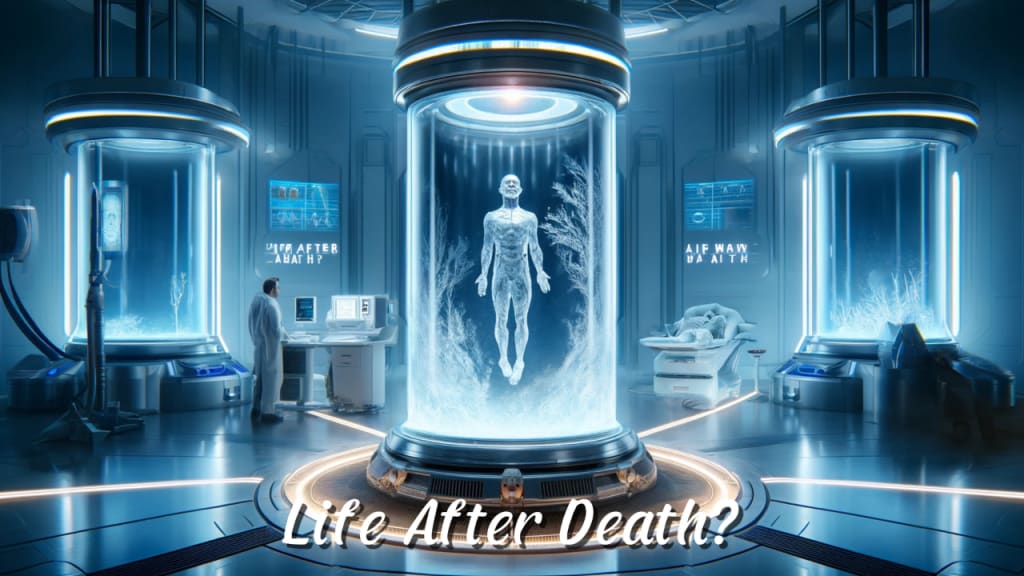
Would you choose to live forever if science made it possible? Cryonics, the process of freezing a body after death with the hope of reanimation in the future, stirs profound ethical questions. From redefining what it means to be alive to potential societal consequences, cryonics sits at the crossroads of science and morality. This article delves into the ethical, social, and philosophical debates surrounding cryonics and reanimation.
What Is Cryonics?
Cryonics is the practice of preserving human bodies at extremely low temperatures immediately after legal death. The aim? To protect cells and tissues from decay in the hope that future medical advancements can cure the conditions that caused death and restore life.
The process involves:
1. Pronouncement of Legal Death
Cryonics begins only after a person is declared legally dead, meaning their heart and breathing have stopped, but their brain cells may still be viable.
2. Stabilization
To prevent damage to the brain and other tissues, the body is quickly cooled and supplied with oxygen and blood circulation using artificial means.
3. Cryoprotectant Administration
The body is infused with cryoprotectant solutions (similar to antifreeze) to minimize ice crystal formation, which can destroy cells during freezing. This step is called vitrification and turns tissues into a glass-like state.
4. Cooling to Cryogenic Temperatures
The body is gradually cooled to approximately -196°C (-320°F) and stored in liquid nitrogen. At this temperature, all metabolic and decay processes effectively stop.
5. Long-Term Storage
The body remains in cryogenic storage indefinitely, awaiting potential future advancements in science and medicine.
6. Hope for Future Reanimation
Scientists hypothesize that future medical technology, such as nanotechnology or advanced biochemistry, may repair cellular damage, reverse aging, and cure the conditions that caused death.
Current Limitations and Status
- Experimental Nature
Cryonics is speculative and unproven. No one has ever been revived after cryopreservation, and reanimation remains purely theoretical.
- Technological Barriers
Repairing ice damage, restoring memory, and ensuring consciousness would require breakthroughs in nanotechnology and neuroscience that do not yet exist.
- Ethical and Financial Hurdles
Long-term storage and maintenance pose practical challenges, and ethical concerns about "experimenting" with deceased individuals add complexity.
While cryonics offers a scientific glimpse into the future, it also raises a host of ethical questions.
The Ethical Questions Surrounding Cryonics
Cryonics challenges long-held definitions of death and poses questions about respect for the deceased.
- Redefining Death
If death is no longer permanent, what does it mean to "die"? Critics argue that calling cryonics a cure for death diminishes the dignity of the human experience.
- Experimenting on the Dead
Some view cryonics as a misuse of human remains, akin to playing God. Is it ethical to treat the deceased as test subjects for hypothetical science?
- Individual vs. Societal Values
Should resources be allocated to preserve individuals indefinitely when they might serve greater societal needs?
The Impact on Personal Identity
Even if cryonics becomes feasible, it may not restore a person as they once were
1. Consciousness and Memory
Memory degradation could mean a reanimated person has little connection to their past self.
2. Questions of Identity
If someone is revived but lacks their former memories, are they the same person? Or are they a new entity with old DNA?
3. Philosophical Dilemmas
Cryonics raises questions about the continuity of selfhood and whether identity is tied to the mind, body, or both.
Inside the US lab freezing the dead at -196C - BBC REEL
Social and Economic Consequences
Cryonics could deepen societal divides and raise practical concerns about resource allocation.
- Wealth Disparity
Access to cryonics is costly, making it a privilege for the wealthy. Could this lead to an eternal divide between economic classes?
- Population Growth
If cryonics becomes widespread, reanimation could strain global resources and create overcrowding.
- Resource Allocation
Is it ethical to prioritize cryonics over pressing global issues like hunger and poverty?
Legal and Policy Considerations
Cryonics also presents legal challenges that require robust frameworks.
- Current Legal Landscape
Most countries lack laws governing cryonics, leaving practices largely unregulated.
- Rights of the Reanimated
If reanimated individuals regain consciousness, what rights would they have? Are they legally the same person who "died"?
- Future Regulation
As science advances, policies will need to address the ethical, social, and economic dimensions of cryonics.
Religious and Cultural Perspectives
Cryonics clashes with many religious and cultural beliefs about death and the afterlife.
1. Religious Views
Major religions like Christianity, Islam, and Hinduism emphasize the sanctity of death, often rejecting interventions like cryonics.
2. Cultural Traditions
Many cultures have long-standing rituals for honoring the dead. Cryonics challenges these traditions, raising questions about respect and morality.
3. Balancing Beliefs with Science
The tension between innovation and spiritual beliefs underscores the complexity of cryonics ethics.
Future Prospects of Cryonics
Cryonics remains a scientific dream, but advancements in technology could make it a reality.
- Scientific Progress
Innovations in nanotechnology and cellular repair hold promise for future reanimation.
- Public Opinion
The success of cryonics depends on societal acceptance, which hinges on addressing ethical concerns.
- Ethical Guidelines
To responsibly navigate cryonics’ future, humanity must establish clear ethical frameworks that balance innovation with moral responsibility.
Conclusion
Cryonics offers a tantalizing vision of life after death, but it also raises profound ethical, social, and legal challenges. From questions of identity and dignity to societal and religious concerns, the implications of cryonics stretch far beyond science.
As humanity progresses, we must carefully consider the moral responsibilities that come with such advancements. What do you think? Is cryonics humanity’s next frontier, or a step too far?
About the Creator
Keep reading
More stories from Marveline Merab and writers in Futurism and other communities.
The AI Singularity Future: What It Means for Us
AI technology is advancing rapidly, and one idea that is becoming more common in discussions about the future is the "AI Singularity." But what does this mean, and how might it shape our world? Simply put, the AI singularity is the point when artificial intelligence surpasses human intelligence. This moment could bring dramatic changes to society, impacting everything from jobs to daily routines. In this article, we will break down the concept of the AI singularity, explore its potential benefits and risks, and discuss how it could change our lives.
By Marveline Merababout a year ago in Futurism
About Binding Prometheus
I want to start actively advocating on behalf of my own work, and the most valuable part of my canon is, without a doubt, Binding Prometheus, the play I have been working on since 2019 and only finished in 2023 as part of my MA. The play itself is an amalgamation of a million different inspirations. On one end, it evokes the Ancient Greek myth-play, deriving its own title from the earliest extant work of Western drama we have, Aeschylus’s Prometheus Bound. On the other end, it borrows significantly from the sci-fi bulwarks from over the years, namely Mary Shelley’s Frankenstein and Karel Capek’s Rossum’s Universal Robots. The play could be an episode of Black Mirror, I fear. I don’t know. I’ve only ever seen one episode of Black Mirror.
By Steven Christopher McKnight20 days ago in Futurism
White Box Server Market: Hyperscale Adoption, Cost-Efficient Infrastructure & Open Architecture Trends
According to IMARC Group's latest research publication, global white box server market size reached USD 17.0 Billion in 2024. Looking forward, IMARC Group expects the market to reach USD 67.7 Billion by 2033, exhibiting a growth rate (CAGR) of 15.43% during 2025-2033.
By sujeet. imarcgroup6 days ago in Futurism
The Devil's Cut
“Comrade, finally you’re awake.” The voice was smooth, sensual. A flickering incandescent bar was all that lit the white, sterile room. All Vladimir remembered was everything going black. He tried to move his arms and found them strapped to the gurney.
By Matthew J. Fromm6 days ago in Fiction




Comments
There are no comments for this story
Be the first to respond and start the conversation.