
Could Moss on Mars Be the Key to Future Life on the Red Planet?
Could Moss on Mars

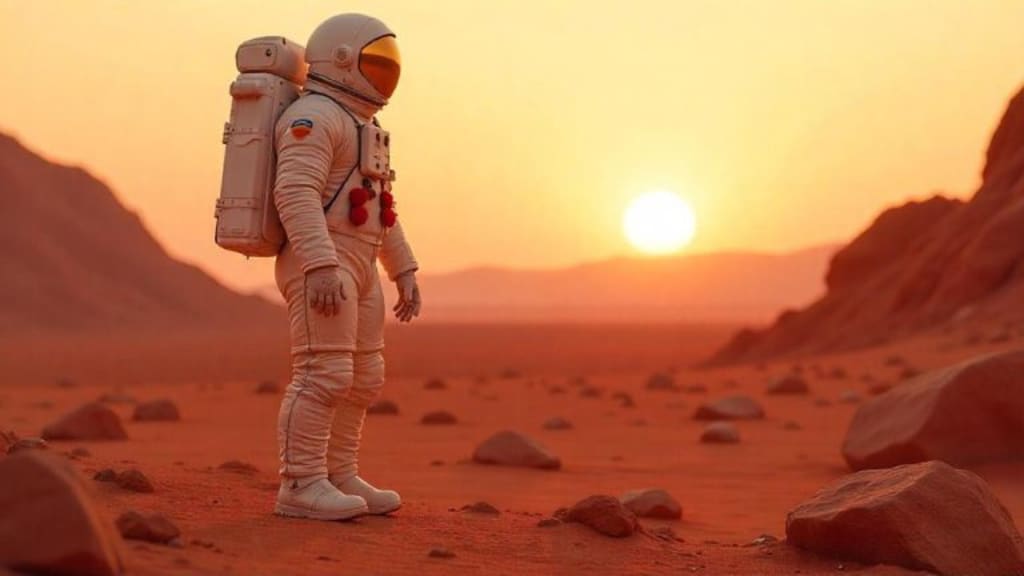
Mars has long fascinated scientists, dreamers, and space enthusiasts alike. But with ongoing exploration, one question keeps resurfacing: Could moss on Mars play a pivotal role in transforming the Red Planet into a more habitable world?
Moss on Mars offers exciting possibilities, from its potential to contribute to terraforming efforts to aiding human colonization. This post dives into the scientific exploration and applications of moss on Mars and how it might redefine space colonization.
Why Moss? A Green Hope for the Red Planet
Moss may seem insignificant on Earth, but its unique properties have sparked interest among researchers envisioning life on Mars. Moss is incredibly hardy and can adapt to hostile environments. It requires only minimal water, thrives in low-light conditions, and can photosynthesize carbon dioxide into oxygen even under extreme circumstances—qualities essential for survival on Mars.
Studying moss on Mars has already become a prominent field, as scientists believe it could play a major role in sustainable life support systems.
The Challenges of Mars’ Environment
Before we can fully explore the implications of moss on Mars, it’s crucial to understand the planet’s harsh environment:
Temperature Extremes: Mars's average temperature hovers around -80°F (-62°C), with extremely frigid nights.
Thin Atmosphere: Composed primarily of carbon dioxide, the Martian atmosphere lacks oxygen, making it uninhabitable for humans and most plants.
Lack of Water: Liquid water is scarce on Mars, existing only as subsurface ice or brine.
These challenges make it difficult for most forms of Earth-originating life to thrive. However, moss's resilience opens up new possibilities.
The Role of Moss in Terraforming Mars
Terraforming—modifying a planet's environment to make it more Earth-like—remains a long-term dream for humanity. Here’s why researchers believe moss on Mars could play a pivotal role:
1. Generating Oxygen
Moss is known to photosynthesize efficiently, converting carbon dioxide into oxygen. Placing moss on Mars could contribute to creating breathable air, both for future explorers and eventual colonists.
2. Soil Formation
Mars lacks fertile soil for traditional agriculture. Moss on Mars could be instrumental in breaking down rocky surfaces and contributing to the formation of organic matter. Over time, this could pave the way for planting more complex vegetation.
3. Radiation Protection
Mars is bombarded with solar radiation due to its thin atmosphere and lack of a magnetic field. Some researchers suggest moss on Mars could serve as a protective layer on habitats, helping shield inhabitants from harmful radiation over time.
4. Controlling Carbon Dioxide Levels
The Martian atmosphere is over 95% carbon dioxide. Moss thrives in CO2-rich environments, making it a natural candidate for reducing excess carbon dioxide while enriching oxygen levels in controlled settings.
Experiments on Earth Simulating Mars’ Conditions
The viability of moss on Mars is being tested in labs worldwide. By simulating Mars-like conditions, researchers examine how different moss species respond to the Red Planet's extreme environment.
Key Findings
Resilience: Certain moss species have shown remarkable survival rates when exposed to low temperatures and reduced atmospheric pressures simulating Mars.
Adaptability: Moss appears capable of photosynthesizing with minimal sunlight, a critical advantage given Mars’ frequent dust storms.
Nutrient Use: Some mosses, like Mars' regolith, have been engineered to grow even with limited resources.
These promising results inspire hope that moss might thrive on the Martian surface, contributing to vital ecological processes.
Applications for Future Mars Missions
Including moss on Mars missions could revolutionize how we approach space colonization. Here are a few proposed applications:
1. Bioreactors for Oxygen Production
Moss-based bioreactors could serve as compact life support systems, generating oxygen for astronauts on Mars.
2. Food Systems in Habitats
Though moss is not a primary food source, using moss to condition Martian soil could enable future farming projects within protected habitats.
3. Waste Recycling
Moss has been known to play a role in biological waste cycles. Implementing moss on Mars could create sustainable systems for recycling human waste into nutrients, closing the loop in isolated habitats.
The Challenges of Growing Moss on Mars
Despite its potential, developing moss on Mars is far from straightforward. Scientists face numerous obstacles, such as:
Water Scarcity: How can moss survive the scarcity of freshwater on Mars? Innovations in water extraction, such as harvesting from subsurface ice, will play a role in tackling this issue.
Radiation Tolerance: While moss is hardy, the high radiation levels on Mars require either genetic modification or protective measures.
Scalability: Deploying moss on Mars is feasible in small experimental setups, but scaling it up for broader applications will require significant innovation.
Ethical Considerations
While the potential benefits are vast, introducing moss on Mars raises ethical questions. Would planting moss on Mars disrupt any natural evolutionary processes on the planet? Could it compromise our ability to study Mars in its original form? Conversations surrounding the ethical implications of geoengineering Mars continue to evolve as the science progresses.
Moss vs Other Martian Biotechnologies
Researchers are also exploring other life forms, including algae and cyanobacteria, as prospects for Mars colonization. But most offer its unique combination of efficiency, adaptability, and versatility. Unlike single-celled organisms, moss can contribute to a more Earth-like ecosystem on Mars, making it a strong candidate for future missions.
What’s Next for Moss on Mars?
The moss study on Mars is still in its infancy, but early experiments are promising. Space agencies like NASA and private organizations like SpaceX are interested in biotechnologies, including moss, as part of long-term colonization plans.
Emerging technologies such as genetic engineering may further enhance moss to thrive under Martian conditions, making it an integral partner in the quest for interplanetary habitation.
Redefining the Future of Space Exploration
Moss on Mars is more than just a scientific curiosity—it represents humanity's potential to transform harsh alien worlds into livable environments. By turning to resilient organisms like moss, we inch closer to realizing the dream of making Mars not just reachable but habitable.
If the idea of moss thriving on Mars inspires you, stay tuned for further updates. This tiny plant could lead the charge in humanity’s next giant leap.
About the Creator
Keep reading
More stories from faisal khatri and writers in Futurism and other communities.
The story of 275 Pigeons Dive into a Pond Filled With Red Glue
Suppose you are staring at the sky on a calm Day, and at one moment, 275 pigeons fly directly into the water with red glue. This scene is not random but unexpected; it raises questions about nature, behavior, and art. Thus, in this article, the author will discuss why such actions might occur, the impact on the environment, other considerations, and artistic representations.
By faisal khatriabout a year ago in History
About Binding Prometheus
I want to start actively advocating on behalf of my own work, and the most valuable part of my canon is, without a doubt, Binding Prometheus, the play I have been working on since 2019 and only finished in 2023 as part of my MA. The play itself is an amalgamation of a million different inspirations. On one end, it evokes the Ancient Greek myth-play, deriving its own title from the earliest extant work of Western drama we have, Aeschylus’s Prometheus Bound. On the other end, it borrows significantly from the sci-fi bulwarks from over the years, namely Mary Shelley’s Frankenstein and Karel Capek’s Rossum’s Universal Robots. The play could be an episode of Black Mirror, I fear. I don’t know. I’ve only ever seen one episode of Black Mirror.
By Steven Christopher McKnight16 days ago in Futurism


Comments
There are no comments for this story
Be the first to respond and start the conversation.