
"Connected Commerce: Inside the World of WhatsApp Business"
How WhatsApp Business Is Transforming Customer Communication and Digital Commerce

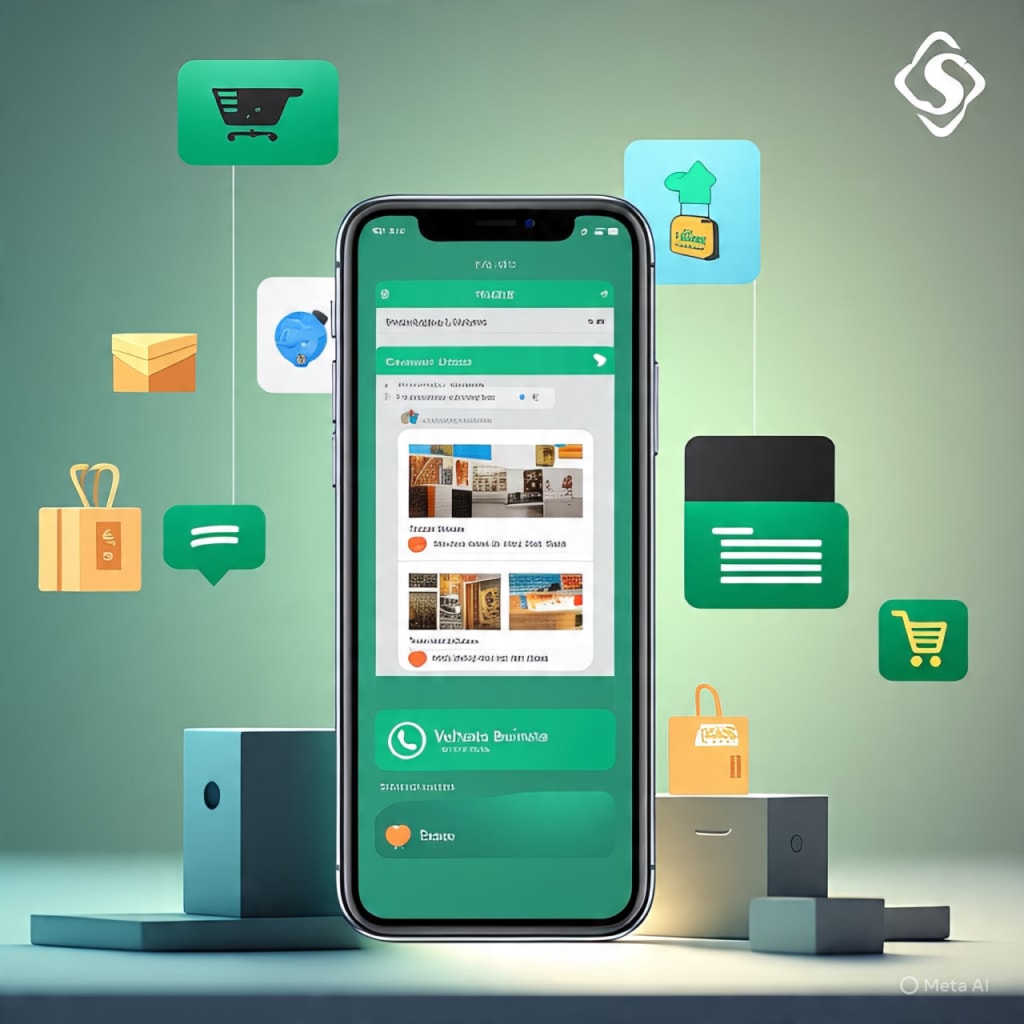
In a digital landscape crowded with communication platforms, WhatsApp Business stands out as a transformative tool for small enterprises and global brands alike. From mom-and-pop shops in Mumbai to large-scale e-commerce ventures in São Paulo, businesses are discovering that WhatsApp isn’t just for chatting—it’s for converting leads, closing sales, and delivering exceptional customer service.
With over 2 billion users globally, WhatsApp offers businesses an unmatched opportunity to meet customers where they already spend a significant portion of their time: on their phones, inside a familiar chat interface. Through features like business profiles, catalogs, quick replies, and powerful APIs, WhatsApp Business is reshaping how commerce happens—one message at a time.
---
The Origins of WhatsApp Business
Launched in 2018, WhatsApp Business was designed to help small businesses interact with their customers more efficiently. The idea was simple: empower businesses to use the same trusted WhatsApp platform to engage users, promote products, answer questions, and even finalize transactions.
Over time, WhatsApp Business expanded into two distinct services:
WhatsApp Business App for small businesses.
WhatsApp Business API for medium to large enterprises needing automation and integration with CRM systems.
This distinction allowed WhatsApp to cater to businesses of all sizes—from local florists to multinational banks.
---
Key Features That Power Business Communication
1. Business Profiles
Every business on WhatsApp gets a verified profile, complete with essential information such as:
Business name and description
Email and website links
Location and hours of operation
This builds trust with customers and enhances brand authenticity, especially in local markets.
2. Catalogs and Shopping
With the product catalog feature, businesses can showcase their offerings visually—similar to an online store. Customers can browse items, view prices, and share products with others, all within WhatsApp.
In some regions, this is paired with in-app shopping and payment integration, allowing end-to-end transactions without leaving the chat.
3. Quick Replies and Labels
To streamline communication, WhatsApp Business allows:
Quick Replies: Pre-written messages for FAQs like “What are your hours?” or “Is this in stock?”
Labels: Custom tags such as "New Customer" or "Pending Payment" to manage chats efficiently.
These tools save time and help maintain organized, consistent communication, even during high-volume periods.
4. Automated Messages
Businesses can set up:
Greeting messages to welcome new customers.
Away messages when offline.
Order confirmations and delivery updates using automation.
This enhances the user experience and ensures customers feel acknowledged, even when human agents are unavailable.
---
The Power of the API: Scaling Communication
For medium and large businesses, the WhatsApp Business API is a game changer. Unlike the mobile app, which is limited to one device and a smaller number of users, the API enables:
Mass messaging to opted-in users.
Integration with CRM platforms like Salesforce, HubSpot, or custom dashboards.
Automation using AI-powered chatbots for handling support, tracking orders, or collecting feedback.
For example, an airline can use the API to send flight status updates and boarding passes directly to a passenger’s WhatsApp. Similarly, an online retailer can provide real-time delivery tracking via automated updates.
---
AI Chatbots in WhatsApp Business
One of the most exciting developments in WhatsApp Business is the rise of AI-powered chatbots. These bots can:
Answer frequently asked questions
Help users place orders
Recommend products based on preferences
Escalate to human agents when necessary
Built using natural language processing (NLP), these bots ensure users receive quick, intelligent responses 24/7. This improves efficiency and customer satisfaction, especially for brands operating across time zones.
---
Use Cases: Real-World Success Stories
1. Local Retailers
A boutique clothing store in Cape Town uses WhatsApp Business to:
Post new arrivals in its catalog
Take orders via chat
Offer doorstep delivery updates
This allows them to run a lean operation without a traditional e-commerce site.
2. Healthcare Providers
Clinics in India use WhatsApp to:
Send appointment reminders
Collect feedback post-consultation
Share lab reports and prescriptions securely
This streamlines healthcare delivery and keeps patient communication convenient.
3. Financial Institutions
Banks and fintech firms use the API to:
Deliver mini-statements and transaction alerts
Provide customer support
Enable two-factor authentication (2FA)
Since WhatsApp is encrypted end-to-end, it adds a layer of security and trust for sensitive information.
---
Challenges and Considerations
While WhatsApp Business offers many advantages, businesses need to navigate a few key challenges:
User Consent: Mass messaging is only allowed to customers who have opted in. Violating this can result in account suspension.
Message Limits: Meta enforces tiered limits for outbound messages based on engagement and quality ratings.
Privacy Compliance: Businesses must handle user data responsibly to comply with regulations like GDPR or Brazil’s LGPD.
Additionally, companies must strike the right balance between automation and human interaction to maintain a personal touch.
---
The Future of WhatsApp Business
Looking ahead, WhatsApp Business is likely to evolve in the following ways:
More seamless payments: Meta is expanding WhatsApp Pay across markets to enable instant in-chat transactions.
Deeper AI integration: Personalized recommendations and emotional tone detection could improve the relevance of interactions.
Marketplace capabilities: WhatsApp may eventually rival platforms like Shopify by enabling full-service storefronts within chat.
Greater omnichannel integration: Businesses will tie WhatsApp messaging to email, SMS, and social media channels for unified customer engagement.
---
Conclusion
WhatsApp Business is no longer just a communication channel—it’s a commerce engine, support system, and brand-building tool rolled into one. Its simplicity, reach, and growing feature set make it an essential platform for modern businesses seeking to build direct, meaningful relationships with their customers.
As digital habits continue to shift toward convenience and immediacy, those who embrace WhatsApp Business will not only stay competitive—they’ll lead the way in the new era of connected commerce.
About the Creator
"TaleAlchemy"
“Alchemy of thoughts, bound in ink. Stories that whisper between the lines.”
Keep reading
More stories from "TaleAlchemy" and writers in Futurism and other communities.
Exploring AI Features in WhatsApp"
In the past decade, WhatsApp has grown from a simple messaging app into a global communication powerhouse, used by over 2 billion people across the world. While its original purpose was basic—text messaging, voice, and file sharing—the evolution of WhatsApp in recent years has been heavily influenced by artificial intelligence (AI). From smarter replies to powerful chat assistants, WhatsApp’s integration of AI technologies is changing the way people interact, both personally and professionally.
By "TaleAlchemy"8 months ago in Futurism
About Binding Prometheus
I want to start actively advocating on behalf of my own work, and the most valuable part of my canon is, without a doubt, Binding Prometheus, the play I have been working on since 2019 and only finished in 2023 as part of my MA. The play itself is an amalgamation of a million different inspirations. On one end, it evokes the Ancient Greek myth-play, deriving its own title from the earliest extant work of Western drama we have, Aeschylus’s Prometheus Bound. On the other end, it borrows significantly from the sci-fi bulwarks from over the years, namely Mary Shelley’s Frankenstein and Karel Capek’s Rossum’s Universal Robots. The play could be an episode of Black Mirror, I fear. I don’t know. I’ve only ever seen one episode of Black Mirror.
By Steven Christopher McKnight17 days ago in Futurism
Top 10 Fintech Software Development Companies in USA 2026
In today’s rapidly evolving digital finance landscape, fintech companies and traditional financial institutions alike are investing heavily in advanced software solutions that enable secure transactions, seamless customer experiences, and robust compliance with regulatory standards. As we enter 2026, the demand for specialized fintech software development services continues to grow, driven by technologies such as blockchain, artificial intelligence (AI), machine learning (ML), and cloud-native architectures. Choosing the right development partner can make or break a fintech project, whether it’s launching a next-generation digital wallet, a mobile banking platform, a payment processing system, or a comprehensive financial analytics suite. This article profiles the top 10 fintech software development companies that stand out in the United States market for their innovation, technical expertise, industry experience, and ability to deliver scalable, secure solutions that meet the unique needs of finance organizations.
By Steve Waugh4 days ago in Futurism




Comments
There are no comments for this story
Be the first to respond and start the conversation.