
China Unleashes Mosquito-Shaped Drone Swarm: The Future of Surveillance?
A chillingly quiet buzz in the sky raises a louder question—what kind of future are we flying into?

The Quiet Whirring of Tomorrow
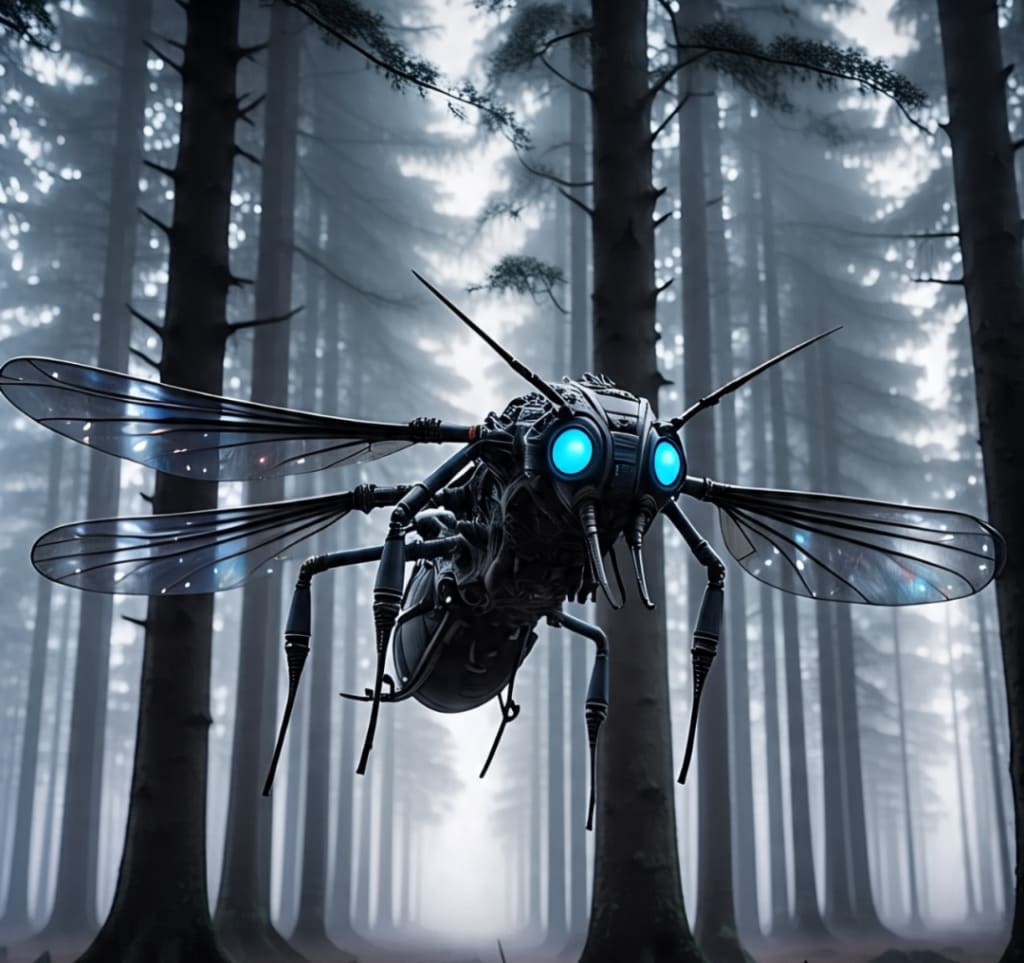
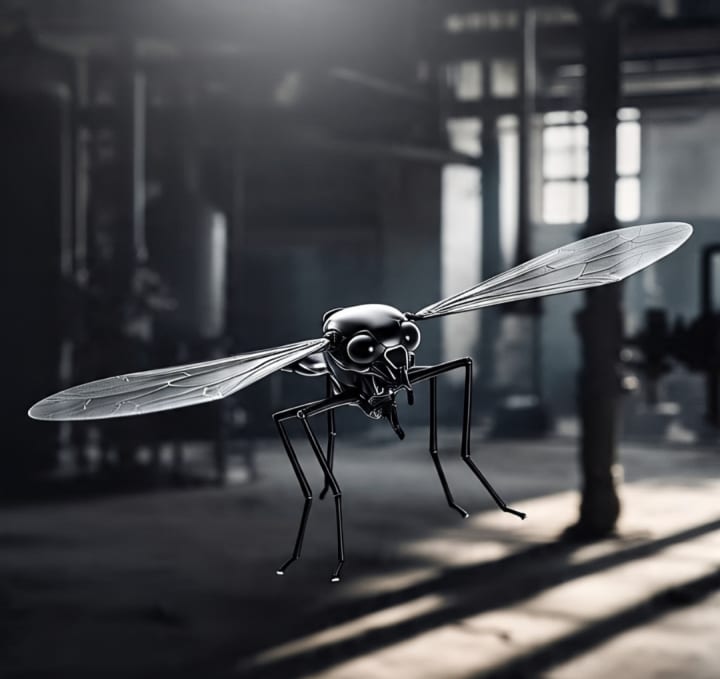
It began with a sound so soft, most people wouldn’t notice it. Just a whisper in the air, like the wings of a mosquito. But these weren’t insects. They were machines. Tiny, nearly invisible to the naked eye. And unlike real mosquitoes, these didn’t bite—they watched.
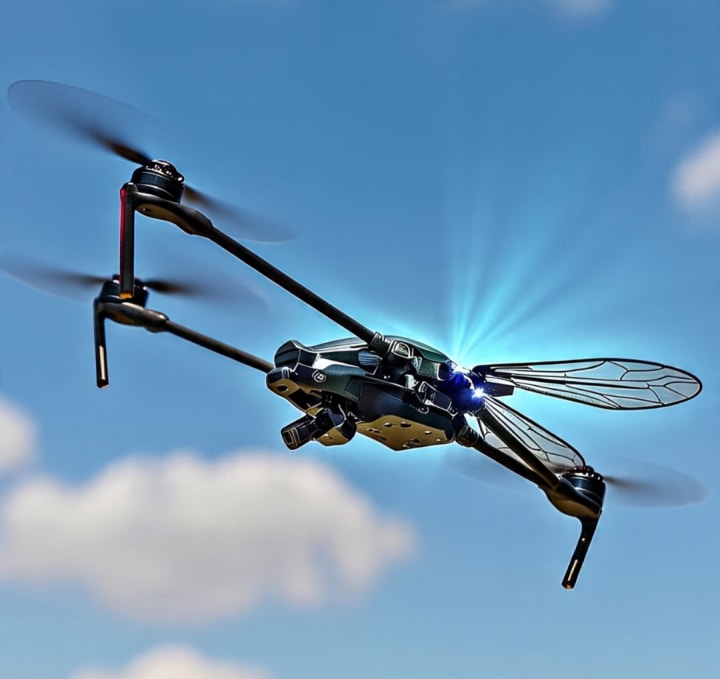
The news broke quietly, as many unsettling things often do. A leak, a grainy video clip, a few murmurs online. China, it was said, had successfully deployed a swarm of mosquito-sized drones capable of surveillance, target tracking, and in some cases, even facial recognition. They were autonomous, AI-guided, and frighteningly effective.
No longer science fiction, this was real.
I read the article late one night, curled up on my couch with a blanket and a fading sense of comfort. As someone who has always admired technology—the marvel of what we humans can create—I found myself uneasy. Where do we draw the line between innovation and intrusion?
A Swarm of Questions
The initial report didn’t say much. The drones had been tested in urban environments and could operate as a collective. Like birds flying in unison, they communicated with each other, adjusting course, identifying targets, even avoiding obstacles on their own. The project, dubbed “Dragonfly Eye,” was reportedly part of a new wave of defense and monitoring tools.
But here’s where it hits deeper: these mosquito drones could enter through windows, hover in small spaces, and blend in with the background noise of a city. You wouldn’t even know they were there.
And that’s what scared me.
I thought about all the ways this technology could be used—for good and for harm. Imagine locating a missing child in a vast forest, or monitoring dangerous gas leaks where no human could safely go. But then, imagine your most private moments—your laughter with family, your journal by the bed, the tear you quietly shed alone—being silently watched.
When I looked up from the screen, I noticed how quiet my apartment was. A strange quiet. Could one of them be in here already? Of course not. But the idea had already planted itself in my mind.
The Thin Line Between Safety and Control
I couldn’t stop thinking about it in the days that followed.
I asked my friend Lina, who works in tech ethics, what she thought.
“It’s complicated,” she said. “Every tool can be a weapon. It depends on who holds it and what their values are.”
She reminded me of the first time drones were used to deliver medical supplies to remote villages. Lives were saved. But those same drones were later retrofitted for surveillance in protests.
It’s always the same duality: innovation and oversight. Protection and power. How can we build these things responsibly?
“I think the real problem,” Lina added, “is that we keep building things faster than we build conversations around them.”
She was right.
A Glimpse Into the Future
Imagine this: You're walking through a park, the sky pink with the setting sun. You sit on a bench, smile at a passing couple, and take out your journal to write. You feel alone, peaceful.
But you're not alone. Above you, hidden in the branches of the trees, a drone records everything.
That journal entry. Your facial expressions. Your voice as you talk to yourself.
Now imagine that data being used—not to harm you—but to profile you. To predict your mood. Your future choices. Your weaknesses.
Even with the purest intentions, that kind of surveillance chips away at something sacred: the freedom to simply be.
What Do We Do Now?
The story of mosquito drones isn’t just about China. It’s about all of us. Every country. Every person.
It’s about asking hard questions before the technology becomes too advanced to contain.
Who gets to control the swarm?
How do we ensure transparency and ethical usage?
Where is the global conversation about personal privacy?
Can we say no to technology that we aren’t ready to handle?
The truth is, we live in a world that values convenience. But sometimes, convenience can cost us our freedom.
A Quiet Revolution
I think back to the night I first read about the drones. And how that small buzz of unease has grown into a deeper awareness.
Not fear. Awareness.
Because it’s not just governments that need to be accountable. It’s us. The public. The thinkers, the creators, the storytellers. We must question what we build. We must protect not just our safety, but our dignity.
And sometimes, we must choose silence—not the silence of being watched, but the silence of being truly alone. Uninterrupted. Unobserved. Free.
Final Thoughts: The Heart of the Story
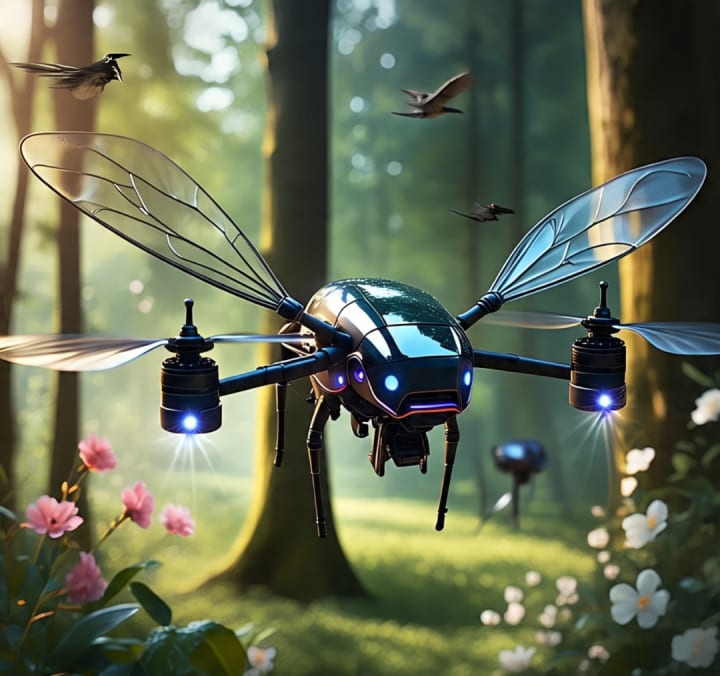
The mosquito-shaped drones are a symbol—of how powerful, how precise, and how potentially dangerous our inventions can become. But they’re also a reminder.
A reminder that humanity must never lose sight of its soul while chasing progress.
Technology is not the enemy. But blind adoption is.
Let us build with intention. Let us innovate with empathy. Let us protect what makes us human.
Moral of the Story:
Progress without wisdom is a path to quiet surrender.
In a world increasingly shaped by machines, may we never forget the value of our unseen, unrecorded, unfiltered selves.
About the Creator
Salman khan
Hello This is Salman Khan * " Writer of Words That Matter"
Bringing stories to life—one emotion, one idea, one truth at a time. Whether it's fiction, personal journeys.
Keep reading
More stories from Salman khan and writers in Futurism and other communities.
When the Ground Speaks: The Future of Earthquake Science
I still remember the first time I felt the earth tremble beneath my feet. It was a mild quake — just a 4.5 — barely enough to rattle the glass in the windows. But I was nine years old, sitting on my bedroom floor with crayons scattered around me, and I thought the world was ending. My mom rushed in, scooped me up, and stood under the doorway, her heartbeat racing against mine.
By Salman khan7 months ago in Futurism
About Binding Prometheus
I want to start actively advocating on behalf of my own work, and the most valuable part of my canon is, without a doubt, Binding Prometheus, the play I have been working on since 2019 and only finished in 2023 as part of my MA. The play itself is an amalgamation of a million different inspirations. On one end, it evokes the Ancient Greek myth-play, deriving its own title from the earliest extant work of Western drama we have, Aeschylus’s Prometheus Bound. On the other end, it borrows significantly from the sci-fi bulwarks from over the years, namely Mary Shelley’s Frankenstein and Karel Capek’s Rossum’s Universal Robots. The play could be an episode of Black Mirror, I fear. I don’t know. I’ve only ever seen one episode of Black Mirror.
By Steven Christopher McKnight18 days ago in Futurism
Top 10 Fintech Software Development Companies in USA 2026
In today’s rapidly evolving digital finance landscape, fintech companies and traditional financial institutions alike are investing heavily in advanced software solutions that enable secure transactions, seamless customer experiences, and robust compliance with regulatory standards. As we enter 2026, the demand for specialized fintech software development services continues to grow, driven by technologies such as blockchain, artificial intelligence (AI), machine learning (ML), and cloud-native architectures. Choosing the right development partner can make or break a fintech project, whether it’s launching a next-generation digital wallet, a mobile banking platform, a payment processing system, or a comprehensive financial analytics suite. This article profiles the top 10 fintech software development companies that stand out in the United States market for their innovation, technical expertise, industry experience, and ability to deliver scalable, secure solutions that meet the unique needs of finance organizations.
By Steve Waugh5 days ago in Futurism
Wild Card Weekend Recap: What Happens Now?
I think I figured out why I love Wild Card Weekend so much. It's because it's the first playoff anything of the calendar year. The NFL season starts in the fall, and once upon a time, the champion was crowned either on or slightly before New Year's. The evolution of the NFL schedule has resulted in the playoffs starting just into the New Year, and currently, the final week of the season falls on the first weekend of the New Year, with Wild Card Weekend coming a week after that. So yes, chronologically, the NFL's Wild Card Weekend serves as the first playoff anything of the calendar year.
By Clyde E. Dawkins6 days ago in Unbalanced




Comments
There are no comments for this story
Be the first to respond and start the conversation.