
China’s Effort to Build a Competitor to Starlink Is Off to a Bumpy Start
China’s ambitious satellite internet projects aim to rival Elon Musk’s Starlink, but early technical failures, launch limitations, and regulatory hurdles reveal a rocky start to a high-stakes race for space dominance.

China’s Effort to Build a Competitor to Starlink Is Off to a Bumpy Start
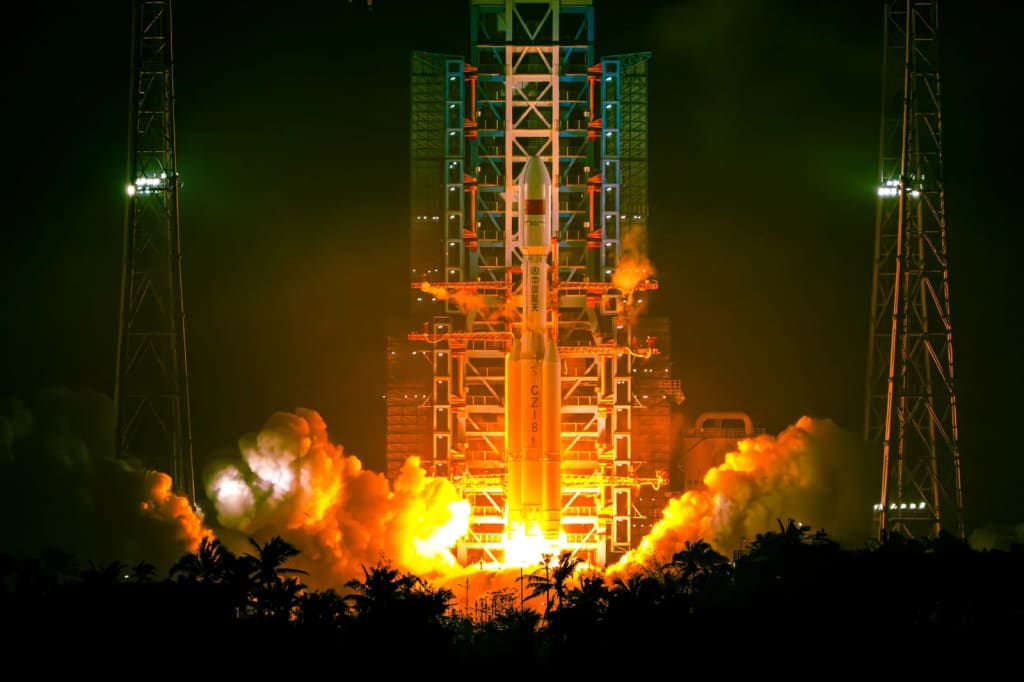
In a world increasingly driven by data connectivity, and satellite technology China’s ambitious attempt to rival Elon Musk’s Starlink satellite internet network is both a strategic necessity and a national prestige project. However as with many grand visions the road to execution has proven to be far from smooth. China’s twin satellite internet initiatives Guowang (also called SatNet or Xingwang) and Qianfan (also known as Spacesail) are part of a state driven effort to create a low Earth orbit LEO satellite constellation that could provide global broadband coverage enhance military communication and establish China as a major space power. While these projects symbolize China’s desire to assert technological independence and global influence their rollout so far has been marred by technical logistical and regulatory challenges.
The Bold Vision Behind Guowang and Qianfan
Guowang backed by the state and reportedly overseen by China’s largest telecom players aims to launch over 13000 satellites mirroring the scale of Starlink. Qianfan in contrast is a more commercially focused venture led by Shanghai Spacecom Satellite Technology (SSST) with international aspirations. Both projects represent China’s answer to SpaceX’s rapid deployment of over 6000 Starlink satellites that now deliver internet to remote corners of the Earth. On paper China has the ambition the technical foundation and the political will. In practice however it is facing the kind of growing pains that even Elon Musk’s company took years to overcome. Since mid 2024 China has launched more than 100 satellites for Qianfan. But reports suggest that at least 14% of those satellites are either failing or behaving erratically a figure that dwarfs the failure rate of Starlink’s constellation which is below 0.5%. These problems are not just embarrassing they’re consequential. A few malfunctioning satellites in a small constellation might not matter much. But when your goal is to launch over 15,000 satellites even a 10% failure rate translates to thousands of non functional spacecraft orbiting Earth and contributing to an already dangerous buildup of space debris. A major contributor to this high failure rate could be the intense pressure to launch quickly. China is racing against the clock to meet International Telecommunication Union (ITU) regulations that require satellite operators to deploy a minimum percentage of their planned constellation within a set period or risk losing their assigned frequencies. In this scramble to meet quotas quality control may be taking a hit.
Lagging Behind in Reusability
One of SpaceX’s most important advantages is its reusable Falcon 9 rockets which allow it to launch payloads frequently and at lower cost. China by contrast is still primarily reliant on expendable launch vehicles which means each launch is more expensive and time consuming. While China has made progress in developing reusable rocket technology it has yet to match SpaceX’s launch cadence. The economic and logistical impact of this gap is significant. Launching thousands of satellites quickly and cheaply is central to the viability of any LEO constellation. Without matching SpaceX’s efficiency China’s satellite internet dream could stall before it truly takes off. China’s rapid fire launches have also contributed to growing concerns about space debris. In October 2024 a Long March 6A rocket carrying Qianfan satellites exploded in orbit creating hundreds of fragments that now pose risks to other spacecraft. Incidents like this have drawn criticism from the international space community. The U.S Space Command and other watchdog agencies are increasingly worried about the cascading risk of Kessler Syndrome a scenario in which orbiting debris triggers a chain reaction of satellite collisions. As China accelerates its launches the pressure to prioritize orbital safety will intensify.
A Global Strategy Amid Geopolitical Rivalries
Despite the technical setbacks China’s satellite internet plan is not just about technology it’s about soft power. Qianfan has already signed agreements with nations like Brazil Thailand and Malaysia offering an alternative to Starlink in countries where governments may be wary of relying on American infrastructure. By providing these countries with Chinese made broadband solutions Beijing hopes to extend its digital Belt and Road Initiative deepening its economic and political ties across Asia Africa and Latin America. But to be successful the technology needs to work and work reliably. It’s too early to write off China’s efforts. The country has repeatedly demonstrated its ability to leapfrog in technology when it puts its mind to it consider the rapid growth of its high speed rail network 5G infrastructure or electric vehicle market. Still building a satellite megaconstellation is a different kind of challenge. It demands precision engineering international coordination and sustained innovation not just brute industrial strength. If China can improve its satellite reliability adopt reusable rocket systems and better manage the space environment it may yet build a true Starlink competitor. But as of today the journey is proving far more turbulent than anticipated.
About the Creator
Adnan Rasheed
Author & Creator | Writing News , Science Fiction, and Worldwide Update| Digital Product Designer | Sharing life-changing strategies for success.
Keep reading
More stories from Adnan Rasheed and writers in Futurism and other communities.
Farming Revolution: Giant Robotic Insects Are Now Replacing Tractors in Fields
Farming Revolution: Giant Robotic Insects Are Now Replacing Tractors in Fields Imagine standing in the middle of a farm expecting to see tractors or farmhands tending to crops. Instead you spot something unusual a massive insect like robot crawling across the fields. It’s not a scene from a science fiction movie but a growing reality in the world of modern agriculture. Giant robotic bugs are making their way to farms revolutionizing how crops are grown monitored and maintained. These advanced machines are set to transform the farming industry with their insect inspired designs and intelligent technology. With increasing pressure on farmers to produce more food sustainably robotic bugs might just be the innovation we’ve been waiting for.
By Adnan Rasheed8 months ago in Futurism
About Binding Prometheus
I want to start actively advocating on behalf of my own work, and the most valuable part of my canon is, without a doubt, Binding Prometheus, the play I have been working on since 2019 and only finished in 2023 as part of my MA. The play itself is an amalgamation of a million different inspirations. On one end, it evokes the Ancient Greek myth-play, deriving its own title from the earliest extant work of Western drama we have, Aeschylus’s Prometheus Bound. On the other end, it borrows significantly from the sci-fi bulwarks from over the years, namely Mary Shelley’s Frankenstein and Karel Capek’s Rossum’s Universal Robots. The play could be an episode of Black Mirror, I fear. I don’t know. I’ve only ever seen one episode of Black Mirror.
By Steven Christopher McKnight17 days ago in Futurism
Saudi Arabia Used Car Market: Rising Demand, Digital Platforms & Pricing Trends
According to IMARC Group's latest research publication, The Saudi Arabia used car market size was valued at USD 10.2 Billion in 2025. Looking forward, IMARC Group estimates the market to reach USD 17.4 Billion by 2034, exhibiting a CAGR of 6.11% from 2026-2034.
By Abhay Rajputa day ago in Futurism


Comments
There are no comments for this story
Be the first to respond and start the conversation.