
China Begins Mass Production of Humanoid Robots AgiBot and Unitree Lead the Future of AI Robotic
From futuristic concepts to factory floors Chinese tech giants AgiBot and Unitree are transforming humanoid robots into real world AI-powered workers through large scale production.

China Begins Mass Production of Humanoid Robots AgiBot and Unitree Lead the Future of AI Robotic
From futuristic concepts to factory floors Chinese tech giants AgiBot and Unitree are transforming humanoid robots into real world AI-powered workers through large scale production.
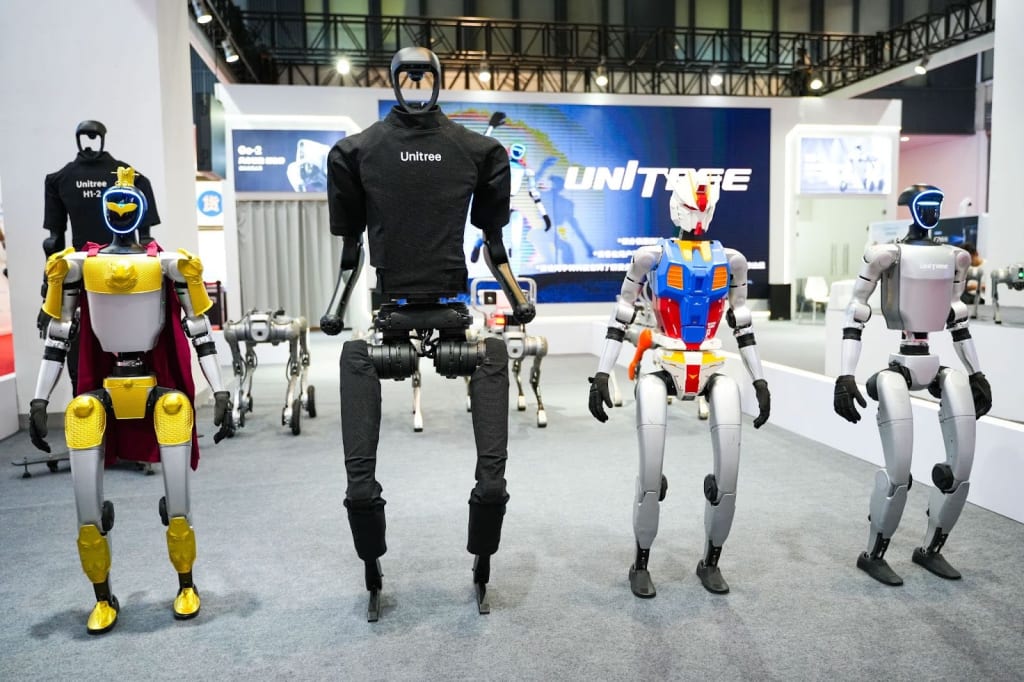
China is rapidly transitioning from robotics research to real world application as its humanoid robot sector begins large scale mass production. Companies like AgiBot and Unitree Robotics are leading this surge positioning China as a serious global competitor in the race to dominate the next wave of automation and artificial intelligence (AI).
AgiBot From Startup to Scale
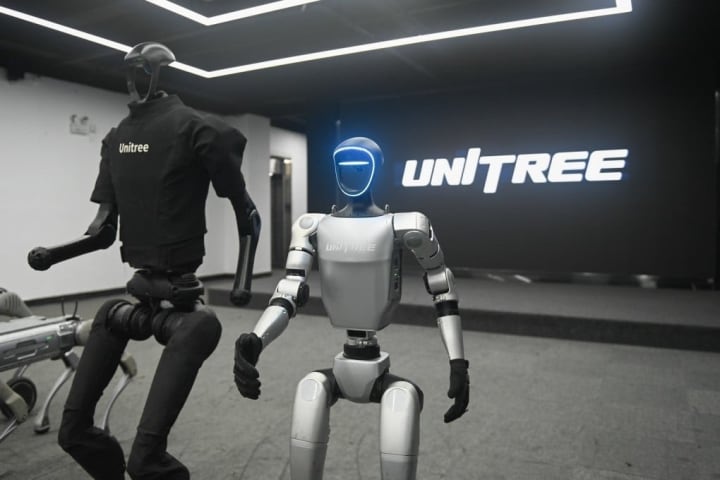
Founded in 2023 by former Huawei engineer Peng Zhihui, AgiBot has quickly evolved into a standout force in China’s robotics landscape. Within just a year AgiBot had reportedly produced nearly 1,000 general-purpose humanoid robots an impressive feat that has placed it ahead of global competitors including Tesla’s Optimus robot which remains in development until at least 2026. AgiBot’s production is centered in Shanghai's Lin-gang Special Area a key hub for high-tech manufacturing. Among its major products are the Raise A2 and Lingxi X1 robots. These models feature state of the art technologies such as RGB D cameras panoramic cameras LiDAR and proprietary SLAM (simultaneous localization and mapping) systems giving the robots impressive spatial awareness and autonomous navigation capabilities. One unique aspect of AgiBot is its open source approach. The company has released its communication framework AimRT and hardware designs to the public along with a massive dataset of millions of real and simulated robot interactions. This fosters transparency community engagement and rapid collaborative improvement something rarely seen at this scale in commercial robotics.
Unitree Robotics Affordable and Functional
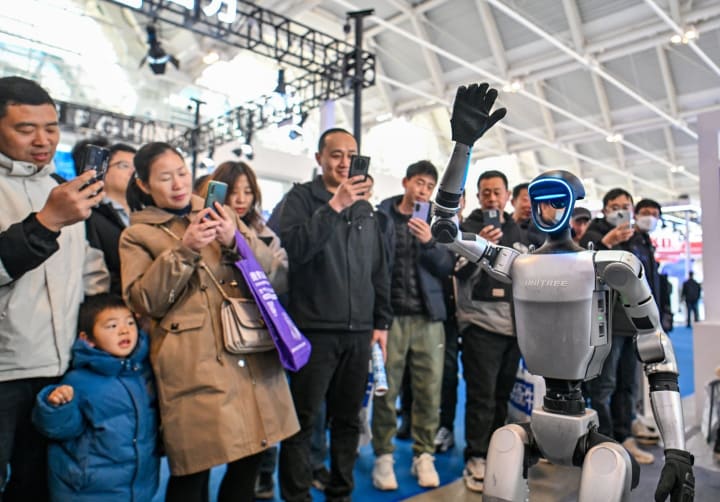
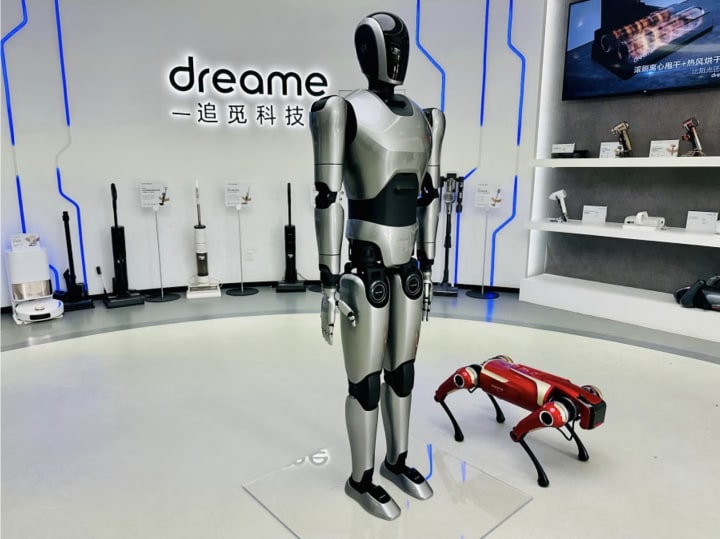
Another major player is Hangzhou based Unitree Robotics, best known for its quadruped robots and now making headlines with its humanoid model the Unitree G1. This robot stands at just over 4 feet tall and is priced at around $16,000 an aggressive move to democratize access to humanoid robots.
Despite its relatively small size and lower cost the G1 is packed with capabilities. It features 23 degrees of freedom dynamic joint control and an integrated vision system using lidar and depth cameras. The robot can walk run jump and perform delicate tasks like soldering and food preparation. It also supports reinforcement learning models that allow it to learn from trial and error over time. The G1 has gained attention for being practical for research labs educational institutions and commercial use. Its combination of agility affordability and adaptability sets it apart in a market still dominated by high-cost prototypes.
Government Support Drives Growth
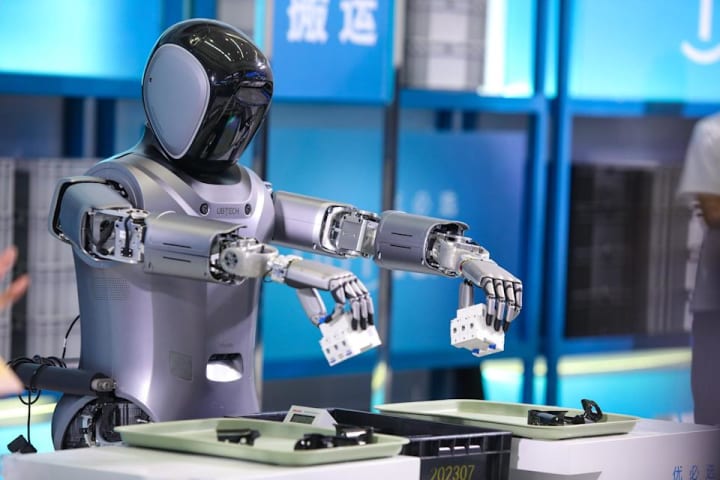
China’s leadership views humanoid robots as more than a technological curiosity. The government is actively supporting the sector as part of a broader strategy to offset demographic decline improve industrial productivity and lead the global race in AI-powered automation. Beijing’s policies have included generous funding tax incentives and regulatory fast tracking for high tech firms focused on robotics. This policy environment has allowed startups like AgiBot and Unitree to thrive in an ecosystem that encourages rapid experimentation production and deployment. In March 2025 the government emphasized AI and robotics as dual engines of growth in its national tech blueprint. This has fueled a wave of innovation across China’s tech hubs from Shenzhen and Hangzhou to Shanghai and Beijing.
The Role of AI and Vision Language Learning
One of the most exciting developments in China’s robotics sector is the integration of vision language AI models into humanoid robots. For example, AgiBot’s GO-1 model is equipped with the ViLLA framework which allows robots to watch videos of human activities and replicate them. This type of learning enables robots to quickly acquire new tasks without the need for hand coded instructions. This AI driven approach to behavior modeling marks a paradigm shift in how robots learn. It’s no longer about scripting commands but teaching robots to observe interpret and act much like a human would.
Global Implications and Competition
While China’s progress is impressive there are still significant challenges. Many of the most advanced chips and components used in robotics are manufactured outside China. This leaves companies vulnerable to supply chain disruptions or export restrictions particularly in light of ongoing U.S China tech tensions. Nonetheless the country is investing heavily in becoming self reliant. Domestic chipmakers AI research centers and robotics startups are receiving unprecedented government backing. Meanwhile competitors in the U.S Japan and Europe are accelerating their own humanoid robot programs. However China’s lead in mass production and deployment gives it a strategic edge especially in industrial automation healthcare and public services. With companies like AgiBot and Unitree Robotics pushing boundaries China is transitioning from a follower to a frontrunner in the humanoid robotics race. Backed by government support AI innovation and aggressive manufacturing the country’s robot revolution is no longer science fiction it’s an emerging reality.
About the Creator
Adnan Rasheed
Author & Creator | Writing News , Science Fiction, and Worldwide Update| Digital Product Designer | Sharing life-changing strategies for success.
Keep reading
More stories from Adnan Rasheed and writers in Futurism and other communities.
World’s First Humanoid Robot Half Marathon Held in China Shocking Results as Humans Easily Win
World’s First Humanoid Robot Half Marathon Held in China Shocking Results as Humans Easily Win 21 humanoid robots from top tech firms raced alongside 12,000 human runners in Beijing but technology still has a long road to catch up.
By Adnan Rasheed11 months ago in Futurism
Agentic AI in Networking Market to Surpass USD 251.8 Billion by 2034
The Global Agentic AI in Networks Market is projected to reach approximately USD 251.8 Billion by 2034, increasing from USD 3.8 Billion in 2024, and it is expected to expand at a remarkable CAGR of 52.10% during the forecast period from 2025 to 2034. This strong growth is associated with the rising demand for autonomous network operations and intelligent infrastructure management.
By Roberto Crum6 days ago in Futurism
Rivian R2: A New Chapter in Electric Adventure Vehicles
Electric vehicles are no longer rare sights on the road, yet some announcements still capture public imagination in a powerful way. The Rivian R2 is one of those moments. When people first heard about this upcoming SUV, curiosity spread quickly. Drivers who love outdoor travel, quiet roads, and modern technology started wondering what Rivian might create next. The company already built a reputation for electric trucks and SUVs designed for exploration. Now the Rivian R2 promises something different: a vehicle that could bring that spirit to a wider audience. It represents more than a new model. For many people watching the electric vehicle market, the Rivian R2 signals a shift toward practical adventure, everyday usability, and a future where electric driving feels natural.
By Muqadas khan4 days ago in Futurism
A Transparent Look at Vocal Challenges and Top Stories
Almost three years ago, we shared a resource article that served as a place for people to suggest new challenge prompts. We thought it would be a good idea to refresh that thread, and take the opportunity to answer a few common questions about top stories, how challenges are judged and how submissions are reviewed.
By Vocal Curation Team4 days ago in Resources



Comments
There are no comments for this story
Be the first to respond and start the conversation.