
ChatGPT: The Natural Language Processing Breakthrough That Changed the Game
How ChatGPT Transformed Natural Language Processing Forever


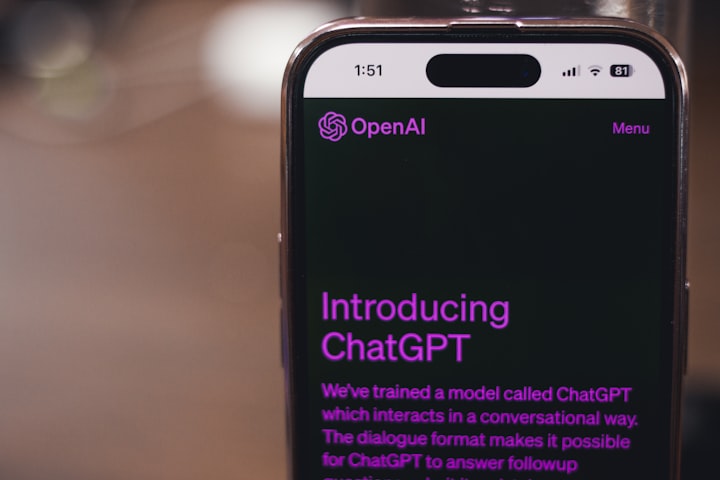
In recent years, natural language processing (NLP) has become an increasingly popular field of research, with many researchers and companies striving to develop language models that can generate human-like responses. One such model that has captured the attention of the NLP community is ChatGPT, a language model developed by OpenAI that is based on the GPT-3 architecture.
https://t.ly/WJCx
ChatGPT has become popular in a very short time due to its impressive capabilities. It is able to generate coherent and contextually appropriate responses to a wide range of prompts, making it useful for a variety of applications, including chatbots, language translation, and content creation.
One of the reasons ChatGPT is so impressive is because it was trained on an enormous dataset of text, which included everything from news articles and scientific papers to online forums and social media posts. This vast amount of data allowed ChatGPT to develop a deep understanding of language and context, which enables it to generate responses that are often indistinguishable from those of a human.
Another key feature of ChatGPT is its ability to perform a wide range of tasks, from generating text in different styles and genres to answering questions and completing tasks. This versatility makes it a valuable tool for many different industries, including marketing, customer service, and content creation.
Despite its impressive capabilities, ChatGPT is not without its limitations. Like all language models, it can sometimes generate responses that are inappropriate or offensive, and it is not always able to understand complex or nuanced language. However, with continued development and refinement, it is likely that ChatGPT will become an even more valuable tool in the years to come.
https://t.ly/WJCx
So, how did ChatGPT become so popular so quickly? There are several factors that contributed to its success:
OpenAI's reputation: OpenAI is a research organization that is known for developing some of the most advanced AI technologies in the world. Its reputation for excellence helped to generate a lot of buzz around ChatGPT when it was first released.
- The size of the dataset: ChatGPT was trained on an enormous dataset of text, which helped it to develop a deep understanding of language and context. This allowed it to generate more accurate and contextually appropriate responses than many other language models on the market.
- The versatility of the model: ChatGPT is able to perform a wide range of tasks, which makes it useful for many different industries. This versatility helped to generate interest from companies and researchers who were looking for a powerful and flexible language model.
- The quality of the responses: Perhaps the most important factor in ChatGPT's success is the quality of its responses. Many users have reported that the responses generated by ChatGPT are often indistinguishable from those of a human. This has made it a valuable tool for applications like customer service and content creation, where the ability to generate high-quality responses is crucial.
- Despite its many strengths, ChatGPT is not without its limitations. One of the biggest challenges facing the model is the issue of bias. Because ChatGPT was trained on a dataset of text that was generated by humans, it is possible that the model has inherited some of the biases and prejudices of its human creators. This could lead to the model generating responses that are sexist, racist, or otherwise discriminatory.
To address this issue, OpenAI has implemented a number of measures to reduce bias in ChatGPT. For example, the organization has implemented a feature that allows users to specify the level of bias they are comfortable with, and the model will adjust its responses accordingly.
https://t.ly/WJCx
Despite these efforts, bias still remains a significant challenge for ChatGPT
About the Creator
Keep reading
More stories from Scott Brewer and writers in Futurism and other communities.
ChatGPT: Advancing Natural Language Processing to Shape the Future of AI
Definition of ChatGPT and Its Significance in AI Artificial Intelligence has made remarkable strides in recent years, and ChatGPT is one of the most significant developments in this field. ChatGPT is an AI language model that can simulate human conversation and respond to user queries in a natural and intelligent way. It was created by OpenAI, an artificial intelligence research laboratory that is dedicated to advancing the field of AI.
By Scott Brewer3 years ago in Futurism
About Binding Prometheus
I want to start actively advocating on behalf of my own work, and the most valuable part of my canon is, without a doubt, Binding Prometheus, the play I have been working on since 2019 and only finished in 2023 as part of my MA. The play itself is an amalgamation of a million different inspirations. On one end, it evokes the Ancient Greek myth-play, deriving its own title from the earliest extant work of Western drama we have, Aeschylus’s Prometheus Bound. On the other end, it borrows significantly from the sci-fi bulwarks from over the years, namely Mary Shelley’s Frankenstein and Karel Capek’s Rossum’s Universal Robots. The play could be an episode of Black Mirror, I fear. I don’t know. I’ve only ever seen one episode of Black Mirror.
By Steven Christopher McKnight28 days ago in Futurism
How a Personal Injury Lawyer Protects You from Common Legal Traps
Introduction An accident, whether a fender-bender in traffic or a slip-and-fall in a grocery store—can seem straightforward at first. However, dealing with insurance forms, deadlines, and legal requirements quickly becomes stressful and complicated. Navigating these challenges alone leaves many people vulnerable to mistakes that harm their ability to recover compensation.
By Zair Fateh Aliabout 17 hours ago in Futurism



Comments