
ChatGPT's impact on Occupational Restructuring
Exploring the Transformative Role of ChatGPT in Reshaping the Future of Work and Learning
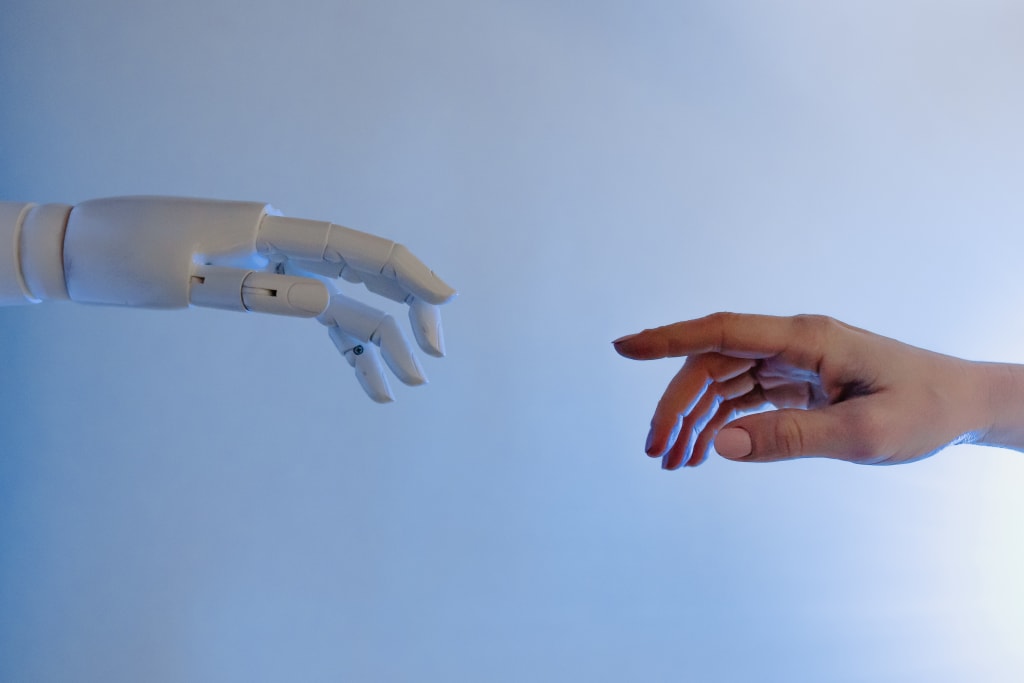
The emergence of machine learning (ML) and artificial intelligence (AI) has significantly altered the labour market in recent years. ChatGPT is one technology in particular that is having a significant influence on occupational restructuring. ChatGPT, a potent language model created by OpenAI, can comprehend human language and produce writing that resembles it.
Customer service is one of the industries where ChatGPT is having a big influence. Nowadays, a lot of businesses use ChatGPT-powered chatbots to offer assistance and customer care. These chatbots can respond to frequently asked queries, provide product suggestions, and even help with decision-making.
The deployment of a ChatGPT-powered chatbot by H&M is one actual illustration of this. The "H&Mbot" chatbot may be found on Facebook Messenger and the company's website. Customers may use it to locate items, get style tips, and get information about H&M's environmental activities. Customers have responded well to the chatbot, and H&M reports that it has increased sales while lowering the amount of customer support questions.
ChatGPT has an effect on occupational restructuring that goes beyond customer service. Other areas, like banking and healthcare, are now using the technology. For instance, banks use chatbots to respond to consumer questions and offer financial guidance. Chatbots are being used by healthcare practitioners to assist patients with appointment scheduling and basic medical information.
While the number of customer support positions has decreased as a result of the usage of chatbots like H&Mbot, it has also opened up new career options for those with the necessary abilities to build and manage these kinds of systems. For instance, businesses that create chatbots require employees with skills in software development, machine learning, and natural language processing.
The usage of chatbots has not only opened up new prospects but also sparked worries about job displacement and the need for retraining. When more customer service operations are automated, people might need to pick up new skills to find employment in other sectors. This might entail acquiring knowledge about artificial intelligence (AI) and other cutting-edge technology as well as soft skills like problem-solving, cooperation, and communication.
ChatGPT affects occupational restructuring outside of the labour market. Also, it is having a significant effect on the educational system. There is an increasing need for people to gain new skills and information as more jobs are mechanized. This has increased the need for educational tools and online learning platforms that may assist people in gaining the skills they need to be successful in the occupations of the future.
One illustration of this is Coursera, an online learning platform that provides courses in artificial intelligence, machine learning, and other cutting-edge technology. Demand for Coursera's courses has significantly increased in recent years as more people strive to upgrade their skill sets and knowledge to stay competitive in the labour market.
Using ChatGPT-powered chatbots is only one example of how this technology is affecting occupational restructuring overall. Yet, it also raises worries about job displacement and the need for retraining, even as it has the potential to develop new sectors and job prospects. To guarantee that technology is created and used ethically and responsibly as well as that employees have the skills necessary to be successful in the occupations of the future, it will be crucial to discover ways to do so as it continues to advance.
In conclusion, ChatGPT is a potent technology that is significantly altering the labour market and the educational system. While technology is generating new employment prospects and sectors, it is also prompting worries about job displacement and the requirement for retraining. The importance of this will only increase as the technology develops.
About the Creator
Keep reading
More stories from Ankit Worlikar and writers in Futurism and other communities.
The Digital Era: Keeping Your Personal Information Safe
In today's world, people are increasingly using digital platforms to conduct their personal and professional life thanks to the development of technology and the internet. As personal data is exchanged and kept online more often, this has nonetheless also increased worries about data privacy. We'll talk about the value of data privacy in the digital age and how to safeguard your personal data online in this blog.
By Ankit Worlikar3 years ago in Education
Samsung Galaxy S26 Ultra Review: Why the "Stealth Upgrade" is 2026's Most Important Flagship
If you are suffering from smartphone upgrade fatigue, you are not alone. Over the past few years, the tech industry has settled into a predictable rhythm. Every January, a new slab of glass is unveiled, boasting slightly faster chips, an extra megapixel or two, and a marketing campaign that promises to revolutionize your life. When the Samsung Galaxy S26 Ultra leaked, many tech enthusiasts looked at the renders, saw a device that looked nearly identical to the Galaxy S25 Ultra, and collectively sighed.
By Tech Horizons6 days ago in Futurism
Samsung Galaxy S27 Ultra: Everything We Know About the Ultimate 6G Bridge
Let’s be honest: for the past few years, the smartphone industry has felt a little stagnant. We’ve grown accustomed to the annual cycle of slightly better cameras, marginally brighter displays, and battery life improvements that you barely notice in your day-to-day life. But every once in a while, a device comes along that shifts the paradigm, forcing us to rethink what a piece of glass and metal in our pockets can actually do. Enter the Samsung Galaxy S27 Ultra.
By Mohammad Hamid5 days ago in Futurism




Comments
There are no comments for this story
Be the first to respond and start the conversation.