

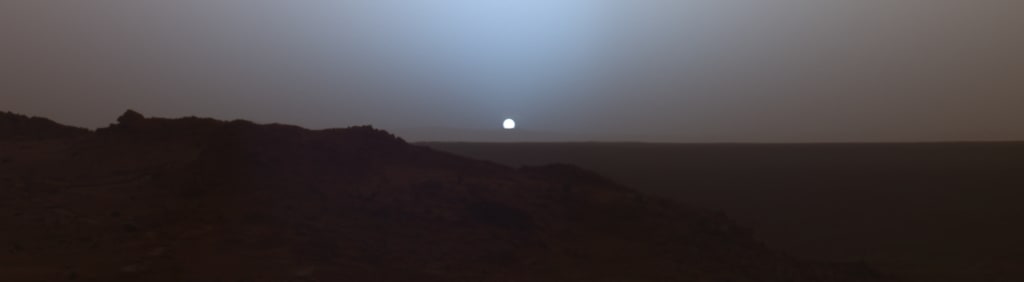
Nobody can hear a scream in the vacuum of space, or so they say. But I can tell you unequivocally–you most certainly can hear your own screams. They blare moot resonance in the narrow confines of your helmet if you are so ill-fated as to find yourself drifting helplessly in the void, cut off from communications and separated from your ship.
Such a fate might well be the product of a single mistake suddenly turned death sentence–to be carried out silently and slowly by the indifferent universe for whatever missteps left you suspended in its inexorable desolation. It is a mercilessly protracted loneliness, to be trapped in such unyielding vastness.
You can scream until your ears ring, until your eyes can’t focus; yet you can never scream loud enough–not loud enough for anyone else to hear, not loud enough to muffle the chaotic legion of voices in your own head–compulsive revisitations of regrets; the haunting words of loved ones you’ll never see again; the spontaneous prayers to whatever gods or telepathic aliens might care to listen. Pointless, ceaseless neurotic questions spawn in your head and morph into a schizophrenic internal dialogue that grows less and less coherent, that beats you down until there are no more tears to cry and no more drive–nothing to nurture even the most anemic of hopes.
I had so many chances and now it all ends like this? Why was I so stupid?
You’ve been stupid your whole life.
Why did this happen to me? Why me?
They told you not to do it. But it was your destiny.
No, it wasn’t! I could have chosen differently!
Then why are you here?
Someone will come–someone will rescue me. Someone has to come!
A meaningless wish when there is nothing left to wish for but death.
I'm sorry! I’m sorry, Mama! I’m so sorry!
******
When I was about ten, my father introduced me to an aghologram show called Racer 42. It was an action-packed show about a mediocre human EM-jet pilot from Earth named Karsha and her engineer, Sakelo, also an Earth human. They traveled all over the galaxy participating in and promoting EM-jet races. The premise of the show, however, was that Karsha and Sakelo were actually government agents doing covert missions–from demolition and sanctions to espionage and recovery of assets.
I rewatched a couple of Racer 42 episodes as an adult–and while rewatching, I found myself inconsolably disappointed at how much worse it was than my romantically nostalgic recollections. The acting, the writing, the production quality–almost everything was now frustratingly sub-par. The only redeeming qualities were the two actors’ on-screen chemistry and natural charisma. I had to ask myself what my ten-year-old eyes had found so wonderful about that show all those decades ago. Then it hit me–the racing and spy action were always exciting elements for any kid. Everybody loves a good agholoshow explosion or two; I did, too–but I realized that wasn’t what got me addicted to the show.
I was possessed by the peculiar, enchanting places they got to visit–the strange skies and divergently manifested nature of other worlds–the exotic, adventurous romances that inevitably ensued with people of oddly beautiful features and enamoring customs wildly foreign to my own banal Earth-bound experiences. One day they’d be partying on the elegant floating cities of Venus; the next week, they’d be talking with purple Jovians on the sleepless, bustling Jupiter 6 MetroSat–or having dinner with eccentric, colorful people from Ganymede. I used to try to guess what fantastic places their next mission would take them. I’d even fantasized about falling in love with a Jovian one day.
Fictional though the show was, the places Karsha and Sakelo went were real; and so these characters were the ones who instilled in me the desire to go gallivanting across the galaxy. I watched and rewatched each episode, analyzing and overanalyzing the characters, envisioning myself in their places–a man of the galaxy. I reimagined myself embodying the balance of both their personalities–Sakelo’s quiet intellectual charm and cerebral humor, and Karsha’s fiery spirit and adventurous spontaneity. I didn’t know how to make it happen, but I knew I had to become a more intelligent, more focused, more action-oriented human; because those distant, alien places were always calling out to me across spacetime–calling me to wade far out into their stimulating depths, and be changed.
I had only Racer 42 and my elaborate imagination to assuage my dreams until one day, my Aunt Phaedra called asking if I wanted to visit her in the Tranquility Sector Base on Luna. I’d been to Luna a few times with my father when I was much younger, but this would be the first of many visits to see Aunt Phaedra on the base. That first time, she gave me the grand tour: new tech projects, next-generation ships, military exercises, and even a few weapons tests–nothing top secret, though. I suppose she thought she was giving me a special experience that few outside of the government would never get–and she was. I appreciated it; but for me, sitting in the tower observatory gazing out at the billions of stars in the sky was always the best thing about the Moon. Outside of Earth’s atmosphere, the sky was clear–a calm and endless black ocean teeming with tiny lights. I felt that my eyes must have fallen upon every single star in our Milky Way Galaxy–and yet knowledge of the trillions more beyond the reach of my feeble human sight filled me with awe every time.
Following in my grandfather’s footsteps, Aunt Phaedra had become a career Sol System Security Service officer, joining immediately after professional university. Her younger sister–my mother–ended up becoming a High Counselor in the Universal Kinship Society, a group dedicated to universal pacifism. Despite 4S soldiers and servicemembers going back generations in our family, Grandfada said no one was surprised when Mama joined the Kinship Society. She always had a strong personality–and an even stronger will. Consequently, she and Aunt Phaedra ended up at philosophical odds, though it never seemed to impact their relationship much–other than an occasional spirited debate. They were quite adept at keeping specifics hidden from me–or, more likely, I was just imperceptive.
But when I told my parents I was interested in joining the Sol System Security Service, all the hidden resentment and anger Mama and Aunt Phae were repressing erupted. A chasm developed between them. Mama was a Professor of Morality at Earth University, which ironically partners with the Sol System Security Service Officer Academy, where Aunt Phaedra had taught Military History for years before being promoted to captain and stationed on Luna.
In truth, I had no desire to become an actual soldier. I tried to explain to my mother that the 4S served many roles in the Sol System–health and medical infrastructure, disaster aid, technological engineering, environmental research, planetary safety and risk management, et cetera; but whatever misconceptions she had about the 4S, my mother had none about the fact that they were also the military of the Sol System Alliance. I could tell she wanted to forbid me from joining–but in the end she simply stated her case, pulling no punches.
“Eventually, you will be sent to kill other sentient beings, or you will be killed by them. And no good will come of it. Your life will be wasted–and forgotten by all but us.”
“Mama,” I told her. “I will not be a warfighter. I can join one of the Engineer Battalions.”
“And what will you be engineering, Chellen? You’ll be creating machines and weapons that will kill.”
“We have to be ready to defend the System, Mama.” It might have been the conversations with Aunt Phaedra that pre-loaded that auto-response in my brain, but I regretted those words the nanosecond they’d escaped my lips, even before I saw the disappointed look in Mama’s eyes. “B-but I don’t have to do that–I’d prefer to join the Medical Battalion,” I added. “I can do that.”
“You’ll be wherever they place you–whatever your requests are, they’ll put you where they think you’re needed. Phaedra didn’t want to be stationed on Luna. She wanted to be on Jupiter 6–but she didn’t have a choice. And she doesn’t talk about it, but you know she was sent on covert missions to do who knows what!”
“But she’s in the Astral Corps. I’ll be joining–”
“The Medical Battalions are sent to war just like everyone else. Don’t you pay attention to the news? Haven’t you seen the death and destruction these militaries cause throughout the galaxy? The 4S has involved itself in war one way or another for the last thousand years, Chellen. Can’t you see that?”
“I promise I won’t contribute to that, Mama,” I tried to reassure her. “I won’t be a part of that.”
“You won’t be apart from that,” she jabbed.
“Mama–”
“You understand my feelings on this,” she said as she turned away. “Now you need to figure out your own moral position before you act.”
After that conversation, Mama didn't mention the subject again for years. I could not have expected her to support my ambitions. She might have accepted the 4S if she had believed they were a purely defensive force, but she’d kept track of all their military engagements; and to her sensibilities, most seemed unnecessary to ensure the security of the Sol System–and all caused death.
She was obviously broken-hearted, but I knew even then that I would not change my mind. I have often felt immense guilt about that. I must have asked my aunt a thousand questions about how to get selected for the battalion I wanted to join. She just looked at me and said, “Chell, you’ve got to pass the entrance exams first. It ain’t like applying to university. Good luck.”
So I did my research and learned that the acceptance rate at the 4S Officer Academy was about 0.6% percent–that’s three out of every 500 applicants. The other option was to join the enlisted ranks–their acceptance rate was about 24%, including reserve applicants. Acceptance into the Officer Academy was 5% for already enlisted personnel, but they could only attend part-time and they had to wait a year before applying. In the meantime, they’d still be regular service people–or soldiers–likely to be sent anywhere, anytime. Aunt Phaedra told me nothing about the exam but that it was five days that would challenge me in every possible way.
Strangely or not, I was undaunted by the numbers and warnings. I had that ignorant, arrogant confidence of a hard-headed youth. That I had to prepare was a foregone conclusion; I joined the Junior 4S and started researching, training and studying, and practicing however I could to prep for the Officer Academy entrance exams. I wouldn't be eligible until I was twenty, but determined to pass, I refused to take those nine intervening years for granted.
During my research, I heard about Scout simulators available to the J4S. I had never flown anything, so I was intrigued and reserved time in one. I learned Scouts were the smallest, most agile ships in the Security Service. They reminded me of the EM-jets from Racer 42. When I stepped into the simulator for the first time, I barely managed to sit properly; but once through the introductory training, something began to feel different–a psychological weight I hadn’t even realized was suffocating me was melting away. It had changed me--after just one day. My heart knew I was meant to be a pilot; and from then on, I was hell-bent on mastering that simulator and moving on to the real thing.
I never told my parents about my revelation; I just let them believe I was going to join the Medical Corps, which I still intended to do–but as a pilot. My father also expressed concern about the risks of joining the 4S–but unlike my mother and the rest of my family, he and Aunt Phaedra were the only ones that told me to follow my dream. Of course, he also told me to refrain from telling my mother about his blasphemous advice; I agreed to keep it between the two of us if he would take me to the Jovian Metropolitan Satellite, Jupiter 6. He’d even been there before. But alas, my attempt at blackmail was unsuccessful.
“Sorry, Chelly,” he said. “I can’t fit that kind of trip into my schedule. Maybe another time. Besides, what about Mama?”
“Aw, she’s not interested in going anyway,” I tried to justify leaving her out of the plans.
“That’s not quite true–and you’re missing the point. She actually loves traveling, but she feels that there are things at home that should be fixed first. And I think she’s a little worried that you’ve been pulling away from us a bit recently. I mean, you’re growing up and making plans to go far away. It’s natural, but it’s also a bit difficult for her–for us.”
“We’re still going to be a family,” I reassured my father. “That’ll never change. There’s just something inside me driving me to get out there and be a part of the Galaxy, Fada.”
“And she’s worried that you’re moving away from her teachings as well.”
“You don’t agree with everything she says, do you?”
“I agree with a great deal, Chelly–but yes, I do have some reservations about certain things. I think it’s important to understand the common ground between what you believe and what the people around you believe, and focus on that–share that. We don’t all have to be in lockstep, but you ought to understand your own moral action code. Have you given that any thought?”
“I will,” I committed half-heartedly, knowing that my hollow promise would float up from my mind and dissolve into the ethers mere seconds after the conversation ended.
Fada, as I called my father, was an engineer for the Earthwide Transportation Authority. He rarely stayed anywhere overnight even though he traveled regularly all over Earth and sometimes to Luna. Only once did he travel beyond that. It was the longest he’d ever been away from us–four months to study a few transportation hubs, one on the Jupiter 6 MetroSat, one on Titan, and one on Sol Station P4. He brought back several perplexing souvenirs–as well as stories of unexpectedly novel meals that I had a hard time imagining him completing–or even starting, for that matter. I would never have called my father the most ambitious person in the galaxy–he was easily contented by a comfortable chair, an agholoviewer, and his favorite foods. He often said he should have taken the opportunity to travel more, but I doubt he really ever felt comfortable away from home. Nevertheless, I believe he truly valued his four months off-terra; and maybe that, in some way, allowed him to understand my desire to expand my own personal galaxy. Perhaps he wanted me to push myself as far as I could and do the things he could not. Whatever the reason was, I was silently comforted by his acceptance and support–passive though it was.
Day after day, I could think of little else but getting off Earth. The rest of the galaxy was right there beyond the Moon–open to everyone who desired to explore and experience, it seemed, except me. I still wanted to visit the Jupiter 6 MetroSat; but Fada was too busy (and too comfortable) on Earth to travel far; and Mama, on top of being busy, maintained that Earthers should work to make Earth peaceful before going out into the galaxy. She said that even peaceful people from a non-peaceful world could only spread destruction.
Of course, they would never allow me to travel beyond Luna alone, either–no matter how impatient and trapped I was feeling. For then, like now, the Galaxy held real dangers that everyone knew; and unknown, hidden dangers inevitably made themselves known to the naïve and the stupid.
We didn’t have relatives or friends living anywhere past the Moon–no one to come get me, no one to stay with beyond the Luna. I would like to think that even amidst the thick, hormonal fog of my teenage years, I wasn’t stupid enough to defy my parents and just secretly go off alone anyway; but considering the question in retrospect, I probably was stupid enough to do it–I just also happened to be too stupid to think of it before it stopped mattering. Aunt Phaedra was constantly traveling between Luna and other stations throughout the Galaxy. As a child, I begged her to let me go with her somewhere besides Luna–even Mars–wherever the 4S would allow. She always said it was up to Helendra–my mom; but Helendra always said no and that I should be thankful for my visits to Luna.
Our Moon had its own charm. Outside of Luna Spaceport, however, there wasn’t much of an intragalactic feel–or even an interplanetary one. The Lunar population was about 800 million and the Lunans were mostly people descended from Earthers generations ago. The main non-Lunan population was the 4S, and most of them were Earthers there on temporary assignment. Very few were from Mars or the outer Sol System; perhaps none were from any other star systems–and everyone knew Standard Gaian. I really wanted to meet people of different cultures, hear extra-terrestrial languages, eat foods in the places they were invented–not sample touristy, Earther-friendly food like they served in the Luna Spaceport. Of course, I’d never been to any of those touristy restaurants. I’d never even been in the restaurant sector of the spaceport; but in my hyper-focused little mind, I craved authenticity–the vast, diverse and thrilling galaxy of the fictional Racer 42. I wanted to experience full immersion on a foreign planet, whatever it had to offer--or so I thought.
Then, when I was fifteen years old, after years of begging, my mother inexplicably gave in and at last permitted Aunt Phaedra to take me to Mars. To this day, I’m not quite sure why Mama agreed–but I’m sure she regretted it.
For me, the departure day couldn’t arrive fast enough. My true desire was to go to Jupiter 6 MetroSat, but at least Mars was a step beyond Luna and certainly better than routine boredom. I was counting down the days, planning what to take with me, making lists of where to go on the planet, what to try, and what to bring back home.
Depending on when one left, it could take between 70 and 80 hours from Earth to Mars on the cosmotrain. Fada was able to speak to a friend at Centhruste Spaceways to get me and Aunt Phaedra a couple of nice cosmotrain cabins. Aunt Phaedra said the 4S Transport could get us there in less than an Earth day, but it wouldn’t be quite as comfortable and luxurious. I supposed I would understand what she meant when I got into the 4S. Until then, I was just looking forward to enjoying my first ride on a cosmotrain.
When the big day finally arrived, my mother, my father, and I all went to Miami and boarded the Atlantic Hyperstream bound for Howard Earthport; twenty-five minutes later, we were all on the atmospheric shuttle up to Luna Spaceport where Aunt Phaedra would meet us. Having visited her so often, I had gotten used to the shuttle ride to Luna; but this time excitement and nervousness were building up fast inside me as I anticipated the new adventure ahead. That two-hour shuttle ride felt like twelve; and when we finally landed at the Luna Spaceport, I was trembling with adrenaline.
As we stepped into the arrival lobby, I started heading towards local transportation as was my habit, but Aunt Phaedra spotted us almost immediately.
“Helendra, Zouvory!” she called out to my parents. “You guys are here earlier than I expected! Hey Chell!”
“Hey Aunt Phae,” I replied. Her hair was down and she was wearing a casual blue jumpsuit with a silver belt instead of her usual service uniform; a small pouch replaced her sidearm.
“How’ve you been, Phaedra?” Fada asked her.
“Busy, you know–but I can always make a little time for my favorite nephew,” she laughed.
“I’m your only nephew,” I clarified as if she didn’t know.
“What about Nubie?” she asked.
“The cat?” I twisted my face, chuckling a little. “Cats don’t count!”
“You take care of Chellen, Phaedra,” my mother said sternly. “Don’t let anything happen to him.”
“I haven’t seen you in six months, Helendra. That’s the best greeting I can get?”
“I’m worried, Phaedra,” she admitted. “I’ve just got a bad feeling about this.”
“Why?” my aunt asked. “What on Earth could possibly happen?”
“Nothing,” Mama said bluntly. “But something on Mars or anywhere between here and there might.”
“Relax, Sis,” Phaedra reassured. “He’ll be under my watchful eye.”
“So this will be a vacation for you, too, Phaedra?” asked my father.
“For the most part,” she said. “I might take care of a couple of small matters since I’ll be on the planet. It’ll give me a chance to take Chell to Red Station 12.”
“Don’t worry, Mama,” I tried to comfort her. “I’ll be safe. Aunt Phae’s been there hundreds of times, right?”
“Yes, but not with you,” Mama highlighted this key difference. “The real world isn’t like your agholoshows where everything works out for the heroes.”
“I know, Mama,” I almost rolled my eyes.
“You have to be vigilant,” she continued, “and do exactly as Phaedra tells you.”
“I will,” I promised as Fada put his hand on my shoulder.
“Captain Raele!” someone called from a few paces behind us. We all turned around to see a tall, athletically-built man with hair so white it nearly glowed under the station lights. His 4S uniform was the unmistakable black-on-black of the Astral Guard.
“Ah, Admiral!” Aunt Phae said.
“I almost didn’t recognize you, Captain,” said the admiral.
“Just taking a bit of family time, Admiral. Are you traveling, sir?”
“Just for a few weeks,” said the admiral.
“Guys,” Aunt Phae turned to us. “This is Adm. Deddisal Jelta. He's been a mentor to me since I joined.”
“Capt. Raele is very kind,” the admiral deflected, “but I’ve learned a lot from her as well–especially about diplomacy,” he smiled, eliciting controlled laughter from Aunt Captain.
“Chell,” Phae looked at me. “Adm. Jelta used to race EM-jets back in the day.”
“Really?” I almost jumped towards him. “That’s so amazing! I would love to do that!”
“Well, it was fun while it lasted,” he mused. “Eventually, I needed to move on, but that experience actually ended up being really useful when I joined the 4S.”
“Really?" I asked. “What did you pilot in the 4S?”
“Have you ever heard of Scouts?” He replied. “They’re fast little–”
“REALLY?” I interrupted with my word of the hour again. “You flew Scouts? How different are they from EM-jets? Did you ever race a Scout? Do they assign you your own Scout? Is it hard to land it in the carrier? What about–”
“Chell!” Aunt Phae interrupted my line of questioning. “I’m sorry, sir,” she said, turning to Jelta. “He’s excited.”
“Oh, it’s no problem at all," the admiral smiled. "He’s just like I was at his age. I‘ve always been excited about piloting, too. Where are you all headed?”
“Well sir, my favorite nephew and I are headed to Mars for about a week.”
“Is that right?” the admiral smiled. “I’m headed to the Red Planet myself.”
“Oh, so we might see you on the cosmotrain this afternoon, Admiral!”
“Indeed you might,” he agreed. “Take care now, Captain, everyone!” he said with a nod to Phae and a glance at the rest of us as he strode away.
“We’d better get going, too,” Phae said. I hugged my mother and my father patted me on the shoulder. Just as I turned to join Aunt Phae, my mother pulled me back into another, stronger hug.
“I love you,” she said softly as she squeezed me and stroked my back.
“You worry too much,” I told her.
“Ah, he’ll be fine,” said Fada.
“See you in a week,” Phae told them. “I’ll deliver him right to your doorstep.”
My parents stood still, watching us as we walked off.
“This way,” Aunt Phae said.
“Where are we going?”
“We have to take the intraport tram line,” Aunt Phaedra informed me. “We’re going to the interplanetary wing this time–not to local transportation like you usually do.”
“Can’t we walk there?” I pleaded. “I want to see the spaceport shops.”
“You can walk there if you want to spend two hours on the scenic route,” she offered. “I’m taking the port tram.”
“Two hours?” I repeated this sobering, key information. Needless to say, I agreed to take the port tram with her.
“We’ll pass by lots of shops on the walk to the tram station, anyway.”
As we walked, everything suddenly seemed new all over again. My nervousness and excitement opened my eyes and ears to everything. I was too young to remember my first trips to Luna with my father; and on my solo trips there to see Aunt Phae, I had never ventured this far into the main sectors of Luna Spaceport–just right to local transportation to meet her. Now, everything I used to ignore in attempts to seem like a seasoned traveler I began to notice in detail. So preoccupied with what was beyond Luna, I never knew how much there was to see and hear right there.
Thousands of people were coming and going, some walking or running with obvious urgency, others milling about casually with time to waste–eating, talking, laughing. Various announcements echoed through the spaceport.
An urgent bell tone preceded one:
“Attention, passenger Sonayer Yphos, please report to the Debbian Starways guidance center, kiosk 18, for urgent information. Attention, Sonayer Yphos…”
I spotted a few uniformed 4S personnel from various branches in the crowd; but when I saw Jovians in real life for the first time, my breath paused. A Jovian girl and her parents were walking in the opposite direction; they all had striking amber eyes and orange hair that contrasted their deep purple skin. My eyes widened involuntarily when I saw her, and a goofy smile spread across my face the second she looked in my direction; I waved shyly, but she offered no response and passed right by. I couldn’t be sure if she had even noticed me, but I felt a tiny pinch of disappointment in my too-eager heart.
“Welcome to the Luna Intragalactic Spaceport,” a gentle, feminine voice began over the public address system. “We are proud to be the safest, most convenient spaceport in the Sol System. You may find food lounges in the Blue Sector, lodging in the Red Sector, shopping in the Green Sector, and entertainment in the Yellow Sector. For a more detailed directory or for other assistance, please see the information kiosks accessible throughout Luna Intragalactic Spaceport. Local transportation and security can be found on sublevel 4 in the Silver Sector. Thank you for using Luna Intragalactic Spaceport. We hope you will enjoy your travels.”
The inside of the station was pristinely clean–no darkened corners, nothing in disrepair. Not even lunar dust to dull the polished floor. The main walkway was embellished with colorful, shape-shifting artwork that sometimes stretched several storeys high. All along the sides were restaurants and lounges going up multiple levels. The lobby ceilings were at least ten storeys above us, so perfectly transparent that the entire place seemed completely open to the dark sky. Ships of all shapes and sizes floated silently overhead to land or take off; a few hovered high in the distance like twinkling stars. I had forgotten how big Luna Spaceport was–slightly larger than the New York island of Manhattan according to Aunt Phae. She said in the Sol System, the only larger port was Hoshikawa Spaceport in the middle of the Pacific Ocean. Apparently, it approaches the size of Singapore.
An amazingly delicious smell wafting from one of the restaurants we passed caught my attention.
“Aunt Phae! Can we stop in there?”
“The Eszoulerin Restaurant?”
“Yeah!”
“Uh, have you ever tried Eszoulerin food?” she asked, pulling me along.
“No–that’s why I want to go in!” I appealed. “I want to expand my horizons!”
Aunt Phae just shook her head and pursed her lips as if to say, this poor ignorant little fool.
“Eszoulerin food requires significantly more effort than you’re used to,” she explained. “Besides, they’re going to serve several full meals on the cosmotrain.”
“Significant effort? For dinner?” I was confused. “What kind of effort?”
“I’ll say this–it’s the kind of food you need to conquer,” she described cryptically. “Some people have been hurt during the endeavor.”
“Uh, ohhh-kayyyy,” I conceded while making a mental note to look up this dangerous food.
After hopping on the tram at Gate 48 Station, we covered the distance between the commercial sectors at the center of the spaceport and the interplanetary wing in just twenty minutes, getting off at Gate 228 Station. The environment there was much calmer and not quite as brightly illuminated. Vending machines replaced restaurants and shops; waiting travelers sat or stood by their gates as Spaceport police–mostly androids–stood unobtrusively off to the sides. There was much less to see inside, but much more to see outside. Huge windows on either side offered unimpeded views of the comings and goings of various spacecraft, the spaceport personnel working outside, and the gray lunascape.
Aunt Phaedra and I walked to one of the windows. The gibbous Earth hung large above the horizon–my parents were probably already on their way back there by then. And I was about to embark on a longer journey than I’d ever taken.
Another announcement echoed from the public address system, this time in the rich, baritone voice of a serious male.
“Welcome to the Luna Intragalactic Spaceport,” it began as seemed to be the standard opening line. “For your safety, we ask that you cooperate with all security protocols and law enforcement requests. Please note that individuals participating indirectly and/or directly in prohibited activities or activities likely to cause harm or damage will be arrested and prosecuted to the fullest extent of the law, with penalties including deportation, imprisonment, and in some cases, the death penalty. If you believe you have information about any such harmful activities, immediately notify security or law enforcement. Thank you for using Luna Intragalactic Spaceport. Travel safely.”
******
About the Creator
Rye Finn
The stories I write are of beings and things seen in dreams, visions, imaginations, and frequently reality. I invite you to explore the depth and breadth of sentience, adventure, danger, loss, and opportunity--and the emotions they ignite.
Keep reading
More stories from writers in Futurism and other communities.
More Electric Aircraft Market: Next-Gen Aircraft Design, Electrical Systems & Growth Outlook
According to IMARC Group's latest research publication, The global more electric aircraft market size was valued at USD 2.45 Billion in 2024. Looking forward, IMARC Group estimates the market to reach USD 7.8 Billion by 2033, exhibiting a CAGR of 13.7% from 2025-2033.
By James Whitman4 days ago in Futurism
After the Storm
After the storm of winter snow there sat a small bear by the name Ted, of course. He loves the snow and likes to roll around in it making all sorts of trails and whatever he has a mind to do. He wondered where all the people are, but in a way, he is hoping that they are all snug in the homes maybe drinking hot chocolate-one of his favorite drinks with mini-marshmallows and eating something homemade for he likes this winter wonderland all to himself to romp and play and maybe even catch some fish down by the river.
By Mark Graham4 days ago in Fiction



Comments
There are no comments for this story
Be the first to respond and start the conversation.