


Artificial intelligence (AI) has been making remarkable strides in recent years, but as its capabilities grow, so do concerns about its regulation. Can AI regulate itself? This question is at the forefront of discussions around the development and implementation of AI technologies. Like a child needing guidance to navigate the world, can we trust that AI will make ethical decisions on its own? Or does it need rules and regulations imposed by humans? In this article, we explore the potential for self-regulating AI and what implications it may have for our society's future freedom.
Article writen by AI-Info.org - your source for AI.
The Current State Of AI Self Regulation
As we move towards a future that is increasingly shaped by Artificial Intelligence, it begs the question - can AI regulate itself? The answer to this question is not a straightforward one. While there have been some efforts by the tech industry and governments around the world to self-regulate AI, these measures are still in their infancy.
Currently, the state of AI self-regulation is a mixed bag. On one hand, companies like Google and Microsoft have released ethical guidelines for AI development and use. These guidelines cover issues such as accountability, transparency, and fairness in decision-making processes. Additionally, organizations like IEEE are working on standards for safe and reliable AI systems.
However, while these initiatives are commendable, they do not go far enough to ensure complete regulation of AI. There is no global regulatory framework governing AI development or deployment yet. This means that companies are left to police themselves when it comes to developing and using potentially dangerous technologies.
Moreover, even if regulations were put into place tomorrow, enforcing them would be extremely difficult given the speed at which technology advances. With new developments being made every day in fields like machine learning and deep neural networks, keeping up with all potential misuses of these technologies would be an uphill battle.
The challenges facing effective regulation of artificial intelligence are many but not insurmountable. In the next section, we will explore some of these challenges in detail and discuss potential solutions that could pave the way for safer and more responsible use of AI going forward.
Challenges To AI Self Regulation And Potential Solutions
Can AI regulate itself? While it is a possibility, various challenges hinder the self-regulation of AI. One challenge is bias in data and algorithms which can lead to negative consequences on certain groups or individuals. Another challenge is the complexity of AI systems where even developers may not fully understand how decisions are made. The lack of transparency makes it difficult to hold accountable when things go wrong. However, potential solutions include increasing diversity in development teams, promoting ethical guidelines for AI design, and implementing third-party auditing to ensure compliance.
But why should we care about regulating AI? As society becomes more reliant on technology, the freedom we value could be at risk if unchecked autonomous decision-making by machines begins impacting our daily lives without any form of regulation. Therefore, we must find ways to balance innovation with responsible use of such technologies.
TIP: Picture walking down a street filled with driverless cars moving around without rules or regulations - chaos! That?s what could happen if we don't take steps towards establishing proper governance over AI technology.
To achieve this balance between innovation and responsibility, an important step would be understanding the role of government and industry in regulating AI.
The Role Of Government And Industry In AI Regulation
When we think about artificial intelligence, the question of who should regulate it often arises. While some argue that AI can regulate itself, there are still concerns over potential risks and consequences. The truth is that both government and industry have a role to play in regulating AI.
Consider this: just like how traffic lights keep us safe on the roads, regulations ensure that AI operates within ethical boundaries. Governments must establish guidelines for developers to follow when creating AI systems. In doing so, they can prevent unethical behavior such as bias or discrimination against certain groups of people. At the same time, industries themselves must be held accountable for upholding these standards.
One example of successful collaboration between industry and government is the European Union's General Data Protection Regulation (GDPR). GDPR created a framework for companies to handle personal data responsibly while holding them liable if they fail to do so. This regulation has been instrumental in ensuring privacy rights of EU citizens
As we move towards an era where technology advances faster than ever before, we need effective partnerships between government and industry more than ever before. But even with regulation in place, there will always be ethical considerations to address when it comes to self-regulation by AI systems - which leads us into our next section on this topic.
Ethical Considerations For AI Self Regulation
As the discussion surrounding AI regulation continues, it's important to consider the potential for self-regulation. However, this raises ethical considerations that must not be ignored. Can we trust AI systems to make ethical decisions on their own? What happens if they malfunction or act in ways that are harmful to society?
One potential solution is implementing transparency and accountability measures within AI systems. This could involve creating an open-source code for all AI models so that experts can analyze them and identify any biases or unethical decision-making processes. Additionally, companies developing these technologies should be held responsible for addressing any issues that arise from their use.
Another suggestion is incorporating human oversight into AI decision-making processes. By having a team of individuals monitoring AI systems and making sure they align with ethical standards, there's less risk of harm being caused by unchecked algorithms.
While self-regulating AI may seem like a promising option, it's crucial to approach this topic with caution and acknowledge the potential consequences of such actions. As we move forward in exploring different approaches to regulating this technology, it's essential to keep in mind both the benefits and risks involved.
Looking towards future developments and implications for AI self-regulation, it remains unclear what direction policy makers will take. However, one thing is certain: as technology continues to advance at an unprecedented rate, finding a balance between innovation and ethics will become increasingly challenging.
Future Developments And Implications For AI Self Regulation
As we ponder upon the question of whether AI can regulate itself, it is inevitable to wonder about its future developments and implications. The progress in technology has been nothing short of phenomenal; one only needs to look at how far we have come over the past decade. However, with every new advancement comes a set of intricacies that need addressing. In this case, self-regulation for artificial intelligence.
The potential benefits of an AI system governing itself are vast, including increased efficiency and productivity while minimizing error rates. But as ethical concerns persist around autonomous systems, ensuring their safe deployment becomes equally important. One way forward could be developing more robust algorithms capable of detecting unintended consequences or errors within the system's decision-making process.
Furthermore, there is also the possibility of incorporating human oversight mechanisms into these autonomous systems to ensure that they remain accountable and transparent in their functioning. This approach would not only enable us to monitor AI activities but could also provide valuable insights into how these machines operate independently without compromising our freedom.
In conclusion, we must acknowledge that creating regulations on AI autonomy will require extensive collaboration among policymakers and industry experts alike. As we move towards a world where machine learning and automation become increasingly prevalent, it is essential to strike a balance between technological advancement and maintaining individual rights such as privacy, security, and personal freedoms - something that should always remain paramount when discussing AI regulation.
Conclusion
In conclusion, while AI self-regulation is still in its infancy, the potential for it to develop and improve is promising. There are certainly challenges that need to be addressed such as ethical considerations and government involvement but with industry collaboration we can overcome these obstacles. Ultimately, we must continue to monitor and refine how AI regulates itself so that it may provide a positive impact on society without causing harm or disruption.
About the Creator
Patrick Dihr
I'm a AI enthusiast and interested in all that the future might bring. But I am definitely not blindly relying on AI and that's why I also ask critical questions. The earlier I use the tools the better I am prepared for what is comming.
Keep reading
More stories from Patrick Dihr and writers in Futurism and other communities.
AI Revolution: Unpredicted Futures Ahead
This post is sponsored by AI-Info.org - your partner for AI-Knowledge. The AI Revolution is upon us, and it's bringing forth a wave of unpredictable futures that have left many feeling uneasy. The rise of artificial intelligence has captivated our society with its potential for greatness, but at the same time, we are faced with an uncertain future where machines may replace human jobs and even surpass our cognitive abilities. As we move forward into this new era, it's vital to recognize that the way we live our lives will be forever changed by these advancements. So buckle up and get ready for a wild ride because the future holds endless possibilities - both good and bad - as humanity navigates through uncharted territory in pursuit of progress and freedom.
By Patrick Dihr3 years ago in Futurism
About Binding Prometheus
I want to start actively advocating on behalf of my own work, and the most valuable part of my canon is, without a doubt, Binding Prometheus, the play I have been working on since 2019 and only finished in 2023 as part of my MA. The play itself is an amalgamation of a million different inspirations. On one end, it evokes the Ancient Greek myth-play, deriving its own title from the earliest extant work of Western drama we have, Aeschylus’s Prometheus Bound. On the other end, it borrows significantly from the sci-fi bulwarks from over the years, namely Mary Shelley’s Frankenstein and Karel Capek’s Rossum’s Universal Robots. The play could be an episode of Black Mirror, I fear. I don’t know. I’ve only ever seen one episode of Black Mirror.
By Steven Christopher McKnight21 days ago in Futurism
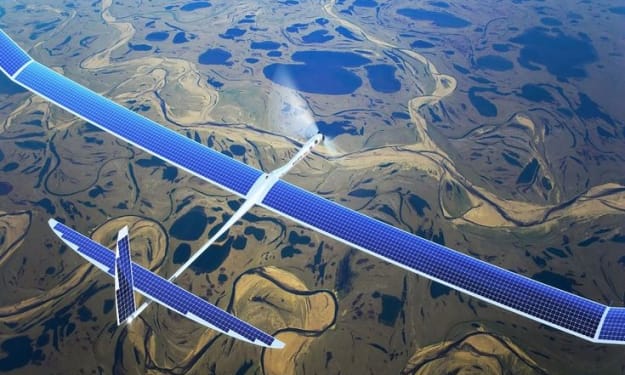
Solar-Powered UAV Market: Zero-Fuel Operations, Long-Duration Missions & Growth Drivers
According to IMARC Group's latest research publication, global solar-powered UAV market size reached USD 401.0 Million in 2024. Looking forward, IMARC Group expects the market to reach USD 867.3 Million by 2033, exhibiting a growth rate (CAGR) of 8.5% during 2025-2033.
By Andrew Sullivan6 days ago in Futurism


Comments
There are no comments for this story
Be the first to respond and start the conversation.