
Can AI Really Understand Human Emotions?
Explore whether artificial intelligence can truly grasp complex human emotions—or if real empathy remains a uniquely human experience.

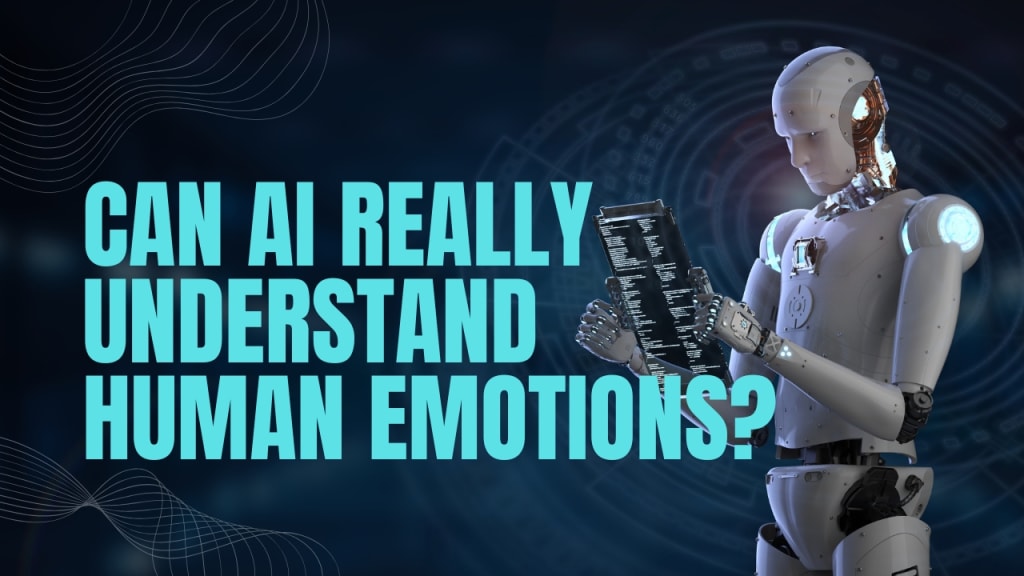
Artificial intelligence has surged forward in the last ten years, mastering speech, images, and even the craft of human-like writing. The newest challenge is emotional intelligence—teaching algorithms to sense and respond to human feelings. This is done by parsing changes in tone of voice, reading facial micro-expressions, analyzing choice of words, and sometimes even biometric signals. Platforms in mental health, customer service, and even modern matchmaking now use these capabilities to gauge emotional states and adjust replies accordingly.
Still, the deeper question endures: does AI genuinely grasp what emotion is, or does it merely execute complex, rule-bound simulations? True emotional intelligence hinges on situational nuance, shared experience, and a kind of empathic resonance that current machines do not replicate.
The Gap Between Recognition and Comprehension
Machines today can pick up emotional signals with remarkable precision, especially when fed vast training troves. For example, modern sentiment analyzers can classify a tweet as annoyed, despondent, or ecstatic. Chatbots can activate comforting language in response to mention of hurt. Such capabilities are saturating our devices and interactions, generating the sense—sometimes comforting and sometimes discomforting—that the technology understands us.
Distinguishing feelings is only the beginning; deciphering them is where the human advantage lies. We sift through past experiences, relational history, vocal inflections, and the weight of unspoken words to arrive at meaning. AI catalogues signals, yet its processing is flat and layerless. Motivation and nuance slip past its grasp; the result is sophisticated output, not shared inner life. It can spotlight emotion, but it does not reside within it.
Why We Seek Emotional Intelligence in Digital Companions
As screens increasingly mediate our lives, AI is pressed into service as surrogate friend, counselor, and confidant. This is a rational pivot—machines pose fewer social hazards and operate around the clock. Yet with every click that substitutes for a conversation, our hunger for recognition swells. We desire the same subtleties of regard that once flourished in shared human spaces.
The more intimacy we barter for convenience, the louder the demand for emotionally aware algorithms. The danger is that we may blur the line between responsive circuitry and genuine feeling. Behind the convincing tone and timely reassurance, circuitry and calculus operate—no heartbeat, no memory, no wound. The glow they emit can feel maternal, but its glow is circuitry, not flesh. When we recoil from its chill, we must remember we are feeling for a warmth it cannot truly possess.
Can Machines Develop Emotional Memory?
Human emotional understanding is anchored in the capacity to weave memories of past events into the fabric of present feelings. Machines, by contrast, engage solely with data fragments and pattern matching, lacking the lived substrates of memory. An AI can store prior entries and modify future outputs in light of them, yet it does so without subjective re-experiencing or the emotional valence those entries once carried.
This absence of true emotional memory circumscribes the emotional richness of discourse with AI. A chatbot might present a sympathetic turn of phrase, yet the algorithmic nature of its recall prevents the layered insight or gentle attunement of a human confidant or therapist. What users sometimes perceive as intimacy is, at best, a finely-tuned transactional mimicry.
Curiously, some engineers now design AI personae that seem to mature through sustained dialogue. These systems cultivate vocabulary and adjust demeanor according to a cumulative archive of exchanges, creating a façade of memory that appears to deepen with time. The processes, however, remain anchored in statistical refinement rather than any substance of understanding.
Emotional AI in Mental Health Support
AI is becoming a more common companion for mental health, providing immediate, low-cost help to people who might otherwise go without. Chatbots like Woebot and Wysa use natural language processing to hold conversations that feel supportive. They can spot words that hint at depression, anxiety, or stress and serve up coping tips on the spot. For someone who can’t reach a therapist, these apps can feel like a small, timely lifeline.
That said, nuance is the quiet muscle of good therapy, and that’s still a shaky spot for algorithms. A therapist notices when silence hangs heavy, leans in, and pauses when the heartbeat changes. They trust a quiet radar of empathy that AI doesn’t have. While chatbots can guide someone through an anxious episode, they can’t match the weight of a human presence, nor can they make a clinical assessment that might, for example, point to the need for medication.
How Cultural Context Impacts Emotional AI
Emotional language is never universal. A quick smile in one culture means “hello,” while in another it means “I’m polite,” and neither is wrong. Sarcasm dances differently, humor slides into different molds, and hand gestures can be invitations or insults. For an algorithm trying to read a face or a text, these subtleties add layers of risk. If the AI hasn’t been trained on the specific cultural context it’s sitting in, it might call someone’s heartfelt sadness “mild annoyance” or deliver a canned reply that feels cold at best, harmful at worst. In therapy or international negotiations, a misread can ripple wide, reminding us that emotion still loves the human touch.
Researchers continue to refine AI’s cultural sensitivity by feeding it wide-ranging datasets reflecting nuanced social behaviors. Yet because the field is still maturing, it can stumble. For AI that gauges emotion to really resonate, it needs to grasp the micro-codes buried in customs, metaphors, and non-verbal cues that vary from one culture to another.
Looking ahead, the goal isn’t to duplicate human empathy but to deepen it. AI might never absorb feeling the way people do, but it can amplify human connectedness. Rather than supplanting emotional intelligence, it can watch for subtle shifts in mood, guide caregivers toward unseen distress, reveal personal emotion trends, or tailor service in ways that feel considerate. When designed and deployed with care, emotional AI acts as a hand that steadies human empathy rather than a mask that tries to wear it.
The flip side is the hazard of misplaced trust. If someone confides heartbreak to a chatbot without recognizing its limits, the resulting advice can ring hollow or even harmful. Maintaining clarity about what emotional AI can—and cannot—do is crucial, particularly in sensitive moments, to shield users from misplaced trust, unmet expectations, or emotional friction.
Last Reflections
AI’s progress in sensing and reacting to our emotions is striking, yet genuine emotional comprehension stays within the realm of human experience. Programs can dissect signals and mimic reactions, yet they lack the capacity to internally experience feelings or to empathize in the human sense. Entering an era in which emotional AI is increasingly present, we must treat these capabilities with care—employing them to enhance human compassion rather than to substitute for it. In the end, the truest bond of understanding arises from living, beating hearts, not from lines of code.
About the Creator
Grace Smith
Grace Smith | AI Content Writer | Sydney
Specializing in crafting intelligent, SEO-driven AI articles that engage and convert. Passionate about tech, language, and digital storytelling.
Keep reading
More stories from Grace Smith and writers in Futurism and other communities.
Practical Tips For Singles Struggling With Commitment Fears
Fear of commitment does not manifest itself without cause. Such fears have their roots in the past heartbreak, childhood or observing unhealthy relationships during childhood in many single people. Unprocessed emotional wounds have the ability to provide protective walls. This makes the mind perceive long-term relationships as something vulnerable, lost or disappointing. Not to face pain once again, other people sabotage promising relationships unconsciously. The awareness that fear of commitment is a defense mechanism most of the times and not a personal weakness is the initial step towards effective change and emotional development.
By Grace Smithabout 7 hours ago in Humans
Australia Identity Verification Market: Digital Adoption, Fraud Prevention & Regulatory Compliance
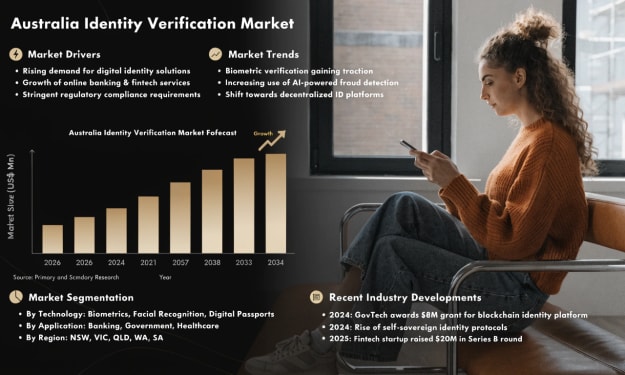
According to IMARC Group, the Australia identity verification market reached USD 315.9 Million in 2025 and is projected to grow to USD 1,005.3 Million by 2034, exhibiting a compound annual growth rate (CAGR) of 13.32% during 2026–2034. The rapid digitization of financial services, e-commerce platforms, and public sector portals across Australia is creating an urgent need for secure, scalable, and compliant identity authentication systems. Increasing concerns regarding cybercrime, identity theft, and data breaches are accelerating investments in biometric technologies, AI-driven verification tools, and automated compliance platforms. As digital transformation deepens across industries, identity verification is becoming a foundational pillar of secure digital infrastructure.
By Kevin Cooper3 days ago in Futurism
Levulinic Acid Market Analysis: Specialty Chemicals, Pharma Applications & Industry Outlook to 2033
The increasing shift toward renewable chemicals, the surge in sustainable agricultural practices, and the growing application of bio-based solvents are fueling the demand for levulinic acid. Supported by green chemistry initiatives, rising investments in carbon-neutral manufacturing, and the expansion of the personal care and pharmaceutical sectors, the market is witnessing significant transformation. According to IMARC Group’s latest data, the global levulinic acid market size was valued at USD 29.7 Billion in 2024. Looking forward, IMARC Group estimates the market to reach USD 42.6 Billion by 2033, exhibiting a CAGR of 3.9% during 2025-2033.
By Andrew Sullivan6 days ago in Futurism



Comments
There are no comments for this story
Be the first to respond and start the conversation.