
Brain-Computer Interfaces: Merging Minds with Machines
How Neural Implants Could Transform Human Thought, Learning, and Reality

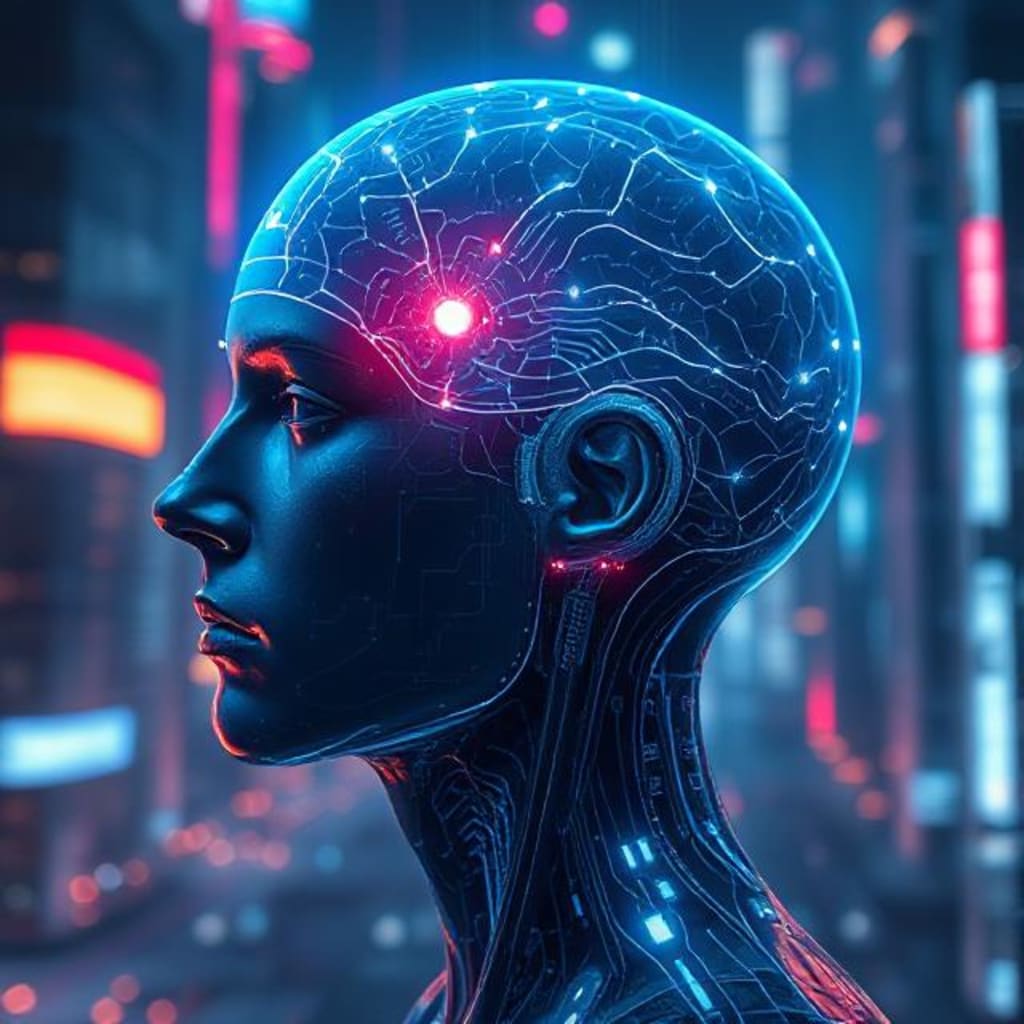
The Age of Mind-Machine Integration
Imagine thinking a command and having a computer, a robot, or even a smart home execute it instantly—without saying a word. Brain-computer interfaces (BCIs), once the realm of sci-fi, are now rapidly advancing. From controlling robotic arms to streaming thoughts into virtual reality, BCIs promise to merge human cognition with machine intelligence in ways never before possible.
Neural implants, such as Elon Musk’s Neuralink, aim to read and write information directly to the brain, potentially enhancing memory, learning, and communication. While the technology is still experimental, early trials show remarkable results: paralyzed patients controlling robotic limbs, individuals restoring lost sensory function, and people interacting with computers using thought alone.
---
How Brain-Computer Interfaces Work
At the core of BCIs are neural sensors capable of detecting electrical activity in the brain. These sensors convert neuronal signals into digital commands that machines can understand. Two main types exist:
1. Invasive BCIs: Implanted directly into the brain tissue, offering high-precision readings but requiring surgery.
2. Non-Invasive BCIs: Placed on the scalp, like EEG headsets, offering lower precision but easier application.
These signals are processed using AI algorithms, which decode complex thought patterns and convert them into actionable instructions. The potential applications range from medical therapy to everyday life augmentation.
---
Real-World Applications
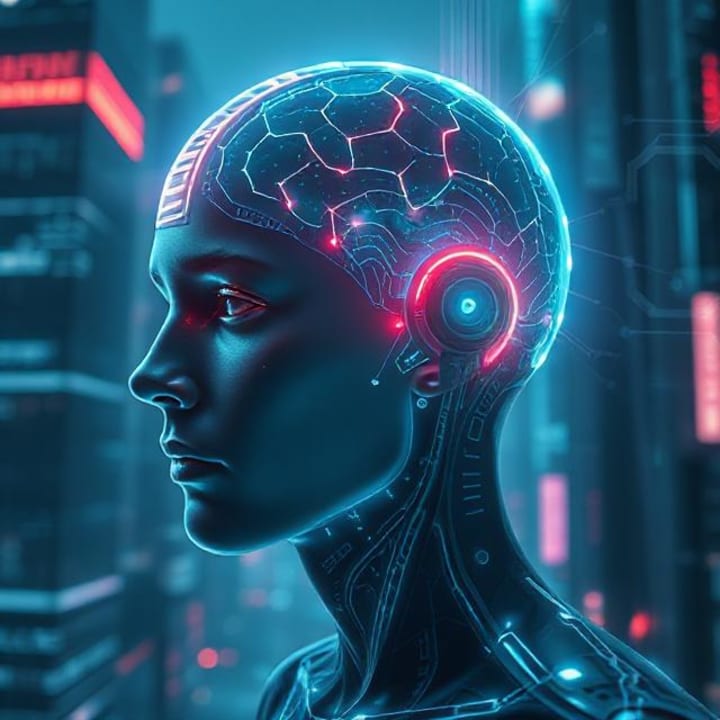
BCIs are already making waves in healthcare and beyond:
Medical Rehabilitation: Helping paralyzed patients regain movement through robotic limbs.
Mental Health: Detecting early signs of depression, anxiety, or neurological disorders.
Education: Accelerating learning by directly uploading information to the brain.
Communication: Allowing people with disabilities to “speak” through thought alone.
Human Enhancement: Potentially enhancing memory, cognition, and multitasking ability for healthy individuals.
In short, BCIs could redefine what it means to learn, work, and interact with the digital world.
---
The Promise of Cognitive Augmentation
Beyond medical use, BCIs could lead to cognitive enhancement—essentially giving humans supercharged mental capabilities. Imagine:
Instantly accessing vast databases of knowledge.
Translating languages in real-time using thought alone.
Controlling multiple devices simultaneously without any physical action.
Enhancing creativity by connecting directly with AI tools.
This convergence of human thought and AI could mark the beginning of a post-human era, where intelligence is no longer limited to biology.
---
Global Race for Neural Technology

Tech giants and governments are racing to control the neural interface frontier:
United States: Neuralink, Kernel, and DARPA are investing heavily in invasive and non-invasive neural technologies.
China: Focusing on large-scale BCI deployment and AI integration for education, healthcare, and military applications.
Europe: Concentrating on ethical research, privacy safeguards, and human augmentation standards.
This race is not just about technology—it’s about defining the future of cognition, labor, and power.
---
Ethical and Societal Concerns
With great potential comes significant ethical questions:
Privacy: Neural data is the most personal information imaginable. Who controls it?
Hacking Risk: Could a hacker manipulate your thoughts or actions remotely?
Inequality: Will only the wealthy have access to cognitive enhancement?
Identity: If machines enhance your cognition, are you still purely human?
Society will need careful regulations to ensure BCIs enhance humanity rather than exploit it.
---
The Path to Mind-Machine Symbiosis

Some futurists predict that within the next two decades, BCIs could evolve from medical tools into full brain augmentation platforms. Humans may be able to communicate silently, merge memories with AI companions, or even experience virtual worlds indistinguishable from reality.
The implications are staggering: education, healthcare, work, and creativity could be transformed overnight. We could be on the cusp of digital immortality, where human consciousness continues in virtual or AI-augmented forms long after physical death.
---
Challenges Ahead
Despite rapid progress, challenges remain:
Technical: Achieving precise, reliable brain-machine communication is extraordinarily difficult.
Biological: Invasive implants carry surgical risks and potential long-term effects.
Ethical: Privacy, consent, and manipulation risks must be addressed proactively.
Societal: Balancing enhancement for all humans while preventing elite-only access is critical.
Successful integration of BCIs will require a careful balance of technology, ethics, and governance.
---
Conclusion

Brain-computer interfaces are more than a futuristic gadget—they represent a fundamental evolution in how humans interact with technology, knowledge, and each other. From restoring lost abilities to augmenting intelligence and unlocking virtual immortality, BCIs promise a future where mind and machine converge seamlessly.
The question is not if this future will arrive, but how quickly, and whether humanity will use it wisely. The age of mind-machine symbiosis is coming—and it could redefine what it truly means to be human.
---
SEO Keywords: brain-computer interface, Neuralink, cognitive augmentation, AI-enhanced mind, mind-machine integration, future of human intelligence, digital immortality, neural implants, post-human technology, human enhancement, virtual reality BCIs, transhumanism.
---
About the Creator
Muhammad Riaz
- Writer. Thinker. Storyteller. I’m Muhammad Riaz, sharing honest stories that inspire, reflect, and connect. Writing about life, society, and ideas that matter. Let’s grow through words.
Keep reading
More stories from Muhammad Riaz and writers in Futurism and other communities.
The Quantum Internet: How Ultra-Fast Networks Could Redefine Connectivity
Enter the Era of the Quantum Internet Imagine sending a message across the globe in the blink of an eye—faster than any fiber optic cable or 5G network could ever allow. This is not science fiction; it’s the promise of the quantum internet, a revolutionary technology that could transform communication, security, and computation forever.
By Muhammad Riaz6 months ago in Futurism
Met Police Using Palantir AI to Flag Officer Misconduct
What Happened The Metropolitan Police has confirmed it is using artificial intelligence tools supplied by US data analytics company Palantir to analyse internal staff data in an effort to identify potential misconduct.
By Behind the Tech6 days ago in Futurism
Plastic Films Market: Flexible Packaging Demand, Lightweight Materials & Industry Growth Outlook
According to IMARC Group's latest research publication, global plastic films market size reached USD 174.2 Billion in 2025. Looking forward, IMARC Group expects the market to reach USD 250.0 Billion by 2034, exhibiting a growth rate (CAGR) of 4.10% during 2026-2034.
By sujeet. imarcgroup4 days ago in Futurism
Magic
Note from the Author: I want to let you know that this is an unusual story, and it has been written purely from whatever is in my unconscious mind, because before I start writing, I get into a flow state that reaches my unconsciousness. I also write in my subconscious mind, which is like a mid-flow state between the conscious and unconscious mind.
By Denise Larkin7 days ago in Fiction




Comments
There are no comments for this story
Be the first to respond and start the conversation.