
Boeing's Big Reveal
How This Aircraft Could Change Everything

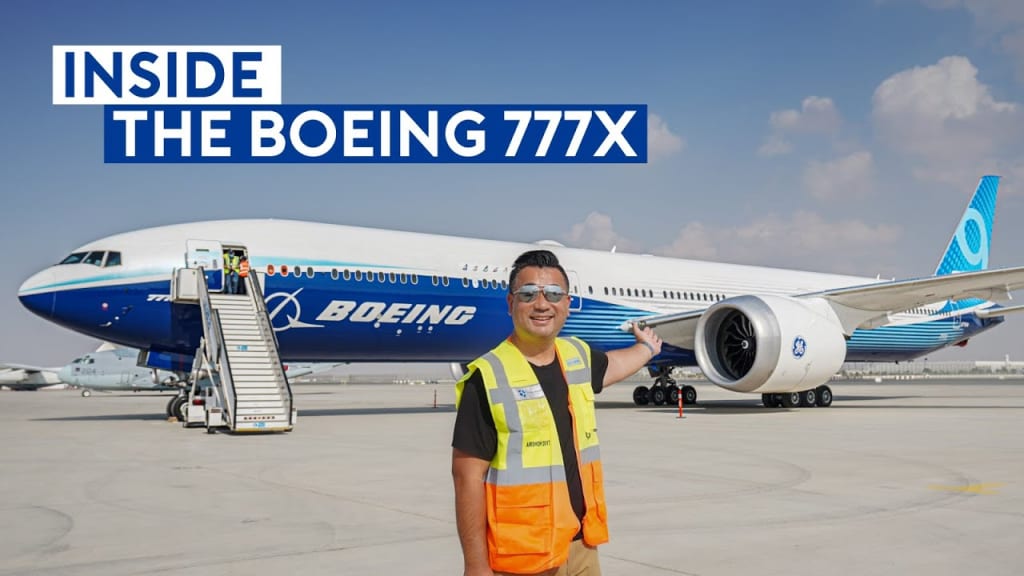
Boeing has been at the forefront of aviation innovation for decades, and their latest aircraft model is poised to reshape the aviation industry. With the new 777X series, Boeing continues to push boundaries, promising to deliver revolutionary advancements in performance, efficiency, and passenger experience. In this blog, we’ll explore how the latest developments in Boeing’s aircraft design and technology could change the future of air travel.
The Triple Seven Legacy
Boeing’s 777 family has long been a cornerstone of international air travel. Introduced in the mid-1990s, the original 777 was a game-changer in terms of fuel efficiency and passenger comfort. Its long wingspan of over 200 feet and ability to fly more than 8,000 nautical miles non-stop made it an attractive option for airlines looking to offer long-haul flights. The 777 could accommodate up to 396 passengers in three classes, offering both flexibility and capacity for airlines serving global routes.
This aircraft quickly became known for its cost-effectiveness and reliability, driven largely by the powerful GE90 engines developed by General Electric. These engines are renowned for their strength, fuel efficiency, and advanced materials that reduce fuel consumption and emissions. As a result, the 777 became a dominant player in the world of wide-body passenger jets, connecting continents with ease.
Enter the 777X - The Future of Long-Distance Air Travel
In 2019, Boeing introduced the 777X, a highly anticipated upgrade to its 777 family. The 777X is now the largest and most fuel-efficient twin-engine jet in the world, boasting cutting-edge advancements that take long-distance air travel to new heights. It comes in two main versions: the 777-8 and the larger 777-9, which can carry up to 426 passengers in a two-class configuration.
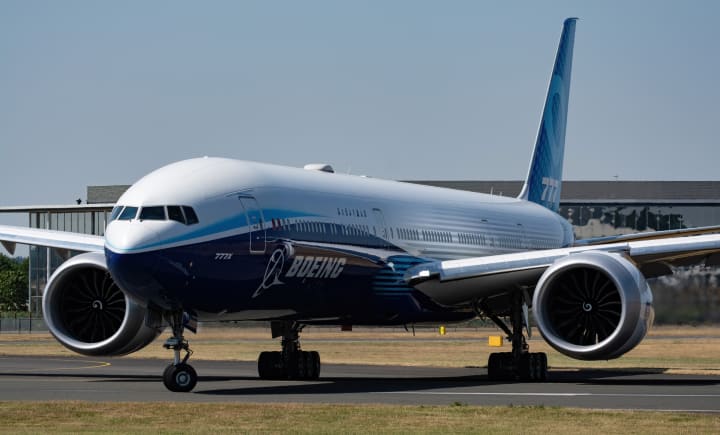
One of the most striking features of the 777X is its advanced composite wings, which stretch up to 235 feet during flight. These wings incorporate folding wingtips, allowing the plane to reduce wingspan on the ground, making it easier to navigate crowded airports. The extended wingspan improves fuel efficiency by reducing drag, helping airlines save money on fuel and cut down on emissions.
The Powerhouse - GE9X Engines
At the heart of the 777X’s performance is the revolutionary GE9X engine. As the largest and most powerful jet engine ever built, the GE9X sets a new standard for fuel efficiency and environmental sustainability. It uses advanced materials, such as ceramic matrix composites, that are lighter and more durable than traditional metals. These materials help the engine perform better while reducing weight, which in turn lowers fuel consumption and cuts down on greenhouse gas emissions.
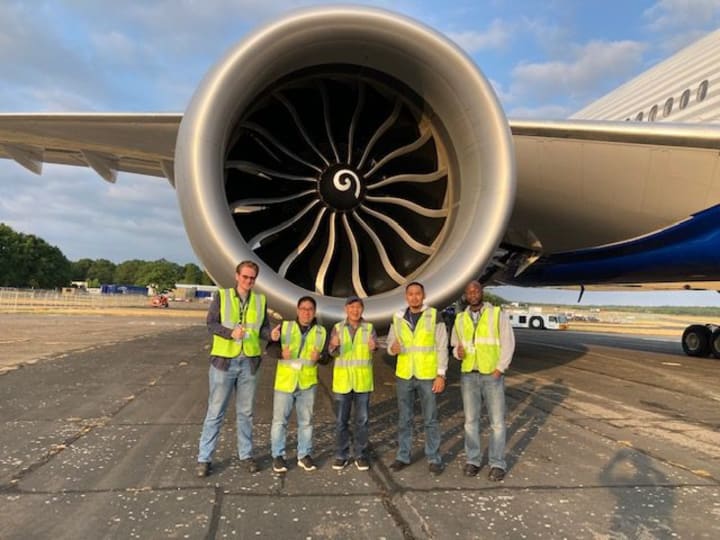
In addition to being fuel-efficient, the GE9X is also quieter than previous engines, addressing a major concern in modern air travel—noise pollution. This quieter operation enhances the passenger experience while also making the aircraft more airport-friendly, especially in urban areas where noise regulations are strict.
A New Level of Comfort and Technology
While fuel efficiency and engine performance are crucial for airlines, passenger comfort is a top priority in today’s competitive aviation market. The 777X doesn’t disappoint in this regard. Its redesigned cabin features larger windows, improved lighting, and better air quality systems, ensuring that passengers on long-haul flights have a more comfortable experience. The wider cabin offers more space, while ergonomic seats and modern amenities, such as high-definition entertainment screens and wireless internet, cater to the needs of today’s travelers.
Another significant improvement comes in the form of enhanced cabin pressure and noise-canceling technology. These upgrades help reduce the effects of jet lag and tiredness, making long-distance flights more bearable for passengers. Airlines have also responded to the growing demand for personalized experiences by offering more customizable lighting and temperature settings within the cabin, further enhancing comfort.
Advanced Cockpit Technology
Not only are passengers benefiting from technological advancements, but pilots are also seeing major improvements in how they control these aircraft. The 777X’s cockpit is equipped with fly-by-wire technology, replacing traditional mechanical controls with electronic ones. This system simplifies the flying process, giving pilots more precision and control over the aircraft.
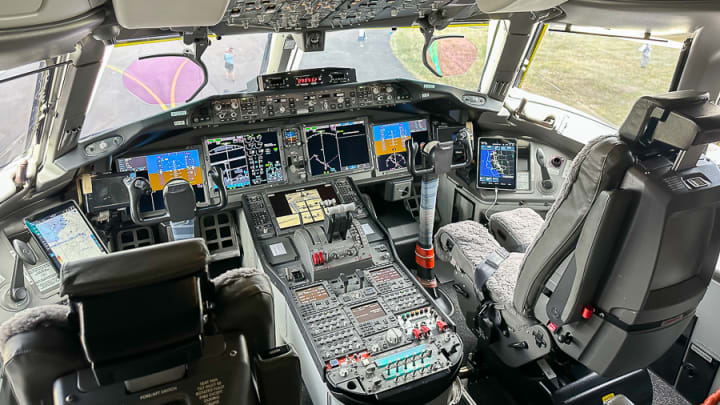
Touchscreen controls are another modern addition, making navigation and system management easier and more intuitive for pilots. By consolidating critical flight information on digital displays, the cockpit becomes less cluttered, allowing pilots to focus more on ensuring a smooth and safe flight.
The Environmental Impact
One of the most pressing concerns in aviation today is the industry’s environmental impact. Boeing has taken this into account in the design of the 777X. The use of lightweight materials, advanced engines, and aerodynamic improvements results in lower fuel consumption and fewer emissions. The 777X is expected to play a significant role in helping airlines reduce their carbon footprints, aligning with the industry's broader goals of sustainability.
The aircraft’s fuel efficiency also means that airlines can offer more competitive ticket prices, as operating costs are reduced. As more airlines adopt the 777X, the aviation industry may see a shift towards more sustainable and cost-effective long-haul flights.
What’s Next for Boeing?
With the 777X, Boeing is not just setting new benchmarks for performance and efficiency—it’s signaling the future of aviation. The aircraft’s advanced technology, combined with its environmental focus, suggests that Boeing is committed to leading the way in sustainable air travel.
As the aviation landscape continues to evolve, Boeing’s innovations will likely drive further changes in how we fly, with the 777X serving as a major step forward in the journey towards a more efficient and eco-friendly future.
In conclusion, the Boeing 777X could truly change everything we know about long-haul flights, pushing the boundaries of both performance and comfort. Whether it’s fuel savings for airlines or a better experience for passengers, this aircraft has the potential to revolutionize the industry—and we’re just at the beginning of this transformation.
About the Creator
Horace Was
Essay Writer, Aviation and Technology Expert
Keep reading
More stories from Horace Was and writers in Futurism and other communities.
Boom Speed
The fantasy of supersonic travel never genuinely passed on with the retirement of the Concorde in 2003. Instead, all things considered, it laid lethargic, sitting tight for the perfect opportunity and innovative headways to rise. That time gives off an impression of being currently, as Boom Supersonic, a startup established in 2014, is very nearly once again introducing the world to business supersonic flight. However, what makes 2024 the year for Boom to take off? We should jump into the variables that are situating Boom Supersonic to alter the flying business.
By Horace Wasabout a year ago in Futurism
Indoor Farming Market Worth USD 93.0 Billion by 2032 at 10.9% CAGR
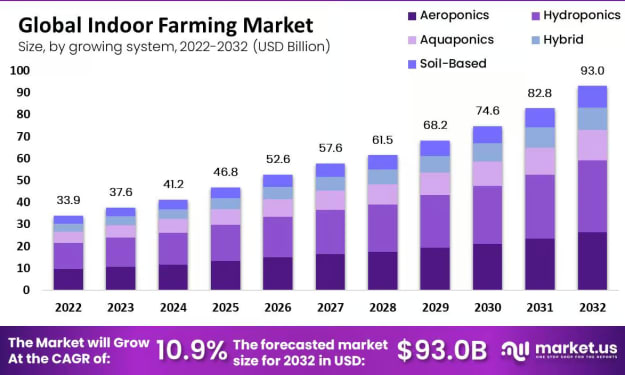
Overview In 2022, the global Indoor Farming Market was valued at USD 33.9 billion and is projected to reach USD 93.0 billion by 2032, with an estimated CAGR of 10.9% from 2023 to 2032. Indoor farming involves cultivating crops in controlled environments, often using vertical farming techniques where plants are grown in stacked layers. This approach typically employs soilless methods such as aeroponics, hydroponics, and aquaponics, combined with controlled-environment agriculture, to maximize plant growth efficiency. Growing consumer demand for fresh, high-quality produce is expected to drive market expansion. Additionally, the rising global population, particularly in developing nations like India and China, is increasing food demand, further boosting the indoor farming market's growth over the forecast period.
By Hayden Kulasabout 11 hours ago in Futurism
AI PC Market to hit USD 433.1 Billion By 2033
The Global AI PC Market is projected to expand significantly, with the market size expected to reach approximately USD 433.1 Billion by 2033, increasing from USD 34.2 Billion in 2023. This represents a strong CAGR of 28.9% during the forecast period from 2024 to 2033.
By Roberto Cruma day ago in Futurism
From ad men to mad men
It's after 2am in the morning when a local police patrol vehicle in Northern New Jersey spots a figure costumed as Quasimodo, The Hunchback of Notre Dame, proceeding southbound on the sidewalk along Lydecker Street. Though the hunchback’s costume stuffing offers added insulation, it's January, and friggin’ freezing. Carefully, the officers slow down, gently question the subject, and offer him a ride home.
By David W. Maury5 days ago in Humor



Comments
There are no comments for this story
Be the first to respond and start the conversation.