
Beyond the Screen: How Remote Work Reshaped Identity, Purpose, and Relationships
The hidden emotional transformation behind working from home


When the world first shifted to remote work, many of us thought it would be temporary—a quick adjustment to a global crisis. We set up makeshift desks on kitchen tables, wore sweatpants to Zoom meetings, and told ourselves, “It’s just for now.” But “now” became years, and remote work didn’t just change how we earn a living. It reshaped who we are, how we see ourselves, and how we connect with others.
Working from home blurred the lines between personal and professional, between solitude and isolation, between freedom and fragmentation. In this new landscape, many people have found clarity and purpose. Others have struggled with disconnection and burnout. But no one has remained unchanged.
This article explores how remote work has transformed our identity, sense of purpose, and relationships—and why the impact runs far deeper than we think.
I. Identity: Who Are We Without the Office?
Before remote work became the norm, the workplace wasn’t just a place to earn money—it was part of our identity. Job titles, work clothes, commuting routines, office chatter—all of it shaped how we saw ourselves.
When that structure disappeared, something unexpected happened: people began to question who they were without it.
For some, it was liberating. The absence of rigid office culture meant freedom to express their full selves. They were no longer “the quiet guy in accounting” or “the overachieving intern.” They were also parents, artists, introverts, travelers, and thinkers. Working from home allowed space to rediscover those parts of identity that were often buried under professionalism.
For others, it felt like an identity crisis. Without the rituals of office life, days began to blur. Motivation wavered. Self-worth, once tied tightly to visible productivity or validation from peers, began to erode.
One software engineer put it simply:
“I didn’t realize how much of my confidence came from other people watching me succeed.”
Remote work forces a new kind of introspection: Who am I when no one is watching?
II. Purpose: Redefining What Matters
Along with identity, purpose took a hit—or, in many cases, was awakened.
In the office, purpose is often externally shaped. There are goals, deadlines, and team wins. You’re part of a machine, and when the machine runs well, you feel like you’re doing something important.
But alone in your apartment, logging into a never-ending stream of emails and video calls, that sense of importance can fade quickly. Many remote workers started asking themselves hard questions: What am I really doing this for? Does this work matter?
Some found that their jobs, once exciting, now felt meaningless when removed from office buzz. Others realized they were chasing promotions in careers that didn’t align with their values.
On the flip side, remote work gave many people the freedom to explore new paths. Side hustles, passion projects, and freelancing exploded. People began writing books, launching small businesses, or learning new skills—not just for income, but to rediscover joy and meaning.
Remote work, in a way, cracked open the door to a more intentional life. Without the noise of commutes and coworkers, people could finally hear their own voice.
III. Relationships: Together, Apart
Perhaps the most emotionally charged shift has been in our relationships.
Work Relationships: From Coffee Chats to Cold Screens
The spontaneous hallway chats and lunch breaks that once built workplace friendships disappeared. In their place: Slack messages, scheduled Zoom calls, and emoji reactions.
For some, especially introverts, this was a relief. The reduced social pressure made work more manageable. But for others, especially those living alone, it brought a sense of deep loneliness.
A project manager from Chicago shared:
“I didn’t realize how much I relied on small talk in the office to feel like I was part of something bigger.”
Trust and camaraderie are harder to build through a screen. New employees often feel disconnected. Long-standing teams sometimes lose their spark. Digital connection simply doesn’t replace human warmth.
Home Relationships: Closer or Cracked?
Working from home also transformed romantic and family relationships—for better or worse.
Couples found themselves together all day, every day. Some grew closer, bonded by shared routines and quiet companionship. Others found their issues magnified without personal space. The same applies to parents juggling remote work with homeschooling or childcare—some thrived, others felt like they were drowning.
Boundaries blurred. Tensions rose. But so did empathy. Remote work made it harder to hide real life, and for many, that honesty brought vulnerability and, eventually, deeper connection.
IV. The Emotional Undercurrent: Freedom Meets Fatigue
Remote work gave people freedom—the chance to design their lives, dress how they like, avoid office politics. But that freedom often came with a price: fatigue, disorientation, and a strange sense of floating.
You could log off early… but you never really logged out. You had flexibility… but the work never truly stopped. You had no boss peeking over your shoulder… but also no one to remind you to take a break.
The illusion of control sometimes led to overwork, burnout, or self-doubt. Productivity became a pressure cooker, especially when no one could see the invisible emotional labor behind your to-do list.
Conclusion: The New You, Unfolding
Remote work isn’t just a shift in location—it’s a transformation of the human experience of working. It challenges how we define ourselves, what we value, and how we relate to others.
For many, it's still a work in progress. We are still figuring out how to balance autonomy with connection, solitude with support, freedom with structure.
But one thing is certain: we are not returning to who we were before. Whether we found ourselves, lost ourselves, or rebuilt ourselves in the quiet of our home offices, we emerged changed.
Not just as workers, but as people.
About the Creator
Emad Iqbal
Chartered Accountant
Part time writer
"A mind too loud for silence, too quiet for noise"
Keep reading
More stories from Emad Iqbal and writers in Futurism and other communities.
AI: A Bad but Necessary Choice
Imagine standing at a fork in the road. One path leads into a storm: unpredictable, risky, and possibly dangerous. The other? It leads nowhere—stagnant and still, full of missed potential. Now imagine being told you have to walk through the storm because standing still is not an option. That’s where humanity finds itself today, facing artificial intelligence.
By Emad Iqbal8 months ago in Futurism
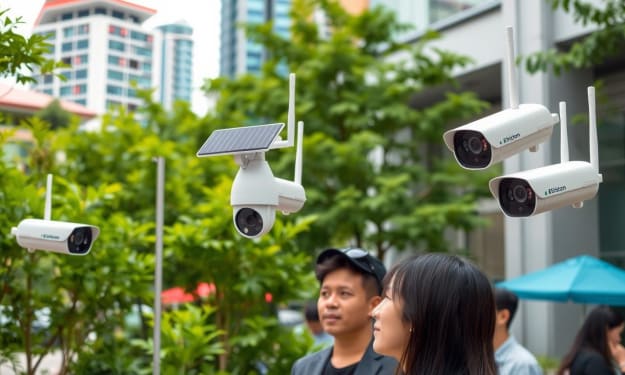
Singapore CCTV Camera Market Outlook: Growth Drivers, Recent Developments & Emerging Trends
According to IMARC Group's latest research publication, Singapore CCTV camera market reached USD 204.16 Million in 2024. The market is projected to reach USD 1,100.66 Million by 2033, exhibiting a growth rate of 18.35% during 2025-2033.
By Abhishek Dixitabout 18 hours ago in Futurism
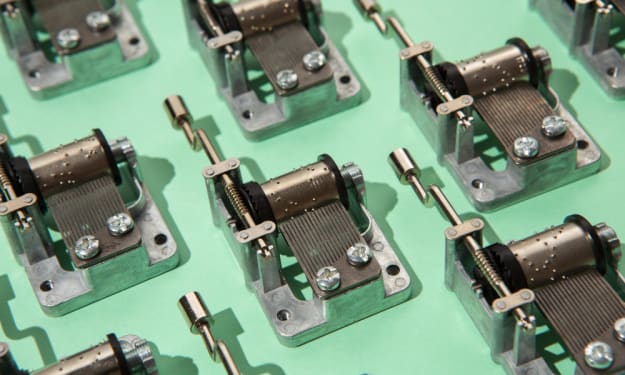
Why Automotive Electric Actuators Are Advancing Vehicle Technology in Latin America?
The automotive sector in Latin America is experiencing technological advancement as vehicles become more intelligent, efficient, and automated. Among the critical components supporting this evolution are automotive electric actuators. These devices convert electrical signals into mechanical movement, enabling automated control of various vehicle functions.
By deepanshu Thakurabout 20 hours ago in Futurism


Comments
There are no comments for this story
Be the first to respond and start the conversation.