
Betrayed Dreams in a Foreign Land
A Pakistani Woman’s Struggle for Dignity and Justice in America

A Silent Struggle in America
BY:Khan
Among the millions of Pakistanis who had migrated to the United States in search of a better life was Balqis Riyaz. Like many others, she knew that living abroad promised financial stability, but it also carried with it countless hidden struggles.
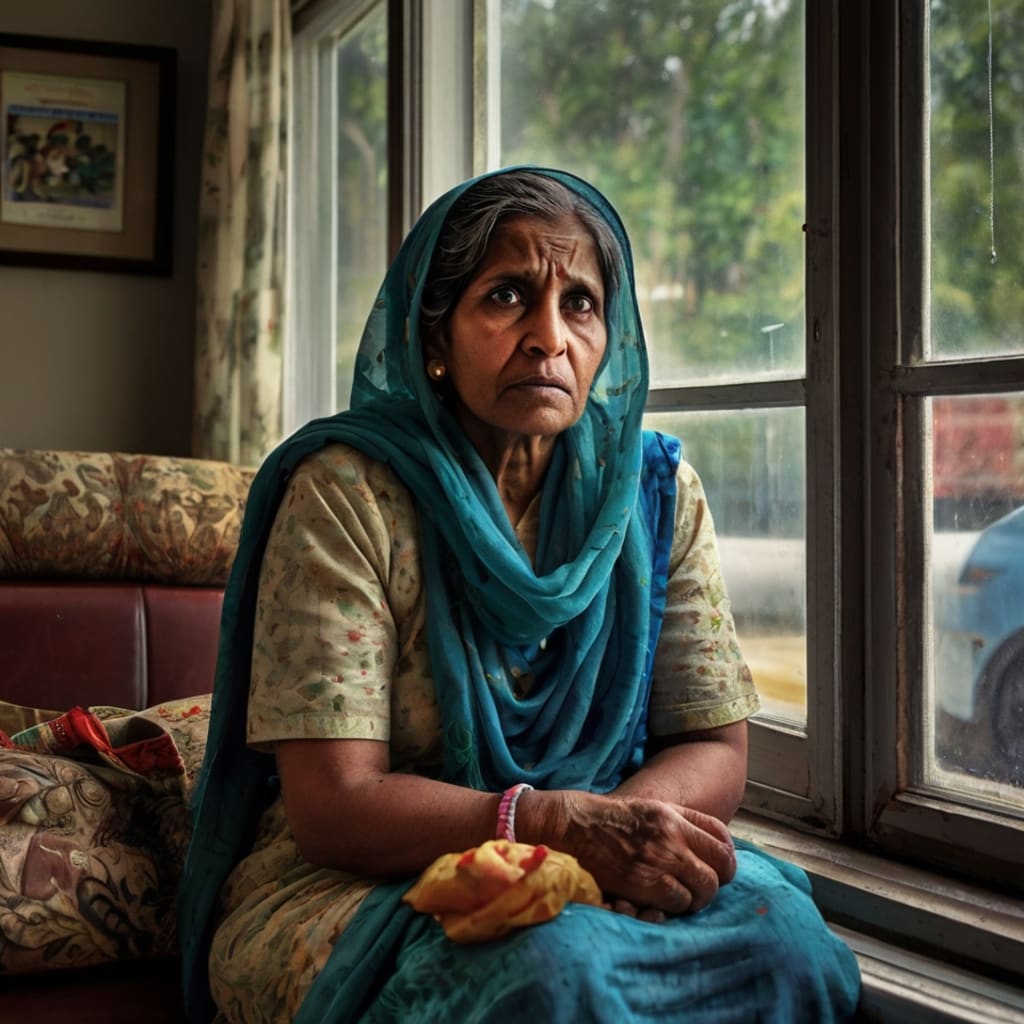
During her stay in America, Balqis witnessed a story that pierced her heart. She was staying with a Pakistani family, and there she met a woman who worked as a domestic helper. On the surface, the woman’s demeanor was so graceful, polite, and dignified that one would never take her for a housemaid. She carried herself with respect and refinement, but her eyes told a tale of deep sorrow.
One evening, as Balqis sat in the living room, the woman shared her heartbreaking story. Years ago, she had come to America with her husband, full of hope and ambition. Together, they had endured the struggles of a new life in a foreign land. She had stood by him in every hardship, every challenge, until they managed to open a small grocery store selling food items.
With time, their hard work bore fruit. The business flourished, money started to come in, and life became more comfortable. She no longer needed to work at the store and instead devoted herself to managing the home. Their sons were enrolled in good schools, and the family seemed to be on the path to stability. She believed she had finally built the life she had once dreamed of.
But then, everything changed. Without her knowledge, her husband took a drastic step—he married another woman. Not only that, he went as far as divorcing his first wife without informing her. She came to know of it in the most painful way possible.
“One day,” she recalled, her voice trembling, “my son came to me and said, ‘Ammi, do you know Daddy has married again? He has also divorced you.’ Those words shattered me. At first, I could not believe him. But when I confronted my husband, I discovered the truth. He had already ended our marriage.”
Tears welled in her eyes as she explained further. “When I demanded answers, he grew angry and threw me out of the house. Not only me, but he also refused to let the children stay with him. They were cast out alongside me. With nowhere else to go, I had to find shelter in another Pakistani household. Since then, I have been moving from home to home, cooking meals and doing chores, just to feed my children and pay for their education.”
Balqis listened intently, her heart heavy with empathy. The woman continued, “You know, in America, the law is clear. When a divorce takes place, the wife is entitled to half of what the husband owns. If I had acted quickly, I could have secured my rightful share of our store and property. But my husband didn’t give me the time to seek help. He divorced me quietly and threw me out before I could even approach the authorities.”
She sighed deeply and added, “Still, I am not without hope. My employers here are kind. They have two small children, and while they work, I care for them. They have promised to support me in getting justice. One day, when my sons grow older and can stand on their own feet, I will file a case against my husband. I know the law will give me my share, but the man himself is gone from my life forever. That loss, no law can replace.”
Balqis felt a wave of sadness. “It’s true,” she said softly. “A man who abandons his wife after years of loyalty does not deserve her. You supported him in his worst days, and when he became successful, he turned away. Such men deserve punishment. Do not wait too long; file your case before time weakens it.”
The woman lowered her gaze and whispered, “Yes, I will. But sometimes I wonder if it’s already too late. When the store began to do well, my husband hired an American woman. She worked with him all day at the shop. Slowly, they grew close. One day, without my knowledge, they married. He never gave me a clue, not even a hint. And by the time I discovered it, everything had slipped from my hands. Now, I sit here mourning my fate. How can I return to Pakistan like this? What face would I show? Everyone there would mock me, shame me for being abandoned.”
Her voice broke into sobs, and Balqis could feel the weight of her pain. She thought about how many other women like her must be living in silence, hidden away in kitchens and back rooms, carrying wounds that no one else could see.
In that moment, Balqis realized that the search for a better life often came with unseen battles. Money could be earned, but dignity, trust, and companionship could be lost in a single cruel decision. The woman before her was not just a maid—she was a symbol of resilience, enduring betrayal and hardship while clinging to hope for justice.
As Balqis left the room, her heart ached with empathy. She knew she would never forget that woman’s story—a silent struggle tucked away in the vast immigrant experience of America.
About the Creator
Australia Luxury Cosmetics Market: Premium Demand, Retail Expansion & Brand Innovation
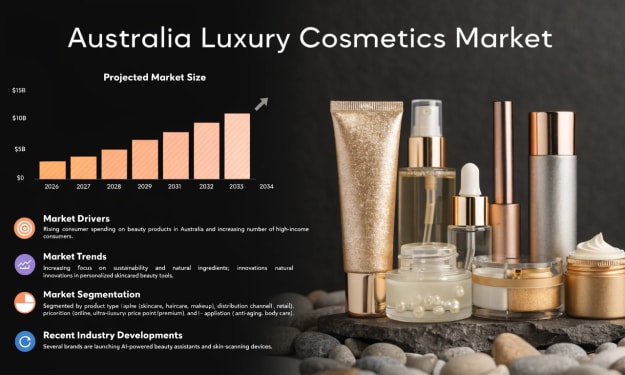
According to IMARC Group, the Australia luxury cosmetics market reached USD 1.6 Billion in 2025 and is projected to grow to USD 2.3 Billion by 2034, exhibiting a compound annual growth rate (CAGR) of 3.92% during 2026–2034. The steady expansion of the market reflects rising disposable incomes, evolving beauty standards, and a growing preference for premium personal care products across Australia. Consumers are increasingly investing in high-end skincare, makeup, and fragrance products that promise quality, performance, and exclusivity. With digital influence reshaping purchasing decisions and sustainability becoming central to brand identity, the Australia luxury cosmetics market share continues to expand within the broader beauty and personal care industry.
By Shrestha Roy6 days ago in Futurism



Comments
There are no comments for this story
Be the first to respond and start the conversation.