
Autonomous Vehicles: Current Challenges and Future Opportunities
Navigating Challenges and Opportunities in Autonomous Vehicles

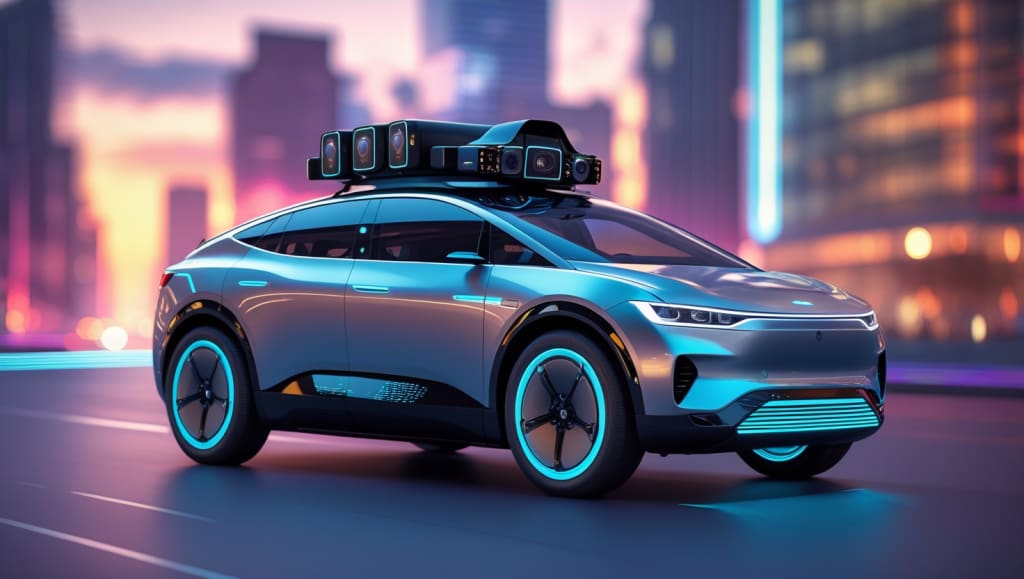
The emergence of autonomous vehicles represents one of the most transformative technological advancements in the automotive and transportation industries. As these self-driving cars transition from prototype to production, they promise to revolutionize how we travel, work, and live. However, this journey is fraught with challenges that must be addressed before AVs become a common sight on our roads. We talk here about the existing challenges of self-driving cars and the enormous future opportunities they create.
Current Challenges
Technological Limitations
Sensor Reliability: Autonomous cars rely on an intricate network of sensors, including LIDAR, radar, and cameras, that help them scan their surroundings. These sensors should work correctly at different times or in adverse conditions, such as bad weather or darkness, which still remains a problem.
Software Complexity: The software behind AVs must handle tremendous volumes of data in real time and make split-second decisions. This is one of the greatest challenges to be addressed to ensure reliability and safety of such complex algorithms.
Regulatory and Legal Issues
No Standardized Regulations: At present, there is no international standard to govern autonomous vehicles. The regulations are scattered all over the globe with each country and state having its own rules, making the regulatory scenario quite disjointed.
Liability Concerns: Determining liability in the event of an accident involving an AV is complex. Questions about whether the manufacturer, software developer, or vehicle owner is responsible are yet to be fully resolved.
Public Acceptance and Trust
Safety Concerns: Many people remain skeptical about the safety of autonomous vehicles, particularly following high-profile incidents during testing phases.
Ethical Dilemmas: Autonomous vehicles can encounter situations where ethical decisions have to be made, such as the classic "trolley problem," which further complicates public acceptance and trust.
Infrastructure Adaptation
Smart Roadways: AVs would need smart infrastructure, including connected traffic lights and road sensors, to operate effectively, which calls for a massive investment and urban planning.
Maintenance and Upkeep: Regular updates and maintenance of both the vehicles and infrastructure are essential to ensure optimal performance and safety.
Future Opportunities
Enhanced Road Safety
Reduction in Human Error: Human error is the major cause of road accidents. AVs can greatly reduce accidents through the elimination of distractions, fatigue, and impaired driving.
Improved Traffic Management: Autonomous vehicles will be able to communicate with other vehicles and traffic systems to optimize routes and minimize congestion, resulting in smoother flow of traffic and fewer accidents.
Economic Benefits
Cost Savings: The reduction in accidents will lead to a huge cost saving in medical bills, repair of vehicles, and insurance.
New Business Models: The rise of AVs will open new services and business models, including autonomous ride-hailing services, delivery bots, and mobility-as-a-service (MaaS) platforms.
Increased Accessibility
Mobility for All: AVs can ensure that people who cannot drive, the elderly, or those with disabilities get more mobility which increases their independence and quality of life.
Reducing Transport Inequality: Autonomous public transport will make travel more affordable and accessible to a higher population.
Environmental Impact
Optimal Fuel Usage: Autonomous vehicles can be designed to consume less fuel, making them create less emission and smaller carbon footprint.
Further advancement of the concept of sustainable transportation and a friendly environment is brought about by combining autonomous technology with electric vehicles.
Conclusion
The journey to the wide acceptance of autonomous vehicles is paved with challenges ranging from technological and regulatory barriers to public skepticism. On the other hand, improved safety, economic gains, accessibility, and environmental sustainability are just a few benefits that make this development worthwhile. The future of autonomous vehicles, with the advance of technology and evolving regulatory frameworks, is very promising and is expected to revolutionize transportation and transform our world.
About the Creator
Ankit Saini
Ankit Saini is an experienced web page developer and an article writer interested in the field of designing fascinating digital experiences as well as incisive content. Experienced in web technologies and creative storytelling.
Keep reading
More stories from Ankit Saini and writers in Futurism and other communities.
The Green Tech Revolution: Innovations for a Sustainable Future
Recent years have been marked by growing urgency to tackle climate change and reduce environmental degradation. The Green Tech Revolution, therefore, represents a movement not just of fashion but of necessity towards building a sustainable future for our planet. Innovation in different fields is making this possible by harmonizing economic growth with environmental stewardship.
By Ankit Sainiabout a year ago in Futurism
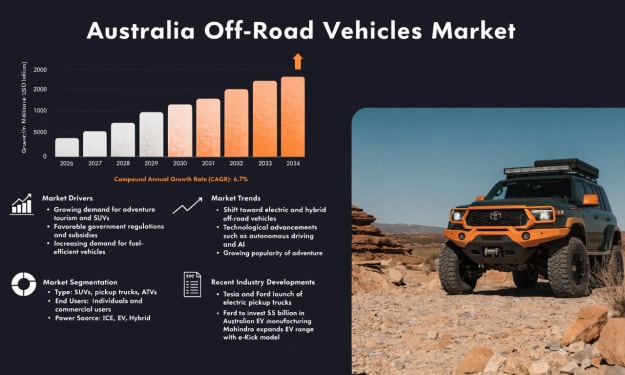
Australia Off-Road Vehicles Market: Adventure Tourism, Electric Models & Rural Utility Demand
According to IMARC Group, the Australia off-road vehicles market reached a value of USD 490.28 Million in 2024 and is projected to reach USD 861.59 Million by 2033, growing at a compound annual growth rate (CAGR) of 5.80% during 2025–2033. The market is experiencing steady growth as recreational, agricultural and commercial users increasingly adopt off-road vehicles for both adventure and practical applications. The expansion of adventure tourism across Australia’s remote landscapes is driving demand for rugged 4WD vehicles, all-terrain vehicles (ATVs) and utility task vehicles (UTVs) capable of navigating challenging terrain. At the same time, rising adoption of electric off-road vehicles supported by environmental regulations and battery technology advancements is transforming the industry. Additionally, growing demand from agriculture, mining and rural operations is strengthening the market as these sectors rely on off-road vehicles for transportation, equipment handling and operational efficiency.
By Shrestha Roy6 days ago in Futurism



Comments (1)
Hy