
AutoGPT: The Future of Automated Language Generation
Exploring the latest advancements in natural language processing

Automated language generation has been an active area of research for a few years now, and it has shown remarkable progress in tasks such as language translation, summarization, and question-answering. The primary goal of automated language generation is to develop models that can generate human-like text, which is an essential aspect of natural language understanding.
Generative pre-trained language models (GPT) are one of the most popular approaches in this field. GPT is a type of artificial intelligence model that is trained on large amounts of text data, such as books, articles, and online content. The model is designed to predict the next word in a sequence of text, based on the preceding words. The model's ability to learn from vast amounts of data allows it to capture the nuances of human language, including grammar, syntax, and context.
However, the challenge with GPT is that it requires manual fine-tuning for specific tasks. For example, if we want to use a pre-trained GPT model for language translation, we need to fine-tune the model's parameters to optimize it for that specific task. This process is time-consuming and resource-intensive, requiring a considerable amount of human intervention.
AutoGPT is a new development in the field of automated language generation that seeks to address this limitation. AutoGPT is an advanced version of GPT that incorporates an automated system for fine-tuning the model's parameters based on the specific task it is being used for. The fine-tuning process is done through a reinforcement learning algorithm that uses a reward function to optimize the model's output. The reward function evaluates the generated text and provides feedback to the model, allowing it to learn from its mistakes and improve its output over time.
The advantages of AutoGPT are numerous. Firstly, it eliminates the need for human intervention in the model fine-tuning process, saving time and resources. Secondly, it allows for more accurate and consistent results, as the model is constantly learning and adapting to new input data. Thirdly, it can be used for a wide range of natural language processing tasks, including text summarization, language translation, and question-answering.
One of the most promising applications of AutoGPT is in the field of content creation. With the increasing demand for high-quality, engaging content, AutoGPT can be used to generate articles, blog posts, and social media content automatically. This can significantly reduce the time and effort required for content creation, allowing businesses to focus on other areas of their operations.
Another potential application of AutoGPT is in the field of chatbots. Chatbots are becoming increasingly popular in customer service, and automated language generation can greatly improve their effectiveness. By using AutoGPT to generate human-like responses to customer queries, businesses can provide a more personalized and efficient customer experience.
In conclusion, AutoGPT represents a major advancement in the field of natural language processing. With its automated fine-tuning process and ability to generate human-like text, it has the potential to revolutionize the way we create content and interact with customers. While there are still some limitations to the technology, such as the potential for biased or inappropriate output, the benefits of AutoGPT are clear. As the technology continues to evolve, we can expect to see even more exciting applications in the years to come.
About the Creator
Keep reading
More stories from V L Prabhash Kumar and writers in Futurism and other communities.
Exploring the Potential of LLMs in the Healthcare Industry
Language models are transforming the healthcare industry by enabling machines to understand natural language and generate responses. Large Language Models (LLMs) such as Open AI's GPT-3 have the ability to process large amounts of data and extract insights from unstructured data. In this blog post, we will explore some potential LLM use cases in the healthcare industry.
By V L Prabhash Kumar3 years ago in Futurism
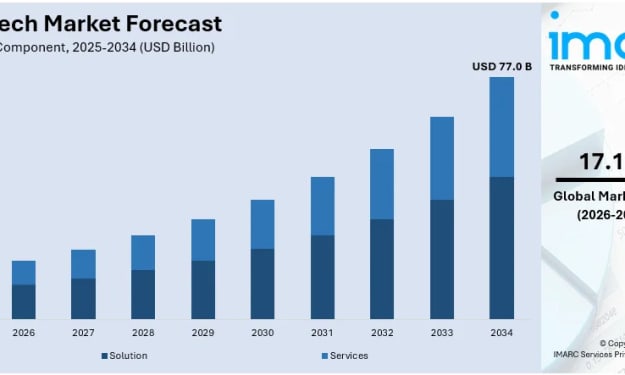
RegTech Market Insights: AI Compliance Solutions, Risk Analytics & Forecast Outlook 2034
Rising regulatory complexities, the surge in digital transactions, and the need for cost-efficient compliance solutions are driving the RegTech demand, supported by advancements in AI, machine learning, and cloud computing. According to IMARC Group’s latest data, the global RegTech market size was valued at USD 18.6 Billion in 2025. Looking forward, IMARC Group estimates the market to reach USD 77.0 Billion by 2034, exhibiting a CAGR of 17.10% from 2026-2034.
By Andrew Sullivana day ago in Futurism



Comments
There are no comments for this story
Be the first to respond and start the conversation.