
Australia Programmatic Advertising Market Size and Forecast 2025–2033
How Data, AI, and Digital Consumption Are Accelerating Australia’s Shift Toward Automated Advertising

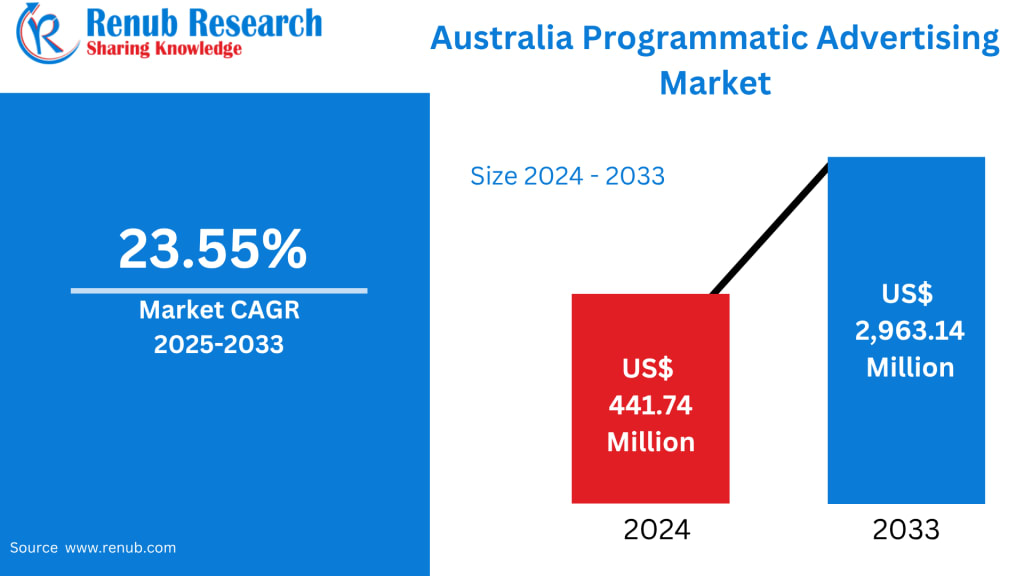
The Australia Programmatic Advertising Market is entering a transformative decade driven by explosive growth in digital consumption, AI-enhanced ad delivery, and rising demand for measurable marketing performance. According to Renub Research, the market is projected to surge to US$ 2,963.14 million by 2033, up from US$ 441.74 million in 2024, registering a powerful CAGR of 23.55% from 2025 to 2033.
What began as a niche method of automated media buying has now become the backbone of Australia’s digital marketing ecosystem. As consumers increasingly migrate toward mobile apps, social platforms, and streaming services, brands are aggressively shifting budgets to programmatic channels where ads can be served with precision, personalized messaging, and real-time performance measurement.
Australia Programmatic Advertising Market Overview
Programmatic advertising refers to the automated buying and selling of digital ad inventory using algorithms, machine learning, and real-time bidding technologies. Unlike traditional ad placements, which rely on manual negotiation, programmatic buying enables advertisers to target audiences by demographics, location, browsing behavior, interests, and even device type.
In Australia, the adoption curve has been particularly steep. High internet penetration, one of the world’s highest smartphone usage rates, and a digitally mature consumer base have created fertile ground for automated media buying. Local advertisers and global brands operating in Australia now rely heavily on programmatic platforms to optimize ad spend, maximize campaign efficiency, and deliver hyper-personalized experiences at scale.
Key sectors—such as retail, finance, travel, and entertainment—have embraced programmatic solutions to reach their audiences across Connected TV (CTV), mobile apps, web display, and social platforms. Furthermore, advancements in AI, dynamic creative optimization (DCO), and cross-device targeting are elevating programmatic from a performance tool to a strategic marketing imperative.
Growth Drivers of the Australia Programmatic Advertising Market
1. Growing Demand for Data-Driven Marketing
Australia’s business landscape is rapidly shifting toward analytics-first decision-making. Brands want every advertising dollar to serve a measurable purpose, and programmatic advertising delivers precisely that.
With digital users leaving extensive trails of behavioral and interest-based data, advertisers can now target audiences with unparalleled accuracy. First-party and third-party data fuel these campaigns, enabling faster segmentation and more personalized delivery.
In a noteworthy development from September 2024, TAFE NSW Meadowbank’s Institute of Applied Technology Digital partnered with global analytics leader SAS to launch a 10-week Applied Data Analytics Program. This initiative signals the country’s commitment to building a robust data-skilled workforce capable of supporting industries—including advertising—where analytics is no longer optional but essential.
2. Boom in Connected TV (CTV) and Digital Streaming Platforms
Australia is rapidly becoming a streaming-first nation. Audiences increasingly consume content on platforms like Netflix, YouTube, Amazon Prime, and regional streaming apps on smart TVs and mobile devices.
Programmatic technology has unlocked enormous potential in this space:
Dynamic ad insertion
Audience-based targeting
Real-time optimization
As advertisers continue reallocating budgets from linear TV to streaming environments, CTV programmatic spending is projected to be one of the fastest-growing segments.
Adding momentum to this trend, Warner Bros. Discovery announced that its streaming platform Max will debut direct-to-consumer in Australia in March 2025—likely opening additional premium programmatic inventory.
3. Rising Mobile and Social Media Penetration
Australia has one of the highest smartphone penetration rates globally. As of early 2025, the country recorded 34.4 million active mobile cellular connections, equivalent to 128% of the population. This is a powerful indicator of multi-device usage and digital-first behaviors.
Mobile programmatic advertising benefits from:
Location-based targeting
Sensor and activity-based segmentation
Real-time ad serving
Rich media and video formats
Social platforms like Facebook, Instagram, and TikTok have fueled this momentum by enabling robust programmatic layers within their ad ecosystems. Consequently, more advertisers now adopt a mobile-first strategy, placing programmatic buying at the core of their outreach.
Challenges Facing the Australia Programmatic Advertising Market
1. Data Privacy and Compliance Pressures
Growing scrutiny over data collection and consumer privacy is reshaping the programmatic landscape. Updates to Australia's Privacy Act, combined with global regulations like the GDPR, require advertisers to ensure strict compliance around user consent and data handling.
Meanwhile, the phase-out of third-party cookies is pushing brands toward first-party data strategies—an area where many still struggle due to inadequate data frameworks or limited technical resources.
2. Ad Fraud and Transparency Issues
Ad fraud—via tactics such as click fraud, spoofing, and fake impressions—remains a significant concern. The complex programmatic supply chain can also create opacity around where ads actually appear and what portion of spending goes to intermediaries.
Solutions such as:
ads.txt
supply path optimization (SPO)
blockchain-based verification
are gaining traction but are not yet universally adopted, creating ongoing challenges for transparency and trust.
Key Segments in the Australia Programmatic Advertising Market
By Type
Movement-Based Programmatic Advertising
These ads use geolocation and sensor data to deliver messages to users based on their physical movement. Retailers, restaurants, and tourism businesses are increasingly leveraging geo-fencing and beacon-triggered ads to drive footfall and real-time engagement.
Auction-Based Models
Real-Time Bidding (RTB) – the cornerstone of automated ad auctions
Private Marketplace (PMP) – invitation-only bidding with select publishers
Programmatic Direct – automated, impression-guaranteed deals
Preferred Deals – fixed-price, non-auction transactions favored for brand-safe inventory
Preferred deals are gaining momentum among finance, travel, and automotive brands due to their emphasis on transparent, premium inventory.
By Platform
Desktop
Even though mobile dominates, desktop remains essential in work, finance, and B2B environments where browsing sessions are deeper and conversions more complex.
Mobile
Driven by smartphone-first consumption, mobile programmatic supports in-app video, location targeting, and interactive formats—critical for e-commerce, travel, food delivery, and entertainment industries.
Video
With the rise of CTV, OTT, and short-form video consumption, programmatic video has become one of the biggest revenue contributors.
Social Media
Facebook, Instagram, TikTok, and Snapchat lead Australia's social programmatic ecosystem, offering massive reach with AI-powered targeting capabilities.
By Ad Format
Display: Banners, rich media, and interactive creatives
Video: Pre-roll, mid-roll, out-stream, and CTV formats
Native: Seamlessly integrated ads improving engagement
Audio: Rising with podcasts and music streaming consumption
By End Use Industry
Retail & Consumer Goods
Retailers rely heavily on programmatic for retargeting, dynamic product ads, and promotional campaigns tied to consumer behavior.
BFSI
Banks and insurers use programmatic to reach segmented audiences based on life stages, financial behavior, and digital banking patterns. Private marketplaces ensure brand safety in this tightly regulated industry.
Media & Entertainment
Streaming platforms, news publishers, and gaming apps use programmatic to promote content and maximize viewer engagement.
Telecom & Communication
Telecom brands use cross-device programmatic to increase subscriber acquisition and promote bundled services.
Healthcare
Due to privacy concerns, advertisers emphasize contextual targeting and private deals. Telemedicine growth has amplified digital advertising opportunities in this space.
Hospitality & Tourism
Post-pandemic recovery and targeted travel promotions have renewed programmatic investments.
Education
Universities and online education platforms use programmatic to target prospective students based on intent signals and academic interests.
Regional Insights
New South Wales
As Australia's digital capital, NSW leads programmatic spending, driven by Sydney’s concentration of agencies, tech companies, and multinational brands.
Victoria
Home to Melbourne, Victoria boasts high digital maturity and sophisticated programmatic adoption across retail, real estate, and financial services.
Queensland, Western Australia & South Australia
These states show strong growth due to expanding regional e-commerce and digitalization initiatives.
Tasmania & Northern Territory
Smaller yet steadily growing markets, supported by increasing digital adoption among local businesses and regional tourism operators.
Key Companies Covered (with 5-Point Profiles)
Alphabet Inc. (Google LLC)
Meta (Facebook)
Amazon.com, Inc.
Microsoft
Alibaba Group Holding Limited
Adobe
The Trade Desk
(Each evaluated across Overview, Key Person, Recent Developments, SWOT, Revenue Analysis)
Final Thoughts
Programmatic advertising in Australia is entering its most dynamic phase yet. With digital consumption surging, CTV expanding rapidly, and AI-driven precision targeting becoming the standard, advertisers are fast recognizing programmatic as the most efficient and impactful way to reach modern audiences.
However, challenges around privacy, transparency, and fraud will shape industry priorities over the next decade. The companies best prepared to navigate regulatory shifts and first-party data ecosystems will lead the transformation.
As the market marches toward US$ 2.96 billion by 2033, Australia is poised to become one of the Asia–Pacific region’s most advanced programmatic economies—where innovation, automation, and data converge to define the future of advertising.
About the Creator
Diya Dey
Market Analyst
About Binding Prometheus
I want to start actively advocating on behalf of my own work, and the most valuable part of my canon is, without a doubt, Binding Prometheus, the play I have been working on since 2019 and only finished in 2023 as part of my MA. The play itself is an amalgamation of a million different inspirations. On one end, it evokes the Ancient Greek myth-play, deriving its own title from the earliest extant work of Western drama we have, Aeschylus’s Prometheus Bound. On the other end, it borrows significantly from the sci-fi bulwarks from over the years, namely Mary Shelley’s Frankenstein and Karel Capek’s Rossum’s Universal Robots. The play could be an episode of Black Mirror, I fear. I don’t know. I’ve only ever seen one episode of Black Mirror.
By Steven Christopher McKnight12 days ago in Futurism
Saudi Arabia Packaging Market: FMCG Demand, Lightweight Solutions, Innovation Drive & Vision 2030
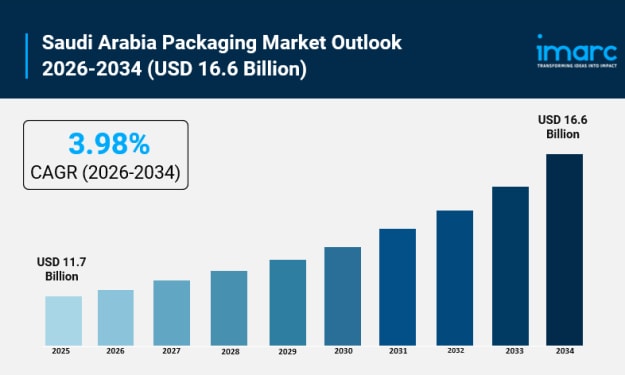
According to IMARC Group's latest research publication, Saudi Arabia packaging market size reached USD 11.7 Billion in 2025. The market is projected to reach USD 16.6 Billion by 2034, exhibiting a growth rate of 3.98% during 2026-2034.
By Jeffrey Wilsona day ago in Futurism
Where's the Glory?
In breaking news, rehabilitated Republican Senator Johnnie Johnson (Pronouns: HE, HIM, HIS) called a press conference from the Men’s room of the New Orleans Louis Armstrong International Airport, Concourse B, across from the Ignatius Reilly’s Lucky Dog stand. The Senator had just returned from a sexual reorientation rehabilitation program in Memphis, TN after being publically disgraced at a Buckee’s Truckstop restroom soliciting sex from an undercover cop three months ago. He is a founding member of the Reformed Christians for Christ, a conservative, pro-family and ex-gay advocacy group. In the spirit of being reborn, Senator Johnson invited reporters to marvel at his plans for a major remodeling of airport bathrooms.
By Cathy Schieffelin6 days ago in Humor



Comments
There are no comments for this story
Be the first to respond and start the conversation.