
Australia Lentil Market: Plant-Based Nutrition, Export Growth & Changing Food Habits
How healthy eating trends, global demand and sustainable farming are shaping Australia’s lentil industry
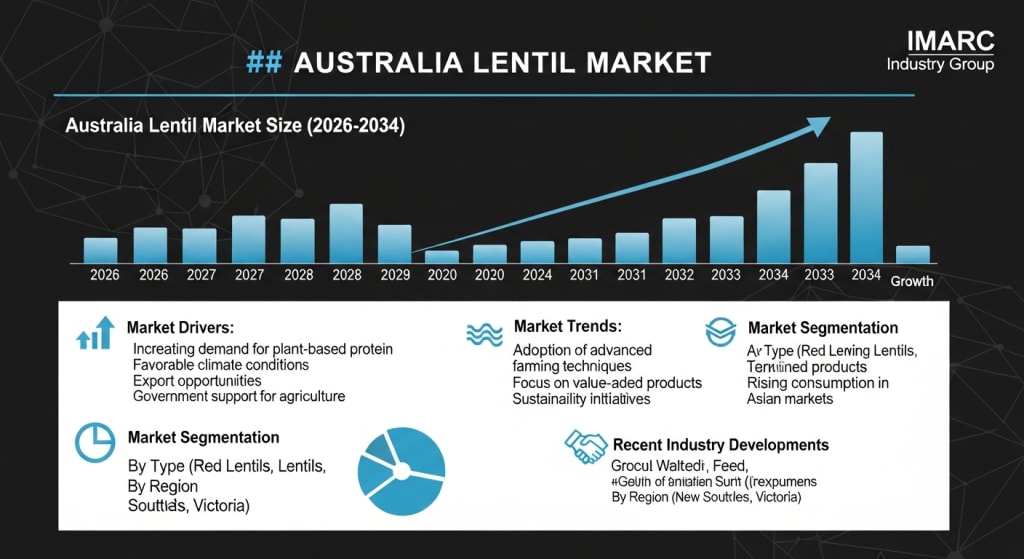
According to IMARC Group, the Australia lentil market reached 502.6 Thousand Tons in 2024 and is projected to expand significantly to 1,302.6 Thousand Tons by 2033, exhibiting a robust compound annual growth rate (CAGR) of 10.10% during 2025–2033. This strong growth trajectory reflects the rising strategic importance of lentils within Australia’s agricultural and food export ecosystem. Lentils are increasingly valued as a sustainable, nutrient-dense protein source, aligned with global shifts toward plant-based diets, food security and environmentally responsible farming. As consumers worldwide adopt vegetarian, vegan and flexitarian eating habits, lentils are gaining prominence not only as a staple food crop but also as a key component of the future protein supply chain. Supported by agricultural research, plant breeding innovation and expanding trade relationships, the lentil industry is emerging as a high-growth segment of Australia’s broader agri-food economy.
Why Should Smart Buyers and Investors Know About the Australia Lentil Market?
High-Growth Market With Strong Demand Fundamentals
With a projected CAGR of 10.10%, lentils represent one of the fastest-growing segments within Australia’s agricultural sector.
Alignment With Global Nutrition and Sustainability Trends
Lentils directly benefit from long-term trends toward healthy eating, plant-based diets and sustainable food systems.
Export-Led Revenue Opportunities
Strong international demand and diversified export markets reduce reliance on domestic consumption and support scalable growth.
Low Environmental Footprint and ESG Appeal
Lentil cultivation supports soil health and lower emissions, enhancing the sector’s appeal to ESG-focused investors and food companies.
Value Chain Expansion Potential
Opportunities extend beyond raw production into processing, branded foods and functional ingredients, supporting margin expansion.
Recent Trends & Developments in the Australia Lentil Market
May 2025:
Growers increased adoption of high-yield, disease-resistant lentil varieties developed through advanced plant breeding programs, improving output consistency.
January 2025:
Export volumes rose sharply following expanded trade engagement with major importing countries, strengthening Australia’s position in global lentil supply chains.
August 2024:
Food manufacturers expanded the use of lentil-based ingredients in plant-based products, driven by demand for clean-label and protein-rich formulations.
The Australia lentil market illustrates how agricultural innovation, changing dietary habits and sustainability priorities are reshaping global food systems. Backed by strong IMARC growth projections, the sector is transitioning from a traditional pulse crop market into a strategically important pillar of plant-based nutrition and export agriculture. As demand for affordable, sustainable protein accelerates worldwide, lentils are positioned at the intersection of health, environmental responsibility and food security. For growers, investors and food industry stakeholders, Australia’s lentil industry represents not only a high-growth agricultural opportunity, but also a forward-looking case study in how future food supply chains will be built around resilient, plant-based solutions.
Australia Lentil Market Vision 2050
1. Lentils as a Core Global Protein Source
By 2050, lentils are expected to become a foundational component of global protein consumption, supporting food security in both developed and emerging economies.
2. Climate-Resilient Crop Development
Ongoing investment in plant genetics and agronomy will produce lentil varieties capable of thriving under changing climate conditions, including drought tolerance and heat resilience.
3. Expansion of Sustainable Export Agriculture
Australia’s lentil sector is likely to play a central role in sustainable export agriculture, supplying low-carbon, environmentally responsible food products to global markets.
4. Deeper Integration With Plant-Based Food Systems
Lentils will increasingly be integrated into alternative protein products, functional foods and nutritionally fortified ingredients as plant-based innovation accelerates.
5. Digitally Enabled Precision Farming
Advanced data analytics, satellite monitoring and precision agriculture tools will optimize planting, irrigation and harvesting, improving yields while minimizing environmental impact.
What Are the Key Growth Drivers in the Australia Lentil Market?
Rising Adoption of Plant-Based and Flexitarian Diets
Consumer dietary preferences are shifting toward plant-based nutrition, driven by health awareness, ethical considerations and environmental concerns. Lentils, rich in protein, fiber and micronutrients, are increasingly viewed as a versatile alternative to animal-based proteins across both domestic and international markets.
Strong Export Demand From Global Food Markets
Australia’s lentil production is highly export-oriented, benefiting from demand in regions with large vegetarian populations and growing interest in affordable plant proteins. Long-standing trade relationships and favorable agreements with key importing countries continue to support volume expansion and price stability.
Advancements in Agricultural Research and Plant Breeding
Significant investment in agricultural research has improved lentil yields, disease resistance and climate adaptability. New seed varieties and improved farming practices are enhancing productivity while reducing crop risk for growers.
Sustainability and Low-Input Farming Benefits
Lentils play an important role in sustainable agriculture due to their nitrogen-fixing properties, which improve soil health and reduce reliance on chemical fertilizers. This aligns lentil cultivation with broader environmental and regenerative farming objectives.
Integration Into Value-Added Food Products
Beyond whole lentils, demand is increasing for lentil-based flours, ready-to-cook meals and processed food ingredients. This diversification is expanding market applications and supporting higher value realization across the supply chain.
About the Creator
Keep reading
More stories from Shrestha Roy and writers in Futurism and other communities.
Australia Iron Ore Market: Global Supply Strength, Commodity Cycles & Economic Impact
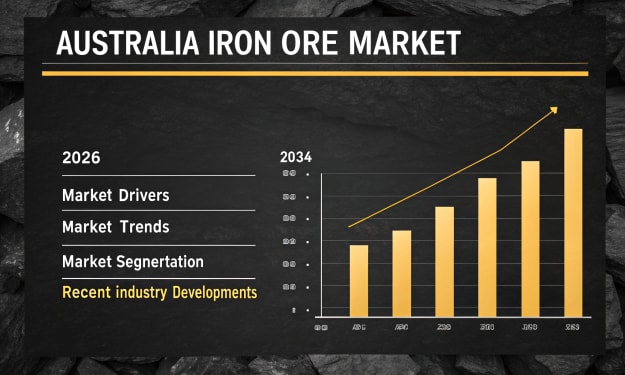
According to IMARC Group, the Australia iron ore market reached a value of USD 8.34 Billion in 2024 and is projected to expand to USD 12.23 Billion by 2033, growing at a compound annual growth rate (CAGR) of 3.90% during 2025–2033. This steady growth trajectory reflects iron ore’s continued strategic importance within the global steel supply chain and its central role in Australia’s resource-driven economy. While the market remains exposed to commodity price cycles and global economic fluctuations, long-term demand fundamentals are being reshaped by the transition toward low-carbon steelmaking and sustainable industrial practices. As one of the world’s leading iron ore suppliers, Australia is increasingly positioning its mining sector to align with decarbonization goals, technological innovation and evolving trade dynamics, reinforcing iron ore’s relevance in the future global materials landscape.
By Shrestha Roya day ago in Futurism
Killer Asteroid: How Humanity Is Preparing for the Inevitable Impact
Sixty-six million years ago, a cosmic rock roughly 10 kilometers in diameter ended the age of dinosaurs in a catastrophic instant. Today, humanity stands as the first species on Earth capable not only of predicting such a disaster but also of preventing it. The only question is: will we be ready in time?
By Holianyk Ihor4 days ago in Futurism
Saudi Arabia Digital Transformation Market: Cloud Adoption, Automation & Growth Momentum
According to IMARC Group's latest research publication, Saudi Arabia digital transformation market size reached USD 10.9 Billion in 2024. The market is projected to reach USD 82.0 Billion by 2033, exhibiting a growth rate of 23.1% during 2025-2033.
By Faisal Al-Harbia day ago in Futurism



Comments
There are no comments for this story
Be the first to respond and start the conversation.