
Australia Fleet Management Market: Connected Vehicles, Operational Efficiency & Smarter Mobility
How telematics, data-driven logistics and vehicle optimization are transforming fleet operations across Australia
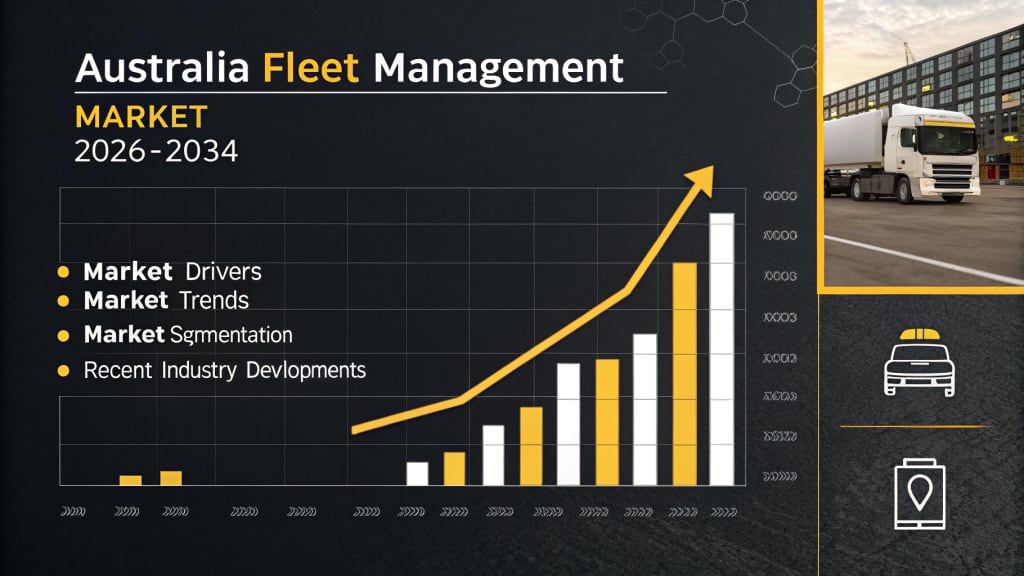
According to IMARC Group, the Australia fleet management market reached a value of USD 885.4 Million in 2025 and is projected to expand to USD 2,057.2 Million by 2034, exhibiting a strong compound annual growth rate (CAGR) of 9.82% during 2026–2034. This rapid expansion reflects the accelerating digital transformation of fleet operations across logistics, transportation, construction, utilities and public services. As organizations seek greater cost efficiency, regulatory compliance and operational transparency, fleet management solutions are becoming essential tools rather than optional add-ons. The integration of telematics, cloud platforms and advanced data analytics is reshaping how vehicles are monitored, optimized and maintained. Against the backdrop of e-commerce growth, sustainability priorities and vehicle electrification, fleet management is emerging as a strategic enabler of smarter mobility and logistics efficiency across Australia.
Why Should Smart Buyers and Investors Know About the Australia Fleet Management Market?
High-Growth Digital Infrastructure Segment
With a projected CAGR of 9.82%, fleet management represents one of the faster-growing segments within Australia’s transportation and logistics technology landscape.
Strong Alignment With Cost and Efficiency Priorities
Fleet management delivers measurable ROI through fuel savings, reduced downtime and improved vehicle utilization.
Central Role in Electric and Sustainable Mobility
As EV adoption increases, fleet platforms become critical for managing charging infrastructure, energy efficiency and emissions reporting.
Expanding Use Across Multiple Industries
Demand spans logistics, construction, utilities, mining, public services and corporate fleets, supporting broad-based market expansion.
Long-Term Relevance in Smart Mobility Ecosystems
Fleet management sits at the intersection of connected vehicles, smart cities and digital logistics, ensuring long-term strategic importance.
Recent Trends & Developments in the Australia Fleet Management Market
June 2025:
Fleet operators expanded the adoption of AI-enabled telematics platforms to improve predictive maintenance and driver performance monitoring.
February 2025:
Government incentives encouraged the integration of electric vehicles into commercial fleets, increasing demand for EV-compatible fleet management systems.
September 2024:
Logistics providers enhanced cloud-based fleet platforms to support rapid scaling driven by e-commerce and same-day delivery growth.
The Australia fleet management market highlights how connectivity, data analytics and sustainability priorities are transforming traditional vehicle operations into intelligent mobility systems. Supported by strong IMARC growth projections, the sector is evolving from basic vehicle tracking into a comprehensive operational intelligence platform. As businesses navigate rising logistics complexity, regulatory pressure and the transition to electric and connected vehicles, fleet management solutions will play an increasingly critical role in enabling efficiency, safety and sustainability. For technology providers, investors and fleet operators, Australia’s fleet management market represents not just a growing software segment, but a forward-looking foundation for the future of smarter, cleaner and more connected mobility.
Australia Fleet Management Market Vision 2050
1. Fully Connected and Autonomous Fleet Ecosystems
By 2050, fleet operations are expected to be deeply integrated with autonomous driving technologies, enabling semi-autonomous or fully autonomous commercial fleets.
2. Electrification and Sustainable Fleet Optimization
Fleet management platforms will play a central role in managing electric vehicle (EV) fleets, optimizing charging schedules, battery health and energy consumption.
3. AI-Driven Predictive Operations
Artificial intelligence will enable predictive analytics for maintenance, route planning and risk management, significantly reducing downtime and operational uncertainty.
4. Integrated Smart Mobility Networks
Fleet systems will increasingly connect with smart city infrastructure, traffic management systems and logistics hubs to improve urban mobility and congestion management.
5. Sustainability and Emissions Tracking as Core Features
Carbon footprint monitoring and emissions reporting will become standard fleet management capabilities, supporting corporate sustainability and regulatory reporting requirements.
What Are the Key Growth Drivers in the Australia Fleet Management Market?
Rising Demand for Cost Efficiency and Operational Control
Fleet operations represent a significant cost center for businesses, encompassing fuel, maintenance, labor and asset utilization. Fleet management solutions provide real-time visibility into vehicle performance and usage, enabling organizations to reduce fuel consumption, optimize routes and improve asset productivity.
Focus on Vehicle Safety and Regulatory Compliance
Safety regulations and compliance requirements are becoming more stringent across commercial transport sectors. Fleet management platforms support compliance by tracking driver behavior, vehicle condition and working hours, helping organizations reduce accidents and meet regulatory standards.
Adoption of Telematics and Data Analytics
Advancements in GPS, telematics and sensor technologies are enabling continuous data collection from vehicles. Analytics-driven insights allow fleet operators to identify inefficiencies, predict maintenance needs and make data-backed operational decisions.
Expansion of E-Commerce and Last-Mile Delivery
The growth of e-commerce and on-demand delivery services has significantly increased the number of commercial vehicles on Australian roads. Fleet management solutions help logistics providers manage high vehicle volumes, tight delivery windows and rising customer expectations.
Shift Toward Cloud-Based and Outsourced Solutions
Organizations are increasingly adopting cloud-based fleet management platforms for scalability, flexibility and lower upfront costs. At the same time, outsourcing fleet management services is gaining traction as businesses focus on core operations.
About the Creator
Keep reading
More stories from Shrestha Roy and writers in Futurism and other communities.
Australia Steel Market: Industrial Backbone, Infrastructure Demand & Economic Momentum
According to IMARC Group, the Australia steel market reached a value of USD 19.5 Billion in 2024 and is projected to grow to USD 25.8 Billion by 2033, exhibiting a compound annual growth rate (CAGR) of 3.16% during 2025–2033. This steady expansion highlights steel’s enduring role as a foundational material underpinning Australia’s industrial economy. Steel remains critical to construction, infrastructure, mining, manufacturing and energy development, forming the physical backbone of national growth. While the market operates within global commodity cycles and competitive international trade dynamics, domestic demand fundamentals and policy-backed infrastructure investment continue to provide resilience. As Australia accelerates spending on transport networks, renewable energy projects and industrial modernization, steel demand remains structurally embedded across economic activity in Australia.
By Shrestha Roya day ago in Futurism
Squalene Market: Plant-Based Sourcing, Clean Beauty Trends & Growth Outlook
According to IMARC Group's latest research publication, The global squalene market size was valued at USD 154.98 Million in 2024. Looking forward, IMARC Group estimates the market to reach USD 263.04 Million by 2033, exhibiting a CAGR of 6.84% from 2025-2033.
By James Whitman6 days ago in Futurism



Comments
There are no comments for this story
Be the first to respond and start the conversation.