
Australia Fast Food Market: Consumer Preferences, Convenience Demand & Digital Ordering
How shifting consumer preferences, increasing demand for convenience and expansion of digital ordering platforms are shaping Australia’s fast food market
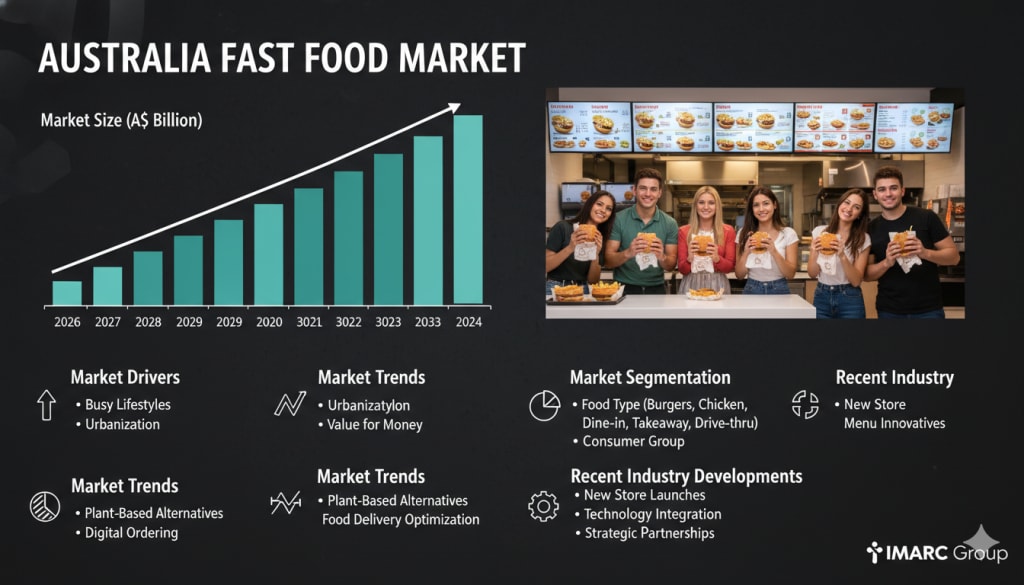
According to IMARC Group, the Australia fast food market reached a value of USD 18.8 Billion in 2025 and is projected to expand to USD 26.5 Billion by 2034, exhibiting a compound annual growth rate (CAGR) of 3.80% during 2026–2034. This steady growth reflects the fast food sector’s ability to continuously adapt to evolving consumer lifestyles, urbanization and technological change. Fast food in Australia has moved beyond traditional quick-service models to become a dynamic part of the broader foodservice ecosystem, shaped by convenience, digital engagement and menu innovation. As work patterns become more flexible, time constraints intensify and consumer expectations rise, fast food operators are redefining speed, accessibility and value across Australia.
Why Should Smart Buyers and Investors Know About the Australia Fast Food Market?
Stable Growth in a High-Frequency Consumption Segment
With a projected CAGR of 3.80%, the market offers predictable growth supported by frequent consumer purchases and strong brand loyalty.
Digital Platforms Enhancing Revenue and Efficiency
Digital ordering and delivery platforms are improving margins, data visibility and customer engagement, strengthening long-term competitiveness.
Adaptability to Changing Consumer Preferences
Fast food brands that successfully integrate health-conscious options and menu innovation can capture broader demographic segments.
Strong Franchise and Scalable Business Models
Franchising enables rapid expansion, cost sharing and localized market adaptation, making the sector attractive for investors.
Resilience Across Economic Cycles
Fast food consumption typically demonstrates resilience during economic fluctuations due to its affordability and convenience.
Recent Trends & Developments in the Australia Fast Food Market
July 2025:
Major fast food chains expanded app-based loyalty programs and digital promotions to increase repeat purchases and customer retention.
March 2025:
Health-oriented menu launches gained momentum, including plant-based burgers, low-calorie meals and sugar-reduced beverage options.
October 2024:
Delivery-focused store formats and ghost kitchens expanded in metropolitan areas, improving service speed and reducing real estate costs.
The Australia fast food market illustrates how convenience, digital innovation and evolving consumer preferences are reshaping one of the country’s most established foodservice sectors. Supported by IMARC’s positive growth outlook, the market continues to evolve from traditional quick-service dining into a digitally enabled, highly adaptive ecosystem. As brands balance speed with quality, convenience with health, and scale with personalization, fast food remains deeply embedded in Australia’s modern lifestyle. For operators, investors and technology providers, the sector represents not just a mature consumer market, but a forward-looking platform where digital engagement, menu innovation and operational agility define the future of fast, accessible and consumer-centric dining.
Australia Fast Food Market Vision 2050
1. Digitally Native Fast Food Experiences
By 2050, fast food operations are expected to be predominantly digital-first, with AI-powered ordering, dynamic pricing and predictive demand forecasting shaping customer interactions.
2. Customization and Personalization at Scale
Advanced data analytics will enable hyper-personalized menus, promotions and portion sizes based on individual preferences, dietary needs and consumption habits.
3. Greater Integration of Sustainability Practices
Sustainable packaging, waste reduction initiatives and responsible sourcing will become core operational standards rather than optional brand differentiators.
4. Expansion of Alternative Proteins and Health-Focused Menus
Plant-based, low-calorie and functional food offerings will play a larger role as dietary preferences continue to evolve.
5. Automation and Smart Kitchens
Automation, robotics and smart kitchen technologies will improve efficiency, consistency and labor productivity across fast food operations.
What Are the Key Growth Drivers in the Australia Fast Food Market?
Rising Demand for Convenience and Time Efficiency
Busy urban lifestyles, dual-income households and flexible work arrangements continue to drive demand for fast, accessible meal options. Fast food outlets offer speed, extended operating hours and consistent availability, making them an integral part of daily consumption patterns.
Expansion of Digital Ordering and Delivery Platforms
Digital transformation is reshaping how consumers interact with fast food brands. Mobile apps, online ordering platforms and third-party delivery services have expanded market reach, improved order accuracy and enabled personalized promotions, significantly enhancing customer engagement.
Increasing Disposable Income and Eating-Out Culture
Rising disposable income levels and a strong culture of eating outside the home are supporting sustained fast food consumption. Consumers increasingly view fast food as a convenient lifestyle choice rather than an occasional indulgence.
Menu Diversification and Culinary Innovation
Fast food operators are expanding menus to include global cuisines, limited-time offerings and locally inspired flavors. This diversification caters to Australia’s multicultural population and growing appetite for culinary variety.
Growing Focus on Health-Conscious Options
Health awareness is influencing menu development, with brands introducing grilled items, plant-based alternatives, reduced-sugar beverages and transparent nutritional labeling. These initiatives help fast food chains remain relevant to increasingly health-conscious consumers.
About the Creator
Keep reading
More stories from Shrestha Roy and writers in Futurism and other communities.
Australia Wealth Management Market: HNWI Growth, Digital Transformation & Regulatory Reform
According to IMARC Group, the Australia wealth management market reached a value of USD 118.6 Million in 2025 and is expected to expand to USD 222.2 Million by 2034, registering a compound annual growth rate (CAGR) of 7.00% during 2026–2034. This steady growth reflects the increasing complexity of personal wealth structures, rising numbers of high-net-worth individuals (HNWIs) and a fundamental transformation in how financial advisory services are delivered. Wealth management in Australia is moving beyond traditional portfolio management toward holistic, technology-enabled financial planning that integrates investments, retirement strategies, tax efficiency and intergenerational wealth transfer. Supported by a mature superannuation system, strong economic fundamentals and regulatory modernization, the sector is emerging as a key pillar of long-term financial resilience across Australia.
By Shrestha Royabout 20 hours ago in Futurism
Freeze-Drying Equipment Market Trends: Pharmaceutical Demand, Food Preservation & Forecast to 2033
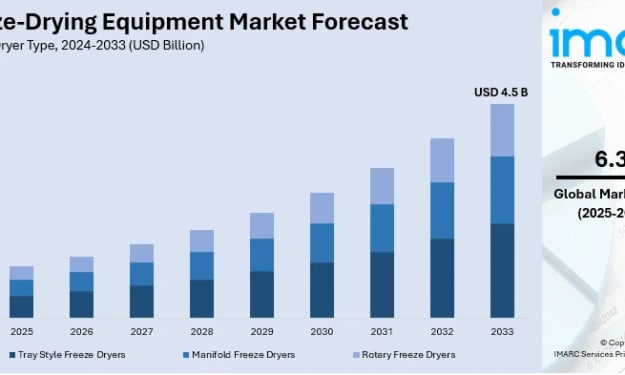
The global freeze-drying equipment market size was valued at USD 2.44 Billion in 2024. Looking forward, IMARC Group estimates the market to reach USD 4.49 Billion by 2033, exhibiting a CAGR of 6.30% from 2025-2033. Asia-Pacific currently dominates the market, holding a significant market share of 35.4% in 2024.
By Andrew Sullivanabout 20 hours ago in Futurism
Companion Diagnostics Market Trends: AI-Powered Testing, Data-Driven Decisions & Industry Outlook to 2033
The global companion diagnostics market is experiencing robust growth, fueled by personalized medicine, technological innovation, and the widespread adoption of targeted therapies. According to IMARC Group's recent analysis, the market reached USD 7.6 Billion in 2024. Looking ahead, IMARC Group projects the market will reach USD 22.3 Billion by 2033, demonstrating steady expansion during 2025-2033.
By Andrew Sullivan5 days ago in Futurism



Comments
There are no comments for this story
Be the first to respond and start the conversation.