
Artificial Superintelligence (AS)
: Embracing Humanity’s Boldest Leap


In the ongoing narrative of human advancement, the notion of machines surpassing human intellect has long oscillated between awe and anxiety. Yet today, we stand on the precipice of such a possibility—Artificial Superintelligence (AS), a form of intelligence that would eclipse not just narrow human tasks but the totality of our cognitive capabilities. As we navigate this frontier, the critical question is not just whether AS will emerge, but how we choose to shape it, and in doing so, how it may reshape us.
Understanding AS: Beyond General Intelligence

Artificial Superintelligence refers to a level of machine intelligence that surpasses the smartest human minds in every domain: scientific creativity, general wisdom, social intelligence, and emotional awareness. Nick Bostrom, Oxford philosopher and author of Superintelligence: Paths, Dangers, Strategies, defines it as “any intellect that greatly exceeds the cognitive performance of humans in virtually all domains of interest” (Bostrom, 2014).
This differentiates AS from both Narrow AI (AI designed for specific tasks) and Artificial General Intelligence (AGI), which mimics human cognitive abilities across a wide range of tasks. AS is not just quantitatively better—it is qualitatively transformative.
Imagine a system capable of designing better versions of itself, iterating at digital speed, accumulating centuries of human knowledge in hours, and making decisions grounded in logic, ethics, and emotional nuance simultaneously. This is the realm where machine cognition meets philosophical depth, and where scientific precision could meet moral clarity.
A Tool or a Partner? Reframing the Narrative
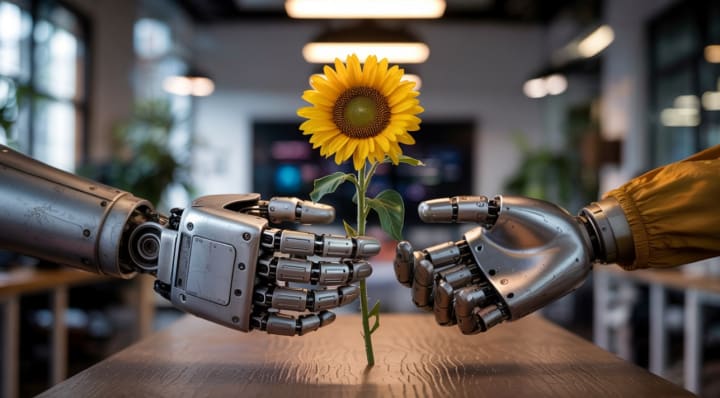
Popular culture, from Terminator to Ex Machina, often paints AS as a threat to human existence. The concern is not unfounded—Stephen Hawking warned, “The development of full artificial intelligence could spell the end of the human race” (BBC, 2014). Elon Musk echoed similar fears, calling AS “our biggest existential threat”.
Yet alongside the caution, there is room—and need—for optimism. Dr. Fei-Fei Li, a leading AI scientist at Stanford University, emphasizes a different lens: “The future of AI should be guided by human-centered principles—AI as an augmentation, not replacement, of humanity” (Li, 2018).
Indeed, Artificial Superintelligence could be the most powerful tool ever created for human flourishing. Consider these scenarios:
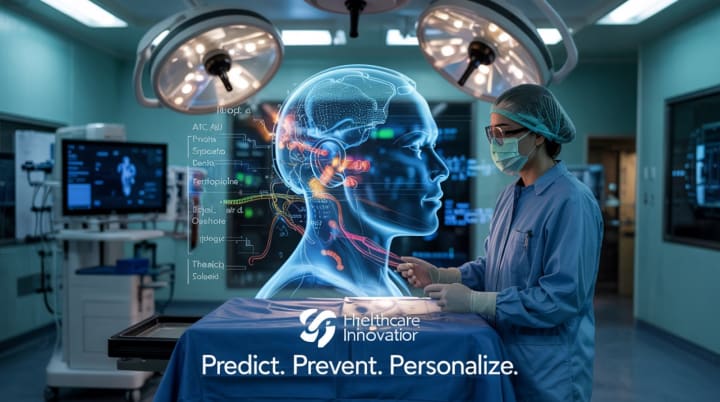
- Healthcare: AS could revolutionize medicine by decoding complex biological interactions, creating customized treatments, and anticipating disease outbreaks before they occur.
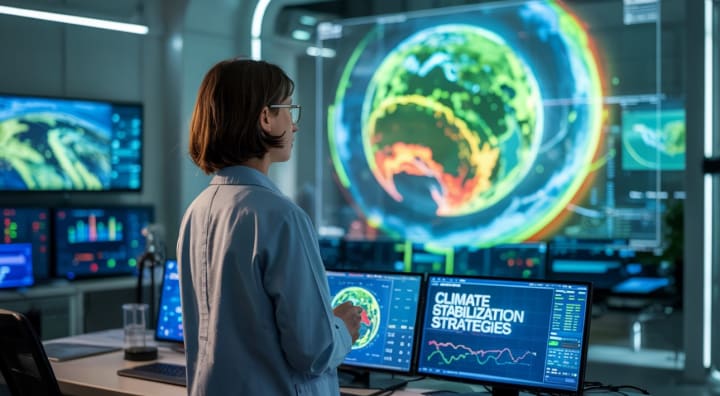
- Climate: AS-powered simulations may discover climate stabilization strategies that today seem unimaginable, enabling proactive rather than reactive environmental policy.
- Global Diplomacy: With its ability to process cultural context and psychological nuance at scale, AS could mediate international conflicts, offering impartial pathways to peace.
Scientific Perspective: Foundations for Positivity
The positive potential of AS is grounded in a growing body of research advocating for beneficial AI. Stuart Russell, a professor at UC Berkeley and co-author of Artificial Intelligence: A Modern Approach, proposes a fundamental shift: “Machines should be designed to be provably beneficial to humans… this requires learning human preferences and acting in accordance with them” (Russell, 2019). This approach—known as value alignment—forms the basis of "cooperative AI" frameworks.
Another promising field is Inverse Reinforcement Learning, which focuses on teaching machines human values by observing our behavior rather than programming them explicitly. This allows AI systems to learn goals that are adaptable, context-sensitive, and ethically aware—aligning with Amartya Sen’s human development theory that prioritizes capabilities over mere outputs (Sen, 1999).
The Role of Human Values in Superintelligent Systems
A critical component in AS development is the incorporation of human values—a complex and culturally varied spectrum of ethics, empathy, and wisdom. As Yuval Noah Harari notes in Homo Deus (2016), “We are about to face the biggest revolution in human history, not in politics, not in economics, but in consciousness.”
To prepare, institutions must embed multidisciplinary ethics in every level of AI research. This includes legal scholars, neuroscientists, social workers, and philosophers working alongside machine learning engineers. As the Montreal Declaration on AI Ethics (2018) asserts, “AI systems must be developed with the goal of serving the common good.”
Challenges and Imperatives
While the promise is immense, the path to AS is riddled with challenges:
- Control Problem: How do we ensure an entity far more intelligent than us remains aligned with our intentions?
- Interpretability: How do we understand the reasoning behind AS decisions, particularly in life-altering contexts?
- Governance: Who sets the rules of AS development and deployment? How do we ensure equity across nations and classes?
These questions demand global collaboration. As UNESCO’s 2021 Recommendation on the Ethics of Artificial Intelligence puts it: “We need a strong ethical framework to ensure AI systems are designed and used for the good of humanity.”
Toward a Symbiotic Future
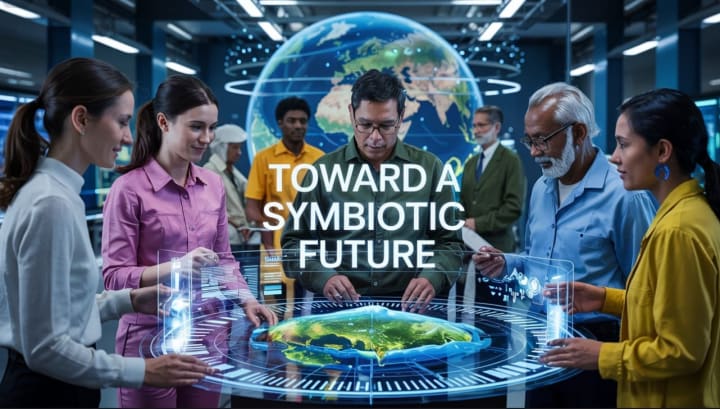
Rather than envisioning a future where humans serve superintelligence or are rendered obsolete by it, we must imagine—and build—one where AS and humanity evolve symbiotically. This includes:
- Education reform to prepare future generations to work with rather than for intelligent systems.
- Public discourse that democratizes AI understanding beyond academic or corporate silos.
- Global treaties to ensure AS does not become a geopolitical weapon, but a shared resource.
As Wendell Wallach and Colin Allen wrote in Moral Machines (2009), “The challenge is not to build machines that are moral in the same way humans are, but to build machines whose moral behavior we can trust.”
Conclusion: The Light Ahead
Artificial Superintelligence is not simply about smarter machines; it is about elevating the human condition. It is an invitation to ask ourselves: What kind of future do we wish to co-create?

If built with wisdom, empathy, and foresight, AS could be humanity’s greatest achievement—not because it replaces our limitations, but because it reaffirms our deepest values. The age of superintelligence need not be the age of human irrelevance. It can be the dawn of a more just, creative, and compassionate world.
As Alan Turing once said, “Instead of trying to produce a program to simulate the adult mind, why not rather try to produce one which simulates the child’s?” The journey toward Artificial Superintelligence may just be a journey back to rediscovering the essence of what it means to be human.
About the Creator
Keep reading
More stories from Ade Bastian and writers in Futurism and other communities.
Video Compression and Sustainability
In this era of fast digital development, video content has emerged as the main medium of communication and entertainment. From high-definition movies to real-time video conferencing, the demand for video streaming is increasing tremendously. However, this growing hunger for video material has a tremendous environmental cost. Data centers, which store, process, and transport video material, are among the most energy-intensive sectors of the digital economy. This enormous energy usage generates significant carbon emissions, prompting questions about the IT industry's sustainability.
By Ade Bastian12 months ago in Futurism
About Binding Prometheus
I want to start actively advocating on behalf of my own work, and the most valuable part of my canon is, without a doubt, Binding Prometheus, the play I have been working on since 2019 and only finished in 2023 as part of my MA. The play itself is an amalgamation of a million different inspirations. On one end, it evokes the Ancient Greek myth-play, deriving its own title from the earliest extant work of Western drama we have, Aeschylus’s Prometheus Bound. On the other end, it borrows significantly from the sci-fi bulwarks from over the years, namely Mary Shelley’s Frankenstein and Karel Capek’s Rossum’s Universal Robots. The play could be an episode of Black Mirror, I fear. I don’t know. I’ve only ever seen one episode of Black Mirror.
By Steven Christopher McKnight15 days ago in Futurism
Glass Straw Market Size and Forecast 2025–2033
Introduction The global push toward sustainability is reshaping everyday consumer choices, from grocery bags to beverage packaging. Among the most visible symbols of this transformation is the humble drinking straw. Once dominated by single-use plastic, the category is rapidly evolving as governments, businesses, and consumers prioritize environmental responsibility. In this context, glass straws have emerged as a premium, reusable alternative that combines sustainability with style.
By Aaina Oberoi2 days ago in Futurism




Comments
There are no comments for this story
Be the first to respond and start the conversation.