
Artificial Intelligence: Future of Technology or a Threat to Humanity?
Discover how AI is transforming our lives—and why experts warn it could be humanity’s biggest challenge


Introduction
Artificial Intelligence (AI) is no longer just a futuristic idea from science fiction movies—it is already here, shaping our lives in ways we never imagined. From voice assistants like Siri and Alexa to advanced systems that detect diseases or drive cars, AI has become an integral part of modern technology. But the big question remains: Is AI a powerful friend that will help humanity, or a threat that could replace us?
In this article, we will explore what AI really means, how it impacts our daily lives, the benefits it brings, the challenges it poses, and what the future might look like.
What Exactly Is Artificial Intelligence?
Artificial Intelligence refers to the ability of machines or computer systems to perform tasks that usually require human intelligence. These tasks include problem-solving, understanding natural language, learning from data, and even creativity.
Some popular examples of AI are:
- Chatbots like ChatGPT that can hold human-like conversations.
- Recommendation systems on Netflix, YouTube, or Amazon.
- Self-driving cars that navigate roads without human drivers.
- Medical AI tools that analyze scans and detect early signs of diseases.
How AI Is Changing Our Daily Lives
1. Healthcare
AI-powered systems can detect diseases like cancer at an early stage, sometimes more accurately than human doctors. Robots are assisting in surgeries, and AI is helping in the development of new medicines.
2. Education
AI tutors personalize learning experiences for students by understanding their strengths and weaknesses. Virtual classrooms and smart learning apps are becoming more common.
3. Business and Work
Companies use AI chatbots for customer service, saving both time and money. Automation tools are replacing repetitive tasks, allowing humans to focus on more creative work.
4. Entertainment and Lifestyle
When you see “Recommended for You” on Netflix or Spotify, it’s AI working behind the scenes. Even Google Maps uses AI to find the fastest route for your journey.
5. Security and Safety
AI is used in face recognition, fraud detection in banking, and even in predicting natural disasters.
The Benefits of AI
- Speed and Efficiency: AI processes huge amounts of data in seconds, something impossible for humans.
- Reduced Human Error: Unlike humans, AI does not get tired, bored, or distracted, which reduces errors in calculations, predictions, and medical analysis.
- 24/7 Availability: AI systems like chatbots or automated machines can work around the clock without breaks.
- Innovation: AI has opened doors to innovation in fields like space exploration, climate change solutions, and scientific research.
The Challenges and Risks of AI
Job Loss
One of the biggest fears is automation replacing human jobs. For example, self-driving trucks could replace truck drivers, and chatbots could replace customer service agents.
Privacy Issues
AI collects and analyzes massive amounts of personal data. If misused, this data can threaten individual privacy.
Bias and Ethics
AI systems learn from data. If the data is biased, the AI will also show biased results. For example, an AI hiring system might unintentionally discriminate against certain groups.
Overdependence
Relying too much on AI can make humans dependent on machines, reducing critical thinking and problem-solving skills.
The Future of AI
The future of AI is both exciting and uncertain. Experts believe that AI will not necessarily replace humans but will work alongside us to make life easier. However, strict rules and regulations will be necessary to prevent misuse.
Some predictions include:
- Smarter healthcare: AI detecting diseases earlier and creating personalized treatments.
- Safer transportation: Self-driving cars becoming more common.
- AI in creativity: Machines writing music, designing art, and even making films.
- Global AI laws: Governments will create regulations to ensure AI is used ethically.
Conclusion
Artificial Intelligence is one of the most powerful tools ever created by humans. Like any tool, it can be used for good or for harm. The benefits of AI—speed, efficiency, and innovation—are enormous, but the risks—job loss, privacy invasion, and ethical dilemmas—cannot be ignored.
The key lies in balance. AI should not be seen as a replacement for humans but as a partner that helps us achieve greater things. If used responsibly, AI has the potential to shape a brighter and smarter future for all of humanity.
About the Creator
Janine Root
Janine Root is a skilled content writer with a passion for creating engaging, informative, and SEO-optimized content. She excels in crafting compelling narratives that resonate with audiences and drive results.
Keep reading
More stories from Janine Root and writers in Futurism and other communities.
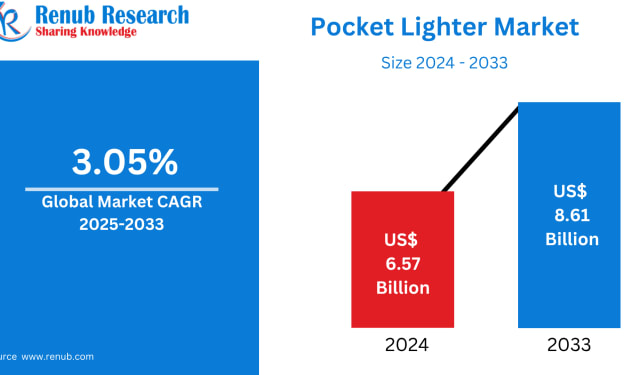
Pocket Lighter Market Size and Forecast 2025–2033
Pocket Lighter Industry Overview The Pocket Lighter industry represents a resilient and dynamic segment of the global consumer goods market, characterized by everyday utility, portability, and evolving design. Pocket lighters are compact ignition devices used for lighting cigarettes, candles, gas stoves, grills, and outdoor equipment. Over the decades, they have transitioned from basic fuel-based tools to modern, refillable, windproof, and electric alternatives that combine safety, efficiency, and aesthetics.
By Janine Root about 21 hours ago in Futurism
About Binding Prometheus
I want to start actively advocating on behalf of my own work, and the most valuable part of my canon is, without a doubt, Binding Prometheus, the play I have been working on since 2019 and only finished in 2023 as part of my MA. The play itself is an amalgamation of a million different inspirations. On one end, it evokes the Ancient Greek myth-play, deriving its own title from the earliest extant work of Western drama we have, Aeschylus’s Prometheus Bound. On the other end, it borrows significantly from the sci-fi bulwarks from over the years, namely Mary Shelley’s Frankenstein and Karel Capek’s Rossum’s Universal Robots. The play could be an episode of Black Mirror, I fear. I don’t know. I’ve only ever seen one episode of Black Mirror.
By Steven Christopher McKnight13 days ago in Futurism


Comments
There are no comments for this story
Be the first to respond and start the conversation.