
Artificial Intelligence and Its Future: A Journey into a Boundless World
Artificial Intelligence
What is Artificial Intelligence?
Artificial Intelligence (AI) is a branch of computer science aimed at creating systems and software capable of performing tasks that require human intelligence, such as learning, reasoning, decision-making, and even creativity. These systems are trained using vast amounts of data and algorithms to analyze and make accurate predictions or decisions.
AI Today
We see the impact of AI in various sectors. In healthcare, intelligent algorithms assist in diagnosing diseases and even discovering new treatments. In education, AI technologies provide personalized learning experiences tailored to each student's needs. In entertainment, AI powers recommendations for movies and music that align with our preferences.
The Future of AI: Opportunities and Challenges
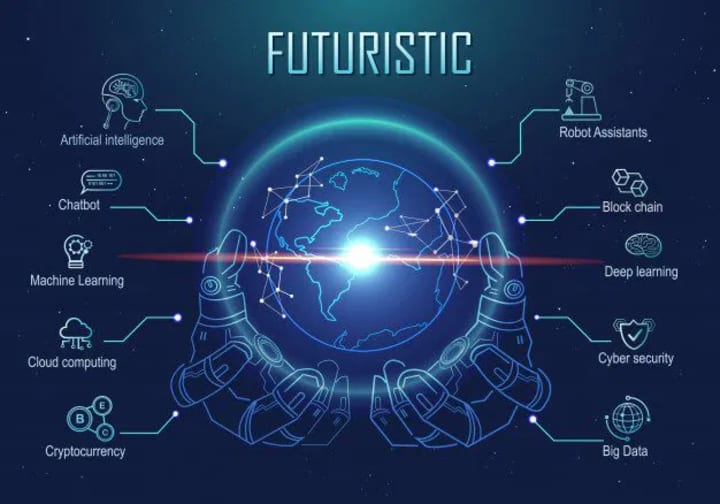
Experts predict that AI will have a profound impact on the future of humanity. Here are some of the exciting possibilities:
- Innovation in the Job Market: AI and robots are expected to replace many traditional jobs, allowing humans to focus on more creative and complex tasks. But this raises a critical question: Are we ready for this shift? This technological revolution will require reskilling and retraining the workforce to meet new demands.
- Unprecedented Advances in Medicine: In the near future, we might see AI doctors offering personalized treatment solutions based on genetic analysis, making healthcare more precise and effective.
- Creative AI: AI systems can already write poetry, compose music, and create artwork. Could we one day see a novel or a full-length film entirely produced by AI?
- Advanced Human Interaction: Robots are expected to become more socially interactive, potentially leading to AI companions that can converse and integrate into human lives naturally.
Ethical Challenges and Concerns
Despite its immense potential, AI comes with a set of challenges. Among the most pressing are:
- Privacy and Security: With massive data collection, the question remains: How do we protect our privacy?
- Algorithmic Bias: AI systems rely on data, and if that data is biased, the resulting decisions could be unfair.
- Existential Risks: Some warn that superintelligent AI could pose a threat to humanity if not controlled responsibly.
Will AI Replace Humans?
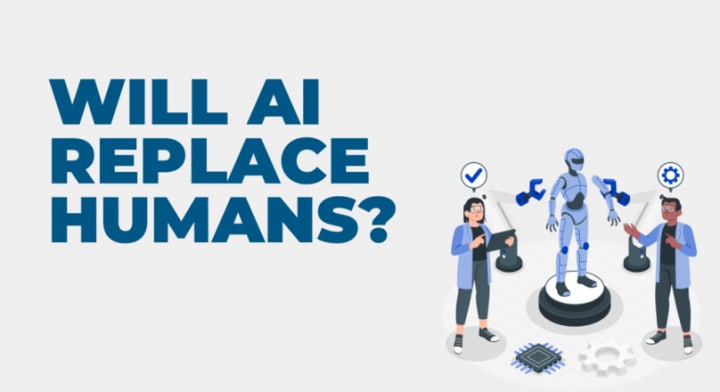
Despite concerns, AI remains a tool designed to help humans exceed their limits. The key difference is that AI lacks emotions, values, and human sensibilities. Thus, ethical considerations and human creativity will remain irreplaceable elements in any AI-driven world.
Ai advantages:
1. Improved Efficiency and Productivity:
AI can perform repetitive tasks faster and more accurately than humans, saving time and effort.
It automates business processes, reducing errors and increasing overall productivity.
2. Advanced Data Analysis:
AI processes vast amounts of data quickly, uncovering patterns and hidden insights.
It helps in making informed decisions based on data-driven analysis.
3. Enhanced User Experience:
AI powers recommendation systems (e.g., Netflix, YouTube) that provide personalized content based on user preferences.
Chatbots deliver instant and efficient customer support.
4. Advancements in Healthcare:
AI assists in diagnosing diseases accurately by analyzing medical images and health data.
It accelerates the development of new medications through genetic analysis and medical modeling.
5. Improved Transportation and Logistics:
AI optimizes traffic management by controlling signals and routes.
Autonomous driving technologies enhance transportation efficiency and reduce accidents.
6. Boosting Creativity and Innovation:
AI generates new content such as images, music, and text using techniques like deep learning.
It drives the development of innovative applications in diverse industries.
7. Cost Reduction:
AI reduces expenses by automating tasks that traditionally require significant human resources.
8. Enhanced Security and Safety:
AI is used in surveillance and crime prediction systems through data analysis.
It helps detect fraud in financial systems.
9. Support for People with Disabilities:
AI provides tools like voice and visual translation, aiding individuals with disabilities in communication.
It enables the creation of technologies that foster greater independence.
10. Support for Scientific Research:
AI simulates natural phenomena and analyzes scientific data effectively.
It accelerates discoveries in areas such as space exploration, climate studies, and biology.
Conclusion: A Bright Future Awaits
AI is more than just a technology; it’s a powerful tool for building a brighter future. With its ability to improve our lives in countless ways, AI holds the key to unlocking unprecedented progress. However, it’s up to us to ensure that this progress serves humanity and not the other way around.
About the Creator
About Binding Prometheus
I want to start actively advocating on behalf of my own work, and the most valuable part of my canon is, without a doubt, Binding Prometheus, the play I have been working on since 2019 and only finished in 2023 as part of my MA. The play itself is an amalgamation of a million different inspirations. On one end, it evokes the Ancient Greek myth-play, deriving its own title from the earliest extant work of Western drama we have, Aeschylus’s Prometheus Bound. On the other end, it borrows significantly from the sci-fi bulwarks from over the years, namely Mary Shelley’s Frankenstein and Karel Capek’s Rossum’s Universal Robots. The play could be an episode of Black Mirror, I fear. I don’t know. I’ve only ever seen one episode of Black Mirror.
By Steven Christopher McKnight23 days ago in Futurism
The New Masters of the Universe: How 2026 Rewired Global Influence
The phrase “Masters of the Universe” once belonged to Wall Street. It encapsulated the finance titans of the 1980s — traders and dealmakers who could move markets with a phone call. But in 2026, mastery has been redistributed. Power is no longer transactional; it’s systemic. The world’s new gatekeepers don’t deal in leverage buyouts or bond spreads. They control algorithms, data flows, digital platforms, and the behavioral economies they sustain.
By Trend Vantage2 days ago in Futurism



Comments